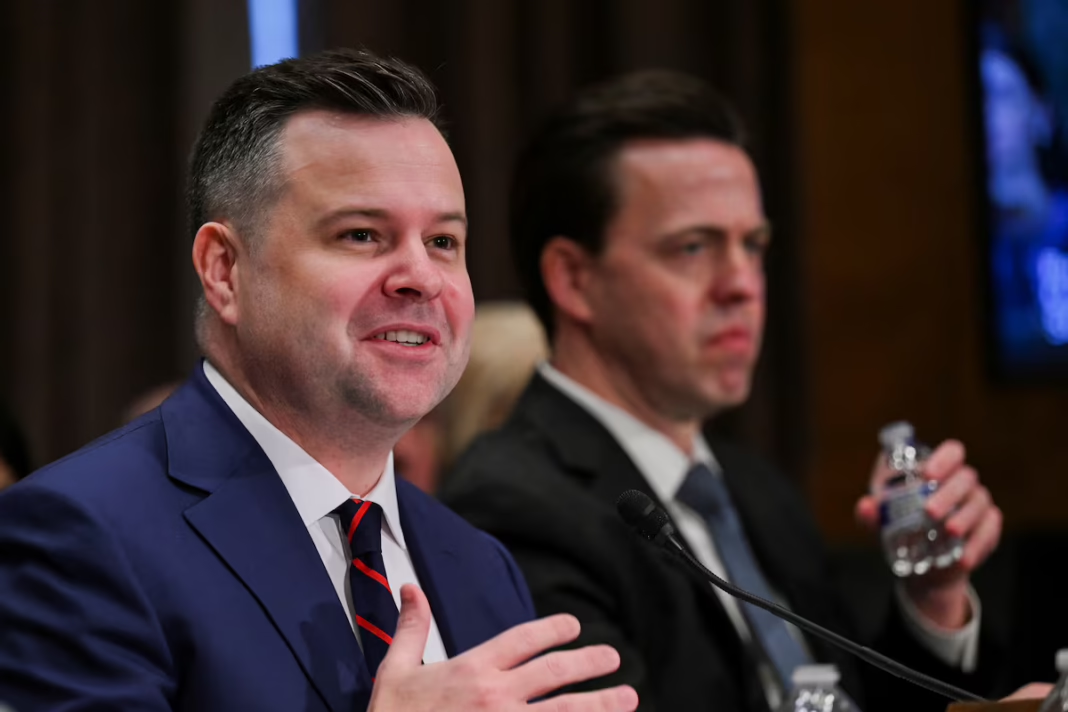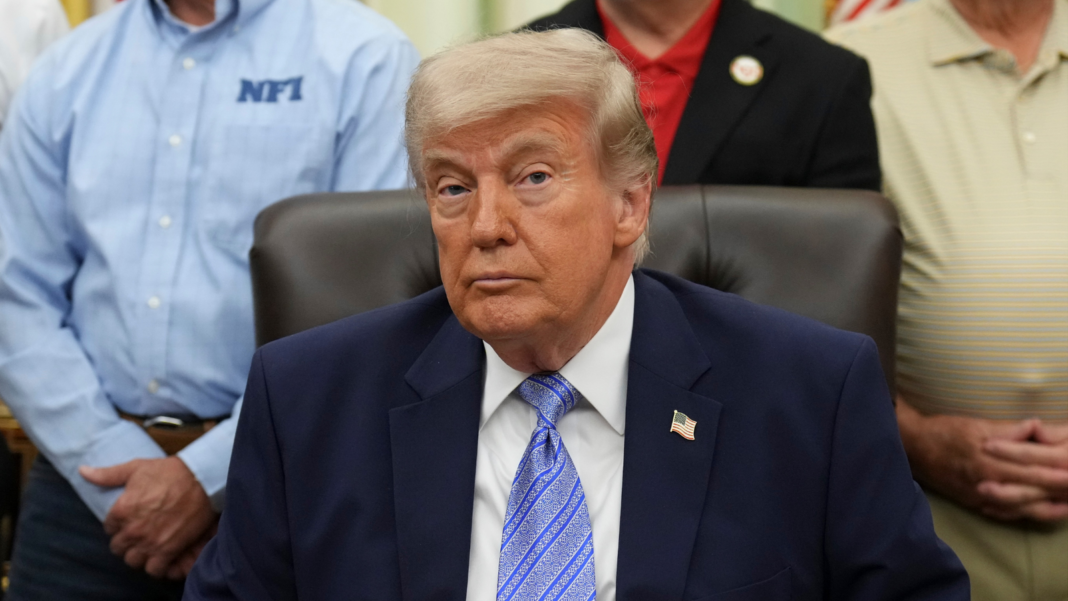





Donald Trump spent the weekend complaining about musicians who pulled out of his “Freedom 250” concerts. Bruce Springsteen spent Wednesday playing to 41,000 people at Washington’s Nationals Park, opening with a cover of “War” and a few choice words about the “reckless, racist, incompetent, treasonous” occupant of the White House. One of these represents a sitting president’s vision of America. The other represents what most of America actually thinks about that president.
The question is why the media still hasn’t figured out which one matters.
The drama
Trump’s planned concert series collapsed after artists discovered they’d been misled about the events. They didn’t just back out. They emphasized they’d been lied to. Trump’s response, posted Saturday, was to call them “overpriced singers, who nobody wants to hear, whose music is boring, and yet who do nothing but complain.” He added that he didn’t want them anyway.
Springsteen, meanwhile, is midway through his “Land of Hope and Dreams” tour, opening every show with the same anti-Trump statement before launching into Edwin Starr’s 1970 protest song. The venues are sold out. The message is unambiguous.
The absurdity
The real story isn’t about two concerts. It’s about the assumptions baked into political coverage. The lazy media reflex is to treat working-class white Trump supporters as the “real” Americans. Editors still send reporters to red districts in middle America to check the pulse of “real” people. Sending reporters to blue areas to measure anti-Trump sentiment? That’s not considered news.
The framing survives despite the actual numbers. Two-thirds of the country now disapproves of Trump. About 25 percent of American adults self-identify as part of the MAGA movement. Springsteen’s favorable-to-unfavorable ratings, according to YouGov, are 53 to 14. Trump can’t book a concert. Springsteen sells out stadiums while calling him a traitor from the stage.
At some point the gap between the narrative and the math becomes the story.
The thread
The deeper issue is what it means to be a “good American” versus a good person. Plenty of Trump supporters are decent people who’d stop to help if you had a flat tire. But being a good American requires belief in certain principles: the rule of law applies to everyone, and the United States is not and never was a Christian nation. Many Trump supporters fail one or both of those tests.
That’s not partisan framing. It’s constitutional fact. Thomas Jefferson drafted the Virginia Statute on Religious Freedom in 1779. The blueprint for American pluralism is older than the country itself. The media’s failure to call that out, while treating MAGA rallies as the authentic voice of the heartland, is a category error with consequences.
Springsteen is 76 years old. His best album came out 53 years ago. He doesn’t represent the future. But he’s filling the gap left by a media apparatus that still treats Trump’s minority coalition as the majority story. Artists like Olivia Rodrigo, daughter of a family therapist and a schoolteacher, who grew up in California’s Inland Empire and pays for mental health services for everyone on her tour, represent the generation coming next. She’s vocally anti-Trump. She’s also, by any reasonable standard, a real American.
What we’re watching
The real question isn’t whether Trump can book a concert. It’s whether the media will stop treating his base as the default setting for American identity. Most of America disapproves of his lying, his racism, his cruelty, his self-regard, and his corruption. People appear finally to be noticing the self-dealing.
Real Americans are not just in Youngstown, Ohio, and Topeka, Kansas. They’re in diverse cities and university towns where people work just as hard as anyone else and believe in a much better America than the one Trump wants to conjure.
The media has spent years sending reporters to diners in swing states to ask Trump voters if they still support him. The answer has been yes, and the coverage has treated that as validation. What would happen if the same energy went toward covering the larger, angrier, more diverse majority that wants nothing to do with him?
Will 2028, with Trump presumably heading to retirement, be the year the spell finally breaks?
Sources: