



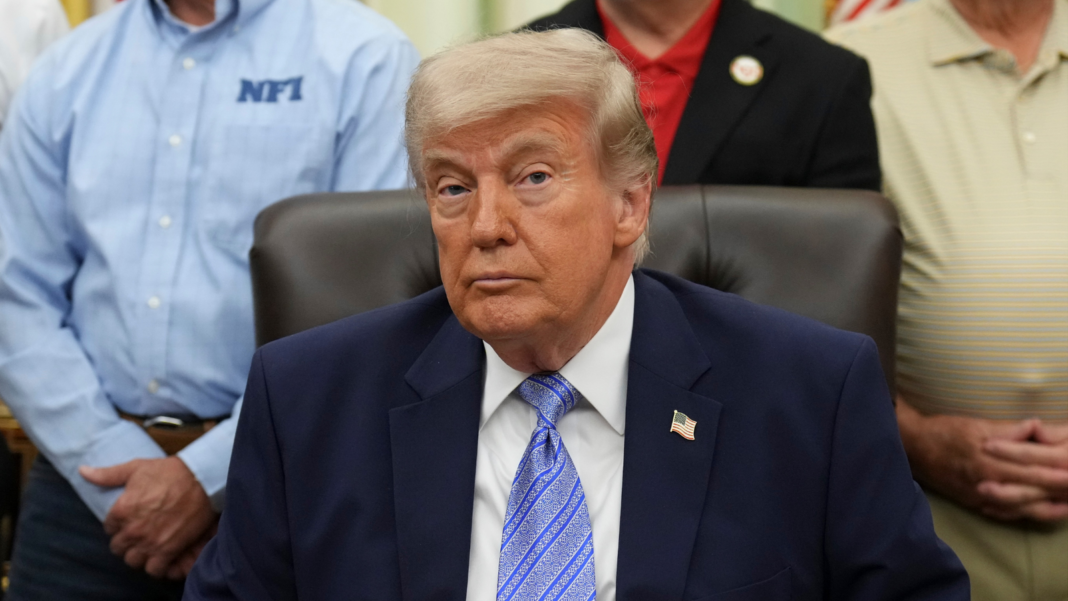
President Donald Trump signed an executive order Tuesday establishing a voluntary federal vetting process for advanced artificial intelligence systems before they go public. The Commerce Department and National Security Agency will have up to 30 days to review the most powerful AI models for national security risks. Participation is optional.
This is the same policy Trump refused to sign two weeks ago because he thought it might slow down American AI development. Trump told reporters on May 21 that he didn’t want to do anything that would hurt the country’s lead over China. The Oval Office signing ceremony was canceled. Tech executives went home. The order was shelved.
Now it’s back, with what appears to be identical language and the same 30-day review window the industry was bracing for in the first place.
What changed, and what didn’t
It’s not clear what revisions were made between the version Trump declined to sign and the one he signed this week. The White House has not released a comparison. The order still characterizes the process as voluntary. It still gives the government a month to vet AI systems. It still empowers the NSA director to determine which models qualify for scrutiny and which “trusted partners” get early access.
The difference may not be in the text. The difference may be in the timing. Anthropic, one of the AI companies invited to the original May 21 signing, had just announced its most advanced model, Claude Mythos, in April. The announcement came during Anthropic’s legal dispute with the Trump administration over a Pentagon contract. Treasury Secretary Scott Bessent and Federal Reserve Chair Jerome Powell convened an urgent meeting with Wall Street CEOs shortly after, warning them about Mythos’ ability to identify cybersecurity vulnerabilities in widely used software.
Anthropic has restricted access to Mythos to a small group of partners, though the company said Tuesday it expanded that group by 150 organizations. The timing is notable. The order is voluntary. The access decisions are not.
The vagueness is the story
Juan Londoño, a policy analyst at the Cato Institute, called the order “a step in the right direction” but flagged concerns about how the government will decide which AI models require vetting and which organizations qualify as trusted partners. Londoño said the lack of clarity “could open the door to potential weaponization against companies that have any sort of conflict with the administration.”
The order does not define what counts as an advanced AI system. It does not specify the criteria for national security risk. It does not explain how a voluntary process intersects with early-access restrictions already being imposed by companies under pressure from federal officials. It establishes a framework in which the most powerful AI tools are subject to government review before public release, but only if the companies developing them agree to participate.
The oversight is both optional and undefined, which means the most important decisions about who gets vetted and who gets early access will be made by the same agency director whose discretion is not bounded by the text of the order.
What we’re watching
The order positions itself as a safeguard. It may function as a gate. The question is not whether companies will volunteer for review. The question is what happens to companies that don’t volunteer but also don’t make it onto the trusted-partner list. Anthropic is already limiting access to its most advanced model. OpenAI and Google were both planning to attend the original signing. The voluntary framework allows the administration to claim it is not imposing mandates while still shaping who gets to deploy the technology first.
The 30-day review window is shorter than some in the industry expected, which will be framed as a win for speed and competitiveness. The vagueness of the qualifying criteria is not a drafting oversight. It is the operating feature. Discretion is the policy.
At what point does voluntary coordination with trusted partners start to look like conditional market access decided by officials whose standards are not written down?
Sources: