




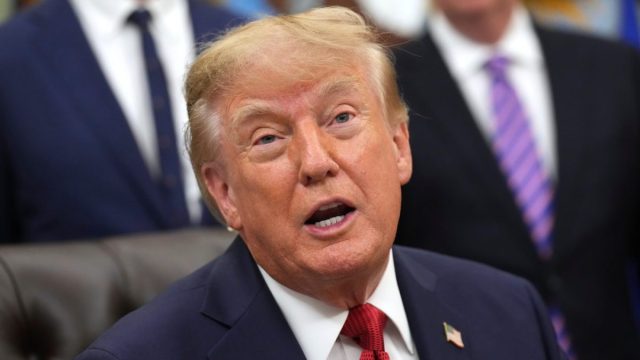
The $5,000 “Trump Dividend” remains a campaign promise that would require Congress. Separately, the administration says more than 20 million Medicare beneficiaries will receive $90 payments in October from an existing federal fund.
Donald Trump has found a midterm message even easier to understand than tax policy: money. He is promising Americans $5,000 checks if Republicans keep control of Congress, while his administration separately announced that more than 20 million Medicare beneficiaries will receive $90 payments just weeks before Election Day.
The two programs are not the same, and that distinction matters. The $5,000 “Trump Dividend” is still a campaign proposal. Trump has said every American adult would receive the payment if Republicans retain the House and Senate, but congressional leaders and budget experts say Congress would have to authorize it. The estimated cost could exceed $1 trillion.
The $90 Medicare payment, however, is much more immediate. The White House says eligible Medicare Part B beneficiaries will receive a one-time payment in October to help offset premium costs. More than 20 million seniors are expected to qualify, according to the Associated Press.
The administration says the money will come from the Medicare Improvement Fund, a roughly $2 billion account created to support improvements to the Medicare system. That fund has historically been used in federal budget negotiations and to finance changes to Medicare rather than to mail direct payments to beneficiaries.
Trump is presenting the $90 as immediate relief and what The Washington Post described as a down payment on his broader $5,000 dividend idea. Critics see something else: millions of checks arriving in mailboxes shortly before voters decide which party controls Congress.
There is no evidence that recipients are legally required to vote Republican or that the payment itself is conditioned on political support. That means it should not simply be described as buying votes. Governments routinely send benefits, refunds, rebates and emergency payments while elections are approaching because governments never stop operating during campaign season.
The timing is nevertheless impossible to separate from the politics. Trump has been explicitly campaigning on direct cash payments, and the Medicare announcement comes during an aggressive rally schedule aimed at rescuing Republican midterm prospects. Even the administration’s own framing connects the payments to the president’s broader affordability message.
It is a remarkably literal campaign strategy. Republicans have spent years arguing about inflation, taxes and the cost of living. Trump’s answer is increasingly: what if the government just sends you a check with my name politically attached to the idea?
The $5,000 proposal is the bigger promise and the shakier one. Trump unveiled it at the Republican midterm convention and has repeatedly told rally crowds that the payment will happen if the GOP holds Congress. House Speaker Mike Johnson later clarified that Congress would need to approve the money, contradicting suggestions that Trump could simply issue the payments himself.
Budget analysts have also questioned how the federal government would pay for it. Trump has pointed to tariff revenue and economic growth, while critics note the government is already running a large annual deficit. Vice President JD Vance has suggested wealthier Americans might ultimately be excluded, which means the exact shape of the “$5,000 for every adult” promise is already changing around the edges.
The Medicare payment is smaller but more concrete. The administration argues the fund gives it enough flexibility to make the payments without new legislation. Critics, including Democrats and some health-policy experts, question whether that is an appropriate use of money Congress created for Medicare-system improvements.
There is also precedent for presidents announcing popular economic relief near elections. Both parties have timed policy rollouts to maximize political benefit. The unusual feature here is how explicitly Trump is connecting direct payments to the electoral outcome he wants.
He is not merely saying Republicans will improve the economy eventually. He is saying Republicans win, Americans get $5,000. That is a campaign slogan with the subtlety of a giant novelty check.
The legal distinction remains important. The big payment cannot happen solely because Trump promises it at a rally. Congress controls federal spending, and Republican leaders would have to turn the pledge into actual legislation. The smaller Medicare payment is already moving through the executive branch under a separate funding rationale.
For seniors who receive $90, the immediate political debate may matter less than the fact that $90 is $90. For taxpayers and lawmakers, the precedent matters more: should presidents be able to repurpose specialized federal funds for direct payments shortly before an election, especially while campaigning on much larger checks?
That is the tension underneath what otherwise looks like the simplest story imaginable. One payment is real and imminent. One is a trillion-dollar campaign promise. Both are being sold under the same basic message: Trump wants voters thinking about money arriving before they think about the ballot.
The question is whether Americans see that as straightforward economic relief — or the federal government discovering that the oldest campaign tactic in history works even better when it comes with direct deposit.
Sources
- Associated Press — Trump announces $90 Medicare payments ahead of midterms
- The Washington Post — Trump announces plan to send $90 payments to millions of seniors
- Associated Press — Trump pledges $5,000 payments if Republicans retain Congress
- Associated Press — Speaker says Trump’s $5,000 dividend needs congressional approval