



A Diplomatic Moment With a Handrail
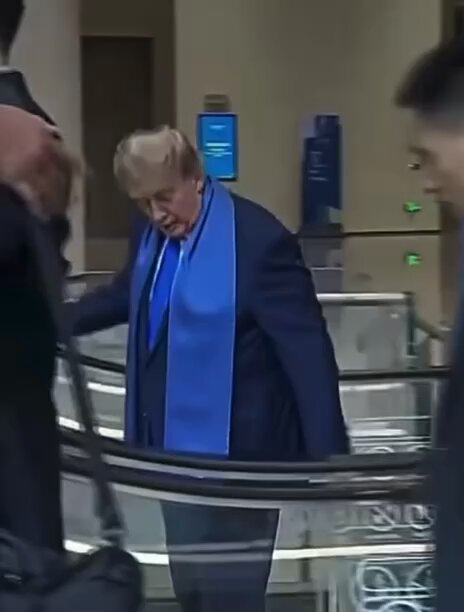
Diplomatic summits are supposed to produce carefully calibrated statements, official photographs and, when things go especially well, a joint declaration that nobody outside a foreign ministry reads. Donald Trump and Xi Jinping gave the world something more immediately digestible in Shenzhen: an escalator ride that turned into a miniature international incident on social media. After an APEC group photograph on November 19, Trump stepped toward an escalator and extended his arm back toward Xi. Xi reached for Trump’s forearm or wrist and stepped alongside him. The footage circulated widely because the gesture was unusual, not because either leader announced a new policy while riding upstairs.
It is tempting to describe the clip as two presidents holding hands, and some headlines did exactly that. The video supports a narrower account: Trump offered his arm, Xi made brief contact with it, and the two proceeded together. This is less romantic than the internet’s preferred interpretation, but still a remarkably intimate bit of stagecraft for leaders whose governments spend so much time arguing about trade barriers, advanced chips and security. Somewhere, a diplomatic protocol officer probably developed a sudden interest in elevator maintenance.
The scene happened at the Asia-Pacific Economic Cooperation gathering in Shenzhen, where Trump and Xi were meeting against the backdrop of a serious technological rivalry. Their governments have clashed over access to advanced semiconductors, export controls and the future of artificial intelligence. The summit was therefore not simply a chance to exchange pleasantries. It was a high-profile attempt to keep the world’s two largest economies from allowing their disagreements to overwhelm their relationship. The escalator clip made that larger story unusually visible, even if it revealed nothing about the negotiations themselves.
The Hug Before the Hand-Holding
The escalator wasn’t the only moment of conspicuous warmth. Xi personally greeted Trump at Shenzhen’s airport on November 18, and the two shared a brief hug near the aircraft stairs. Reporting described the airport welcome as an unusually notable gesture from the Chinese leader. Trump had previously greeted Xi in the United States, so the exchange also carried a clear element of reciprocity. Diplomatic hospitality is a language of its own, and Beijing was speaking in capital letters, complete with the ceremony, flags and carefully managed camera angles.
Trump appeared to appreciate the treatment. In a Fox News interview during the trip, he repeatedly praised the reception and described his relationship with Xi in warm terms. At their meeting, he referred to Xi as a friend and suggested that their personal rapport would help prevent problems between the two countries. That is an optimistic description of a relationship that contains a formidable list of actual problems. Friendly greetings do not automatically resolve export controls, security concerns or disagreements over China’s dealings with other countries. A hug is not a trade agreement, however enthusiastically it is photographed.
The spectacle was especially striking because Trump and Xi were appearing in the same diplomatic orbit as Vladimir Putin. The three leaders held an unusual summit focused in part on nuclear risks and international stability. Those are weighty subjects, and they should not be reduced to a viral clip. Still, the public presentation matters: governments use images to communicate who is welcome, who has influence and who appears comfortable in the room. A hand on an arm can become part of that story precisely because so much of the actual bargaining happens behind closed doors.
What the Pictures Cannot Tell Us
One useful way to read the video is to separate what it shows from what viewers project onto it. The visible interaction was brief and cordial. It does not establish that Trump needed physical assistance, that Xi was directing him, or that either leader was making a secret political point. Those theories can race around the internet faster than an escalator moves, but a few seconds of silent footage are not enough to support them. The more responsible observation is also the more interesting one: both leaders were comfortable enough to participate in an unusually informal exchange in full view of cameras.
Coverage from Shenzhen described the meeting as positive in tone while emphasizing that significant disagreements remained. China and the United States have competing interests in technology and trade, and neither side announced that a friendly airport reception had made those differences disappear. Even the summit’s wider trilateral discussions with Putin were accompanied by questions about how much substantive progress had been achieved. Diplomacy can produce powerful images long before it produces measurable results. That is one reason political leaders put so much effort into arranging the images.
For BuzzyTimes purposes, the clip is memorable because it compresses an enormous geopolitical relationship into an almost comically ordinary human moment. The president of the United States reached backward on an escalator; the president of China took his arm; millions of people were suddenly debating the etiquette of a moving staircase. The internet may never agree whether the interaction was assistance, courtesy or a little of both. The larger question is whether the leaders’ public warmth survives the next fight over chips, tariffs or security. Escalators, at least, have the advantage of knowing exactly which direction they’re going.
One final caution about the viral framing: viewers often encounter a cropped clip before seeing the surrounding footage or reading a complete account of the summit. That sequence encourages people to treat a single gesture as the defining event of an entire diplomatic visit. The hand contact is real and unusual enough to discuss, but its political meaning remains open to interpretation. The leaders’ subsequent statements, the governments’ published summaries and any concrete changes to trade or security policy will provide a much firmer basis for judging whether the friendly images marked a lasting shift or simply a carefully managed day of diplomacy.