



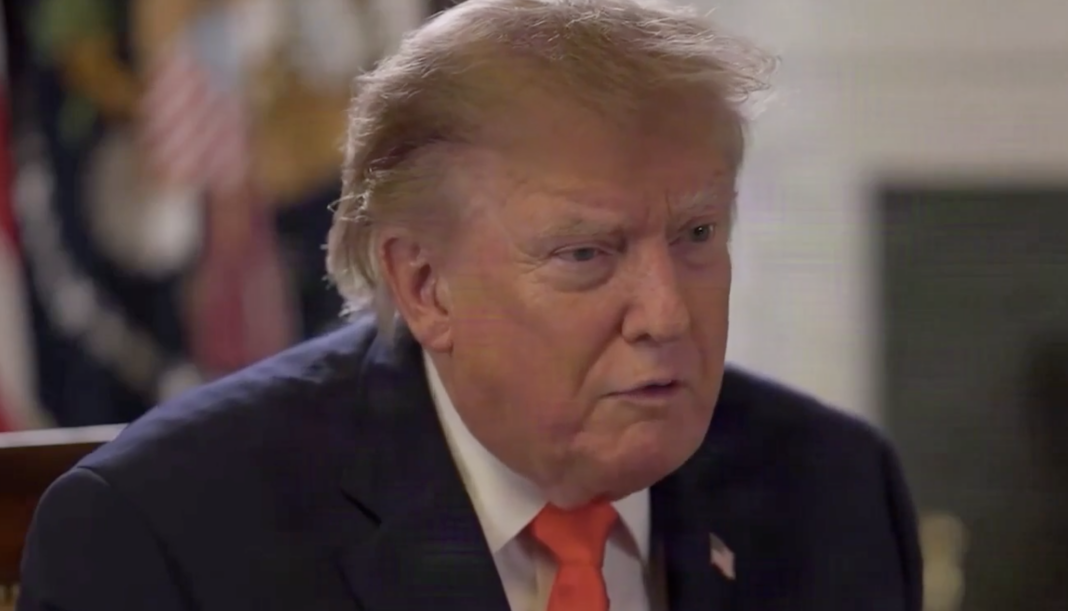
Trump spent the midterms telling voters to treat the election like a referendum on him. After Republicans suffered major losses, he immediately argued that the real problem was that he personally was not on the ballot.
Donald Trump spent the closing stretch of the midterms asking supporters to imagine one very specific thing: pretend he was on the ballot. Voters did exactly that, and after a sweeping Democratic night, Trump’s first major explanation was that Republicans lost because he was not actually on the ballot.
That is a fairly ambitious pivot even by modern campaign standards. For weeks, Trump made himself the center of the Republican message, endorsed candidates around the country and repeatedly told crowds that a vote for Republicans should be treated as a vote for him.
At rallies, Trump explicitly urged supporters to close their eyes and pretend his name was there. The strategy was not subtle, which is why the morning-after argument that his absence from the ballot explained everything landed with the force of a campaign slogan driving directly into its own parked car.
Democrats ended up flipping the House and Senate while winning several races in states Republicans had expected to hold. The Washington Post described the result as a sweeping rebuke of Trump and his party, with voters citing affordability, the Iran war and dissatisfaction with the economy among their concerns.
Trump responded on Truth Social by saying Republicans would have won “in a landslide” if he had been on the ballot. He later told The New York Times he was willing to accept the results, but he continued to separate his own political strength from the losses suffered by candidates he had campaigned for.
The contradiction is what makes the story so clean. Before Election Day, the message was essentially “this election is about me,” and after Election Day the message became “you cannot blame me because this election was not about me.”
Republican strategists were not universally buying the distinction. Some openly described the results as a rejection of Trump’s agenda and warned that his personal style and policy choices had become liabilities in states that had once looked safe.
Democrats, naturally, were delighted to use Trump’s own pre-election language against him. If the president had asked voters to treat Republican candidates as stand-ins for him, Democrats argued, then he could not suddenly demand a recount of the metaphor when the stand-ins lost.
There are legitimate structural reasons presidents often struggle in midterms, and Trump’s name not literally appearing on the ballot may have reduced turnout among some supporters who vote mainly for him. But that is different from pretending the president had not spent a month personally nationalizing the races.
The political problem for Republicans is that both explanations can be bad at the same time. If Trump is so uniquely powerful that his voters disappear when he is absent, the party has a turnout problem; if voters did treat the election as a Trump referendum, the party has an approval problem.
Either way, Trump managed to create the morning-after headline himself. He told America to pretend he was on the ballot, America voted, and then he immediately asked everyone to stop pretending.