



The Kennedy Center’s dispute over Donald Trump’s name has now become entangled with a $257 million renovation and the closure of most of the building. The board voted to close the performing arts complex for renovations after months of legal and political conflict over whether Trump’s name could be added to the congressionally established memorial. Then Trump said the renovation would not proceed unless an appeals court overturned the ruling blocking the name change.
The sequence is important. A judge blocked the naming effort. The board later voted to close the center, citing financial and building concerns. Trump then explicitly connected the renovation schedule to the naming appeal. That does not prove the court ruling caused the closure. The board had separate arguments about the condition of the building. It does establish that the president himself linked the future of the renovation to the legal fight over his name.
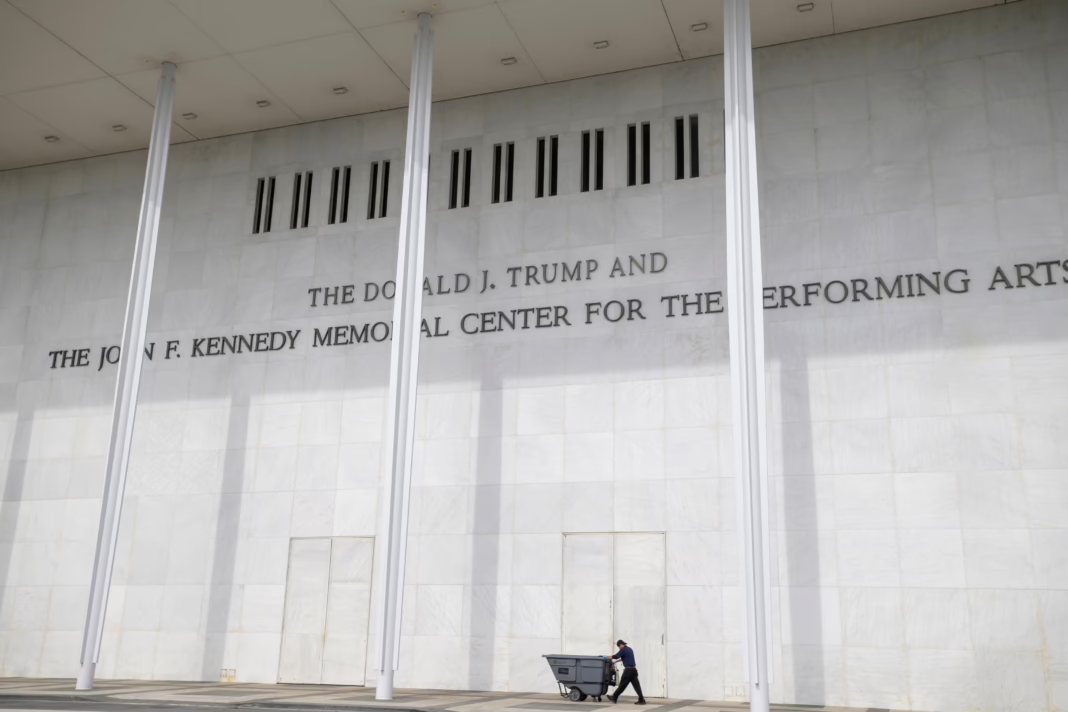
The underlying legal question is unusually concrete. Congress created the institution as the John F. Kennedy Center for the Performing Arts. U.S. District Judge Christopher Cooper ruled that the board could not unilaterally change the congressionally designated name. Earlier this year, the center was ordered to remove references to Trump from its website and facade. The administration and the Trump-aligned board have continued to challenge that result.
Meanwhile, the renovation is not a small maintenance project. Congress appropriated roughly $257 million for work on the center. The Guardian and New York Post both reported on the board’s closure vote and Trump’s position that renovation should wait on the appeal. At that point, the dispute stopped being only about signage. It became a question about whether public money already allocated for repairs would remain tied up while a naming case moves through the courts.
The board says the building needs substantial work and has cited structural, financial and safety concerns. Critics dispute parts of that account and have challenged the closure in court. Those disagreements should not be flattened into a claim that the center is either perfectly healthy or on the verge of collapse. The factual point is that the board has chosen closure and the condition of the building is part of ongoing litigation and public argument.
Trump’s involvement makes the story more complicated because he is not a distant president commenting on a cultural institution. He became chair of the Kennedy Center board after reshaping its leadership. His allies supported adding his name. He has personally promoted the renovation. Now he is saying that work should not proceed if the courts do not permit the recognition he wants. Each piece of that sequence is part of the same institutional dispute even if the legal questions are technically separate.
A private venue could settle a naming fight by changing a plaque and calling a donor. A federal memorial is different because Congress, federal law, public money and the courts all have roles. That is why the argument has become so stubborn. The board controls operations. Congress controls the statutory name and appropriations. Courts interpret the limits. The president controls neither of those other branches, even while chairing the board.
The appeals court may eventually side with Trump or leave Cooper’s ruling intact. Either way, the building still needs a decision about its future. The most important question is no longer simply whether Trump’s name appears on the facade. It is whether a naming dispute can delay a congressionally funded repair project for a national cultural institution. If the courts ultimately say the name cannot be added, will the Kennedy Center renovation proceed anyway?
The timing matters for artists, employees and audiences too. A closure for major renovations affects bookings, contracts, touring schedules and staff planning long before the first construction crew arrives. When the legal status of the renovation becomes uncertain, those people have to plan around a building whose operating future depends on both engineering decisions and appellate litigation.
The naming dispute is unusually durable because it involves symbolism and statutory power at the same time. A plaque can look trivial compared with a quarter-billion-dollar construction project, but the name is the part Congress explicitly controlled when it created the memorial. That makes the fight over the facade a test of who gets to decide what a national institution is called, not merely a disagreement over branding.
The renovation money adds an accountability question. If Congress appropriated funds for repairs, lawmakers will want to know whether delays are being driven by construction needs, litigation, management choices or the naming dispute. The public can evaluate those explanations only if the board and administration keep the separate reasons clear instead of allowing them to blur together.
There is a governance issue underneath the spectacle as well. The Kennedy Center board has operational authority, Congress created the memorial and controls federal appropriations, and the judiciary is deciding where the board’s naming power stops. A durable solution has to fit all three. If the board proceeds as though the statute is optional, the courts can intervene. If Congress dislikes the result, it can change the law. Until one of those paths resolves the dispute, management decisions about the building will continue to carry a legal shadow.