



CNN, MS NOW and Politico had their credentials temporarily restored by a federal judge, but CNN and MS NOW reporters still faced restrictions when they tried to cover Xi Jinping’s state-dinner arrivals.
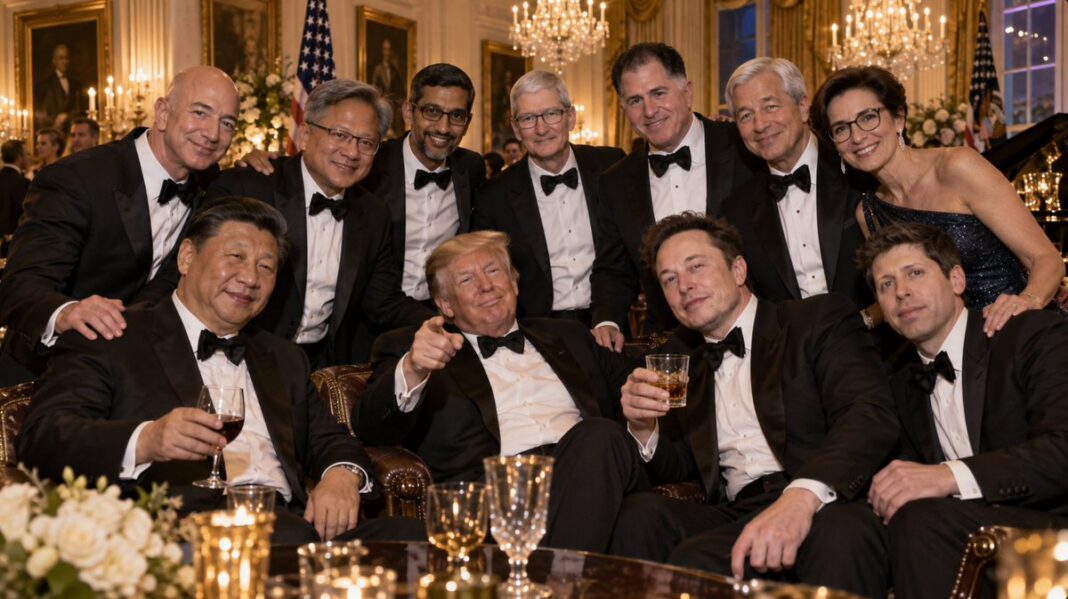
President Donald Trump spent Thursday hosting Chinese President Xi Jinping for a state visit filled with diplomacy, ceremony and a lavish White House dinner. Meanwhile, several American reporters were outside arguing about whether a federal court order meant they were actually allowed to walk through the door. International statecraft, meet the press-pass desk.
The dispute stems from Trump’s decision to ban CNN, MS NOW and Politico from White House grounds over coverage he considered unfair. The three outlets sued, arguing the government had retaliated against them because of their reporting. A federal judge then issued a temporary restraining order requiring the White House to restore their credentials for 14 days.
For a few hours, that seemed to settle the immediate question. Axios reported that journalists from the outlets were readmitted to the White House after the ruling. But the truce became considerably less tidy when Xi’s state visit reached its evening spectacle.
CNN and MS NOW reporters said they were denied access to cover arrivals for the state dinner despite the judge’s order restoring their credentials. CNN reported that the White House attempted to dictate which types of its journalists could cover the event, while MS NOW correspondent Laura Barrón-López reported from outside after being denied entry to parts of the day’s coverage.
Politico’s overall credentials were also restored, though the specific state-dinner access dispute reported Thursday night centered primarily on CNN and MS NOW. That distinction matters because having a valid White House credential does not automatically guarantee entry to every event. Administrations routinely use limited pools, rotating seats and event-specific access rules because some spaces cannot accommodate the entire press corps.
The legal fight is over whether those ordinary access rules were being applied neutrally or used to continue punishing outlets after a judge had told the administration to restore their access. CNN, MS NOW and Politico argue the original ban violated constitutional protections because it targeted them based on the substance of their coverage.
The White House has defended its authority to manage press access and has repeatedly accused the outlets of unfair or false reporting. Trump has also made clear that he personally dislikes their coverage. A district judge found enough merit in the outlets’ due-process arguments to temporarily block the ban while the case proceeds.
That is why Thursday’s state-dinner dispute became more than a scheduling squabble. If the court says the outlets must be readmitted but the White House can still exclude their reporters from major events through event-by-event decisions, the practical meaning of the court order becomes much more complicated.
The timing could hardly have been more visible. Xi was making a high-profile state visit to Washington, complete with a formal arrival ceremony, meetings with Trump and a dinner attended by prominent American business leaders. Under normal circumstances, every network would be fighting over camera angles and live shots. Instead, part of the story became which networks were standing outside.
This latest fight follows days of escalating tension between the White House and the press corps. Major television networks had suspended pooled White House video coverage in response to the original ban, leaving portions of Trump’s public schedule without the normal shared television feed. The White House responded by pushing its own video operation while the banned outlets took the matter to court.
The judge’s temporary order appeared to offer a path back toward normal access. Instead, the Xi visit immediately tested the limits of what “restored” actually meant. By Thursday evening, CNN anchors were simultaneously covering U.S.-China diplomacy and explaining that their own reporters had just been blocked from covering the dinner arrivals.
There are legal questions here that extend beyond whether anyone likes CNN, MS NOW, Politico or Donald Trump. The White House has broad authority to control physical security and event logistics. Courts have also recognized that once the government creates a system for press access, it cannot necessarily revoke credentials in an arbitrary or viewpoint-discriminatory way.
The lawsuit will determine how those principles apply to Trump’s ban. The dinner dispute creates a more granular question: even if credentials must be restored, how much discretion does the White House retain over access to specific events?
That question is now playing out in one of Washington’s favorite formats — emergency filings, temporary orders and reporters narrating their own inability to enter the building they cover. Xi came to Washington to discuss trade, artificial intelligence and global security. Somehow, the seating chart still managed to become part of the geopolitical news cycle.
The larger issue is whether the temporary court order actually restores meaningful access or merely restores the badge. If a reporter has the credential but can still be selectively excluded from the biggest events, how much has really changed?