



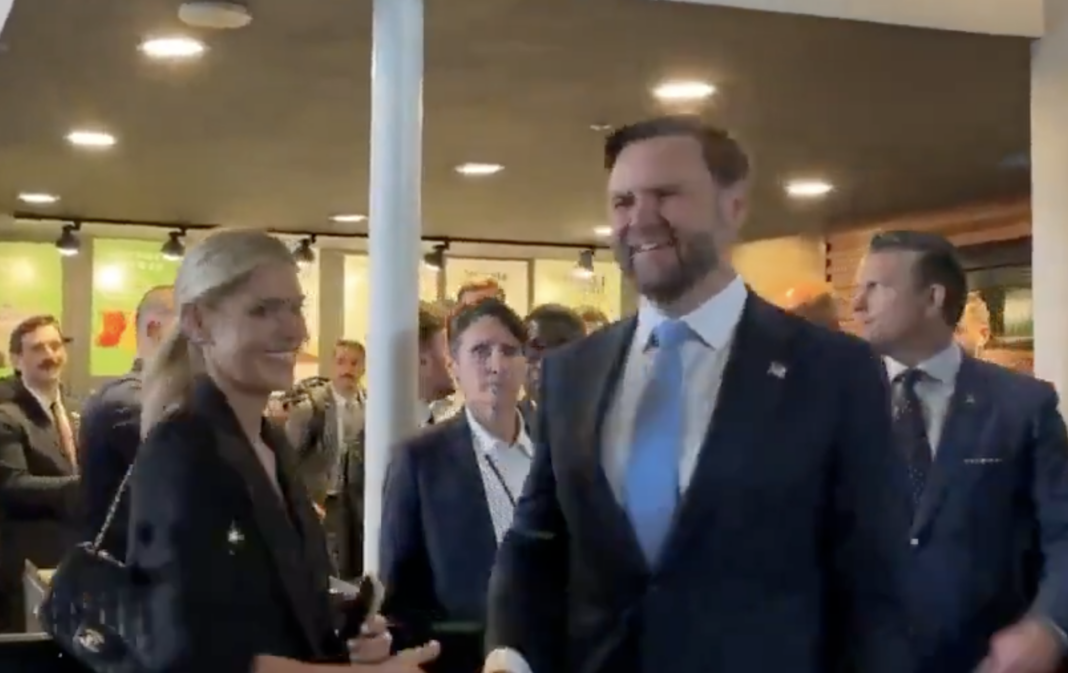
Vice President JD Vance and Defense Secretary Pete Hegseth visited National Guard troops at Washington’s Union Station in August 2025, accompanied by White House deputy chief of staff Stephen Miller. The officials shook hands, thanked service members and handed out food at a Shake Shack. Protesters responded with jeers and chants of “Free DC!” It was a classic Washington photo opportunity, except the background soundtrack declined to cooperate. A visit intended to project gratitude and order became a public argument about why troops had been deployed to a major American city in the first place.
The Trump administration had sent National Guard troops into the capital as part of an anti-crime initiative. Supporters said the deployment would improve safety and restore confidence. Critics questioned the scale of the response, the need for military personnel and the effect on local authority. Reuters described the visit as an unusual scene, with senior administration officials greeting troops not in a foreign combat zone but in a busy transit hub. The Guardian reported that Vance praised the troops and defended the deployment while protesters shouted nearby. The clash was about more than a burger, although the burger received a remarkable amount of attention.
Vance told the soldiers they were doing a good job and urged them to ignore the protesters. Miller called the demonstrators “stupid white hippies,” according to Reuters. That line was not a sophisticated response to questions about federal authority, crime statistics or the mission of the National Guard. It was an insult delivered at a photo opportunity. The demonstrators were not necessarily offering a detailed policy paper either. But public officials can choose whether to answer opposition with an argument or a label. The administration’s response made it easier for the exchange to become a culture-war clip instead of a discussion about the deployment.
There is a perfectly reasonable reason to thank service members for doing the jobs assigned to them. The soldiers did not design the policy. They were carrying it out. That is what made the staging so politically delicate. By placing troops at the center of a publicity event, the administration invited audiences to connect respect for the soldiers with support for the mission. Protesters who objected to the mission could then appear to be objecting to the people serving. That is a familiar trap in American politics, and it works in both directions. A uniform should not have to serve as an argument for every decision made above it.
The Guardian subsequently reported that a White House social video of the visit used music and official remarks over moments when other footage captured the boos. Editing is a normal part of producing a short video. It also matters what an edit removes. A viewer watching only the official version could come away with a different impression of the reception than someone who saw the contemporaneous footage. The disagreement is not whether Vance thanked the troops. He did. It is whether the public should also see that some of the public strongly objected. Washington has always had a talent for choosing its camera angles. Digital video simply makes the choice faster.
What remains is the policy question that neither burgers nor boos can resolve. Did the deployment make residents safer, and were its costs and consequences justified? The administration can point to its priorities and evidence of results. Critics can challenge that evidence and explain what alternatives they prefer. Those arguments are more useful than a staged lunch that becomes a referendum on who can shout louder near a counter. The troops eventually had to return to their duties. The officials left with footage. Residents were left with the same question they had before the visit.
What evidence should determine whether deploying troops in the capital was effective, rather than the applause or boos at a photo opportunity?