



The White House now has a round-the-clock Trump stream just as the traditional television pool has stopped providing pooled video after CNN was barred from doing its scheduled turn.
The White House spent the weekend fighting with major news organizations over who gets to cover Donald Trump. By Monday night, it had also launched its own 24-hour channel devoted to Donald Trump.
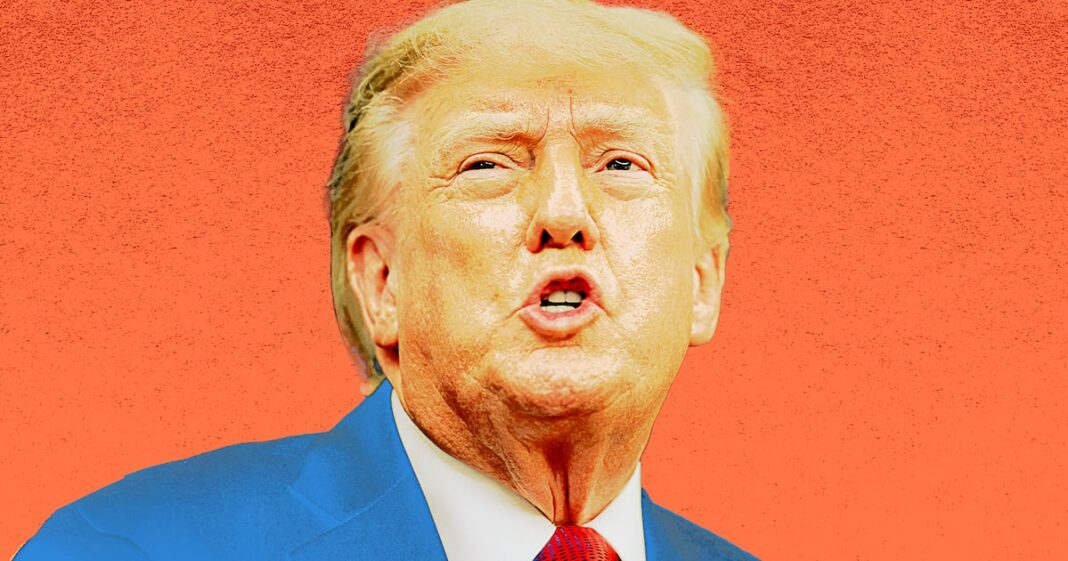
Welcome to TRUMP TV: The Essentials Station, an official White House stream promising speeches, announcements, archive footage and administration highlights around the clock. The White House says the channel will collect the administration’s “biggest moments” in one place and keep the stream updated in real time.
The timing could not be more on-brand if somebody storyboarded it.
Trump announced days earlier that CNN, Politico and MS NOW were banned from the White House because he considers their coverage dishonest and unfair. The three organizations then sued the administration, arguing that stripping access in retaliation for coverage violates the First Amendment and due-process protections.
Then the television pool broke down.
Five major television networks — ABC, CBS, CNN, Fox and NBC — normally rotate responsibility for providing pooled video of presidential events. CNN was scheduled to handle the pool on Monday. Because the White House would not allow CNN to fulfill that assignment, the other networks declined to replace it, suspending pooled television coverage rather than operate a system in which the administration could remove one participant and expect the others to quietly fill the slot.
That does not mean ABC, CBS, NBC and Fox have stopped covering Trump entirely. They still report on the president. Their correspondents can still produce stories. Other members of the White House press pool are still working. What stopped was the shared television-pool operation that supplies live or near-live video when space and logistics make it impossible for every network to put its own camera in the room.
That distinction may sound technical until the president travels. Pool footage is how huge portions of the news ecosystem see events that only a small number of journalists can physically attend. When the pool camera disappears, there can be no neutral shared video feed from moments that would ordinarily be documented automatically.
Axios reported that Trump’s trip to the United Nations would proceed without the normal pool television camera after the networks declined to provide a substitute for CNN. CBS likewise reported that the television pool had been suspended for the time being.
And into that gap rolled Trump TV.
The official White House video page lists the channel by name. The initial programming included past Trump speeches and administration footage rather than a traditional independent news broadcast. White House digital officials are presenting it as direct access to presidential moments they say established news organizations ignore, distort or fail to air.
There is nothing inherently unusual about a White House distributing its own video. Administrations have operated official websites, social accounts, livestreams and promotional channels for years. Presidents of both parties routinely publish polished clips designed to present policy in the most favorable possible light.
The unusual part is the collision of events: Trump bars three major outlets; those outlets sue; the existing network pool refuses to work around the ban; and the White House launches a branded 24/7 Trump stream during the same media standoff.
That creates two competing models of presidential coverage sitting side by side. One is independent press access, where reporters decide what is newsworthy, ask questions the government may dislike and share footage with competitors. The other is a government-controlled stream where the White House chooses the clips, framing and sequence itself.
The White House argues that physical access is a privilege and that outlets it considers dishonest are not automatically entitled to enter the complex. The banned organizations argue that once government press access is distributed, officials cannot punish specific outlets because they dislike editorial coverage. That legal fight is now in federal court.
The new channel does not solve that constitutional dispute. Government video is not a substitute for independent journalists being physically present, because the person holding the camera — and deciding when to turn it on — matters. At the same time, Trump’s supporters are likely to see the channel as an obvious workaround to a media system they already distrust.
Which means the White House now has exactly the sort of communication environment Trump has spent years building toward: fewer intermediaries, direct distribution, a channel bearing his name and an audience invited to bypass traditional news organizations completely.
The result is a very 2026 Washington scene. The networks are fighting over who gets to point a camera at the president. The president is fighting over who gets through the gate. Three newsrooms are in court. And somewhere in the middle of it all, Trump TV is playing another Trump clip because, unlike the press pool, it never has to rotate out.
Is an official White House stream useful direct access to the president, or does it become fundamentally different when independent news organizations are simultaneously losing physical access?