



The reporting is explosive, but the guardrails matter: Collins denies wrongdoing, the FBI says it ultimately found nothing implicating her, and the documented illegal donation came through people around a defense contractor and a pro-Collins super PAC.
A previously undisclosed FBI corruption investigation was circling a defense contractor, political donations and the orbit of Republican Sen. Susan Collins before the case fell apart — and the underlying money trail is complicated enough that this story needs both eyebrows raised and the brakes firmly attached.
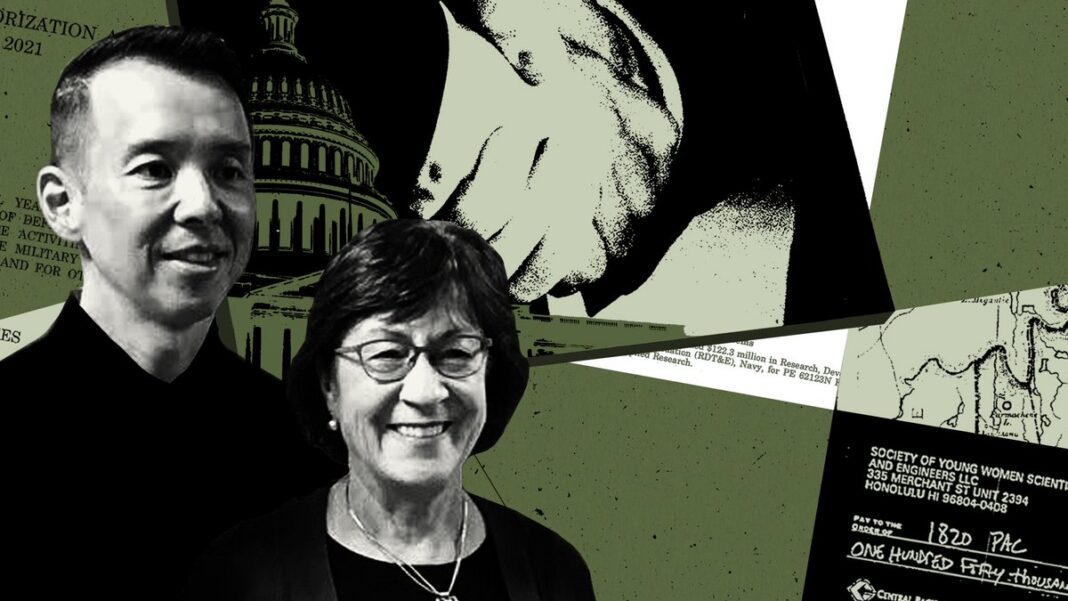
ProPublica reports that FBI anti-corruption investigators had been examining dealings involving Navatek, a defense contractor that received federal work, and political giving tied to Collins’ 2020 reelection effort. The investigation was exploring whether a broader pay-to-play scheme existed involving federal contracts and political contributions.
The central figure was former Navatek CEO Martin Kao. Kao previously admitted to campaign-finance crimes involving conduit contributions and a $150,000 donation that federal records later established had actually come from Navatek through a shell entity. The money went to 1820 PAC, a super PAC that supported Collins.
That part is not merely an accusation in a new article. Federal Election Commission records describe Navatek as the true source of the $150,000 contribution and recount Kao’s guilty plea involving efforts to circumvent campaign-finance restrictions.
The newly reported question is how far the conduct extended — and what, if anything, Collins or people close to her knew.
According to ProPublica’s reporting, Scott Reed, who headed the pro-Collins super PAC, met with Navatek executives in 2019 and sought a much larger contribution. Kao later sent the $150,000 through a shell company. ProPublica reports that Kao told investigators there was an understanding connecting political support and future federal contracts.
Collins vigorously denies bribery or pay-to-play allegations. Her office says it cooperated with investigators and that improper donations were returned once they were discovered. The FBI, for its part, told ProPublica that it ultimately found nothing implicating Collins or her campaign.
Those statements are not footnotes. They are the line separating an explosive investigation from an established criminal case against a senator. There is no public charge accusing Collins of taking a bribe. There is no conviction finding that she traded federal money for campaign support. The FBI says its investigation did not ultimately implicate her.
But the underlying facts around the donation were serious enough to trigger federal enforcement. Government contractors face restrictions on political contributions for the obvious reason that Washington would become a very different place if companies could openly write campaign checks while negotiating over taxpayer-funded contracts.
Navatek was pursuing federal defense work. Collins held significant influence in the Senate and helped secure funding for work associated with Maine. A super PAC supporting her received $150,000 that federal authorities later determined actually originated with Navatek through a shell company. That is precisely the kind of arrangement that causes federal investigators to start asking who knew what, and when.
ProPublica reports that FBI investigators were preparing to push deeper into the matter in late 2024, including examining a wider network of politicians and defense-contracting relationships. Then the investigative team was disrupted after Trump returned to office and the anti-corruption unit was reshaped. The inquiry did not proceed as investigators had planned.
It would be easy to turn that timing into a neat conspiracy story. The evidence is messier. Personnel changes at the FBI were real. The probe did not continue in the same form. But that does not itself prove anyone in the Trump administration killed the case specifically to protect Collins. The available reporting describes disruption and termination of investigative work, not a documented order from Trump saying, in effect, make this Collins problem disappear.
The case is also a reminder of why political-money stories are so hard to explain in headline-sized chunks. Collins’ campaign, a super PAC supporting Collins, Navatek, Kao and the shell entity are legally distinct actors. Money moving to a super PAC is not the same thing as money moving into a candidate’s personal bank account. And a senator helping a company obtain federal work is not, by itself, bribery. Members of Congress advocate for projects in their states constantly.
The criminal line is quid pro quo: money or something of value exchanged for official action. ProPublica’s reporting says investigators were exploring whether evidence pointed toward such an arrangement. Collins says it did not. The FBI says its work ultimately found nothing implicating her.
So the remarkable part is not that a senator has suddenly been proven corrupt. She has not. The remarkable part is that a contractor tied to a confirmed illegal $150,000 political contribution was also at the center of an FBI bribery investigation examining the political network around one of the Senate’s most prominent Republicans — and the public is only now learning how far investigators were prepared to go.
When an investigation involving illegal political money is shut down before the public sees its full scope, how much of the underlying investigative record should eventually become public?