



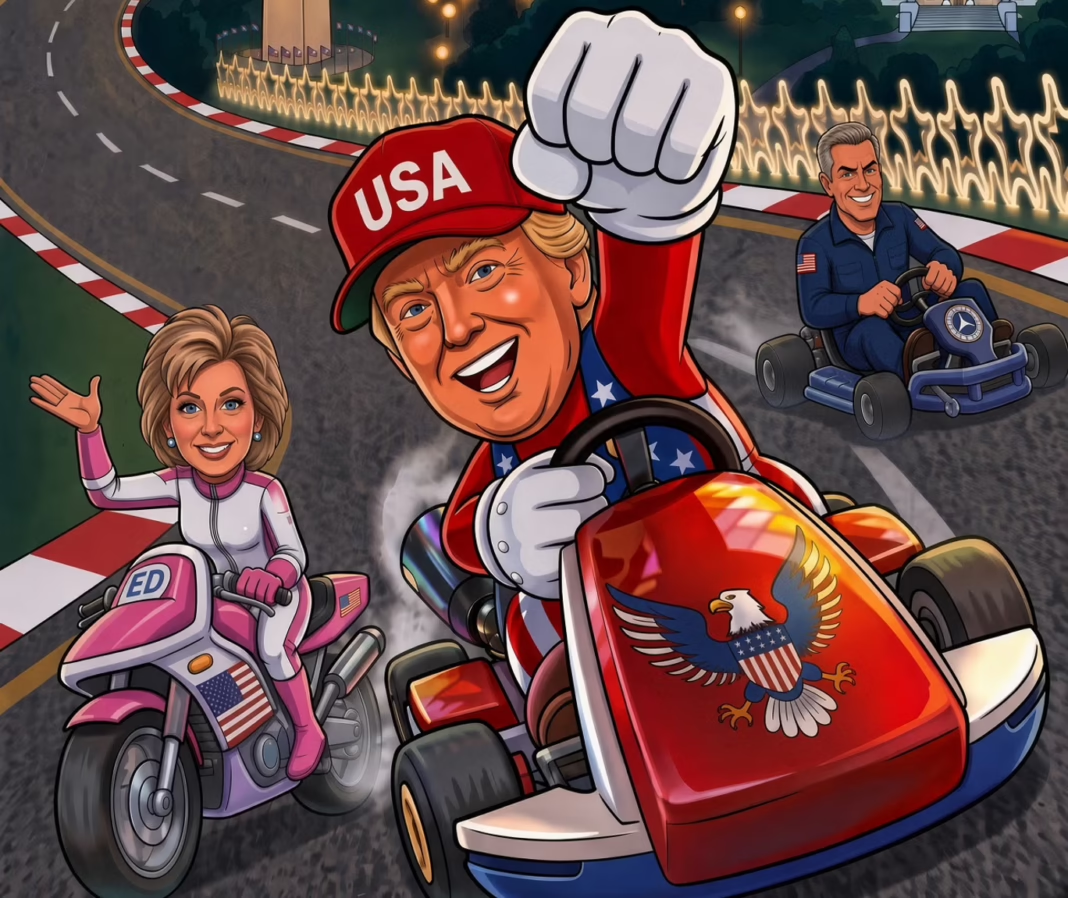
The Department of Education used artificial intelligence to promote the Freedom 250 Grand Prix and accidentally created a federal civics quiz. The image was supposed to show Donald Trump, Education Secretary Linda McMahon and Transportation Secretary Sean Duffy racing in a Mario Kart-style scene. Instead, viewers spent the day asking whether the other figures looked like Hillary Clinton, Jeffrey Epstein or somebody else entirely. The Independent reports that even AI systems shown the government image disagreed about who it depicted. Official Washington has reached a useful milestone. The government is now generating synthetic portraits of its own cabinet that other computers cannot identify.
The intended identities were not secret. Department logos on the vehicles made the assignment clear, and the post promoted this weekend’s Freedom 250 race on the National Mall. The problem was execution. Millions viewed the image, and the resemblance questions quickly overwhelmed the event it was supposed to advertise. The Independent asked several AI tools to identify the faces. Perplexity reportedly suggested Trump, Hillary Clinton and Gavin Newsom. Gemini offered Trump, Elizabeth Warren and Ed Markey. This is not a strong showing for a technology currently being sold to government as a tool for efficiency. A staff photographer would at least know what Sean Duffy looks like.
The event itself is real and elaborate. The Washington Examiner reports that the Freedom 250 will use a 1.7-mile, seven-turn course in Washington, run 147 laps and distribute about 100,000 free tickets through a lottery. Roughly 60 sponsors are attached. That is more than enough material for a government communications team. Cars. Cabinet officials. The National Mall. An America 250 celebration. Somehow the chosen method still involved asking a generative model to invent human faces and trusting the output enough to post it from an official federal account.
The administration’s broader enthusiasm for AI makes the mishap more than a funny picture. Generative systems can produce copy, images and video quickly, which is attractive to political communications shops that need a constant stream of content. They can also invent details, deform faces and produce exactly the kind of confusion a communications office exists to prevent. In this case, nobody is debating a subtle factual hallucination buried in a report. The output failed at the most basic promotional task. Here are three people. Please make them look like those three people. The machine returned something closer to a political Rorschach test.
There is also an institutional question about why federal departments increasingly communicate like campaign meme accounts. A Grand Prix can be promoted with a photograph, a map, a schedule or a graphic designed by a person. The AI image was chosen because synthetic content has become part of the political aesthetic. It is cheap, fast and visually loud. That works until the audience spends more time identifying the accidental celebrity than understanding the message. At that point efficiency becomes a false economy. The taxpayer may have saved design time and purchased an entire day of explanations.
The choice of department makes the graphic even better. The Department of Education is an institution associated, at least in theory, with literacy, standards and checking the work before turning it in. Its promotional image became a public exercise in identifying obvious output errors from a generative model. That does not mean Education staff are uniquely careless. It means AI changes the cost of producing content faster than it changes the cost of verifying it. A polished image appears in seconds, which makes review feel optional right up until millions of people inspect the faces more closely than the person who posted them. The technology saves the first five minutes and can create the next five hours of communications work.
There is an irony in the administration using synthetic imagery for an event built around physical spectacle. Racing is attractive because machines, noise, speed and human skill are visible. Washington is full of actual monuments and actual cabinet secretaries. The Grand Prix has actual cars, sponsors and a course. None of that required fabrication. The AI layer was there to add style, not information, and style is precisely where it failed. This is a recurring problem with generative content in politics. It is deployed not because reality is unavailable but because reality is insufficiently meme-shaped. Once government starts preferring the synthetic version of its own officials, it inherits the obligation to make sure the synthetic officials at least resemble the people drawing federal salaries.
Government agencies have spent the AI boom promising that these tools can make public communication faster, cheaper and more inventive. The Grand Prix image supplied an unusually concise warning label. Generative systems are very good at producing something that looks intentional before anyone has checked whether the intention survived. In a private group chat, that creates a weird picture. In an official government promotion featuring cabinet officials and the president, it creates a public guessing game about who the government itself meant to depict. The efficiency case gets weaker when the time saved generating the image is spent explaining why the image resembles entirely different famous people.
No great national harm came from a strange racing graphic. That is exactly why it is useful. Small failures reveal habits without requiring a crisis. The Department of Education wanted attention and got it, but not for the reason intended. The administration wants AI to signal modernity, speed and technological confidence. The image signaled that nobody involved felt compelled to ask whether the faces looked like the officials whose names were on the post. If this is the standard for harmless promotional material, the question becomes what review looks like when the output matters more.
If an official federal promotion needs agency logos to explain which officials the AI meant to draw, what exactly did artificial intelligence improve?
Sources
The Independent: “Is that Epstein?” Head-scratching AI pic teasing Trump’s DC Grand Prix has folks wondering who’s who
Washington Examiner: Fans, fast cars, and Freedom 250: The sponsors behind the DC Grand Prix
Washington Examiner: Meet the Duffies: Trump’s transportation secretary takes his family on a romp through America