




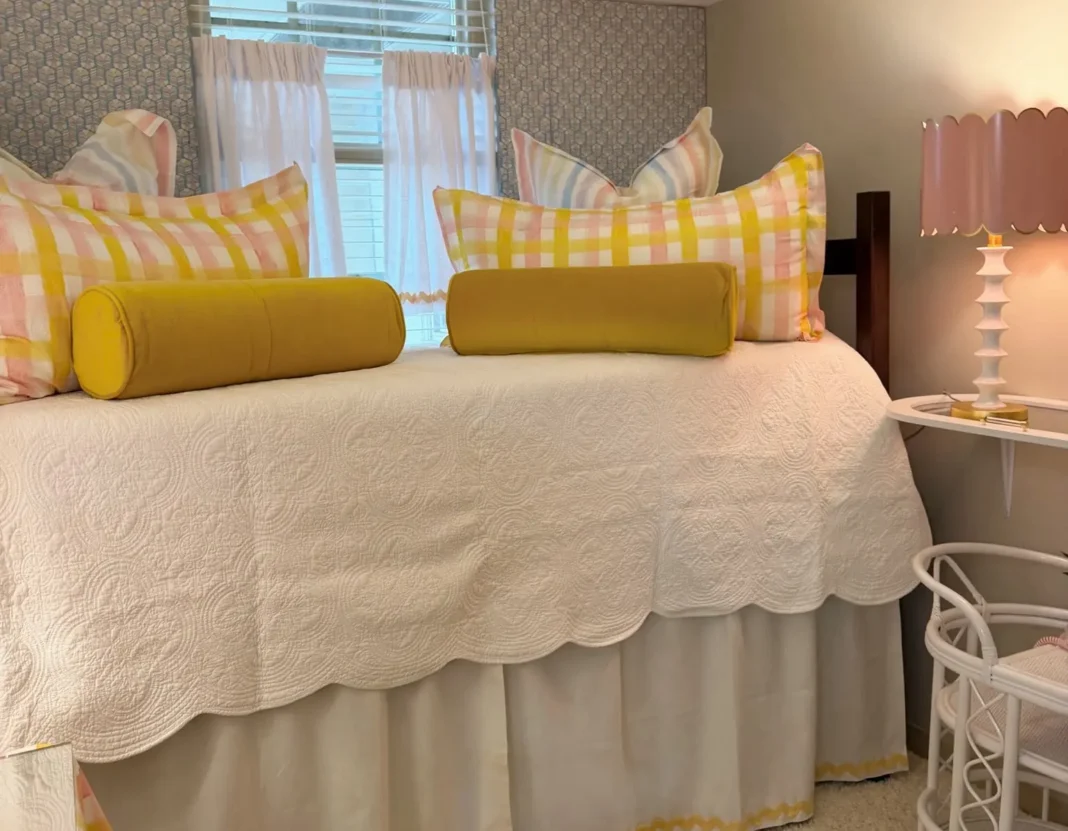
Fox News devoted a Friday segment to the rise of luxury dorm rooms, with a Gen Z influencer explaining a college move-in trend that has turned the humble twin XL mattress into an interior-design emergency. Dorm life used to begin with a plastic laundry basket, a desk lamp and the discovery that your roommate owns a microwave that smells like soup. Now the internet would like the room to have a concept.
College already comes with tuition, fees, books, meal plans, transportation and a small encyclopedia of optional expenses that stop feeling optional the moment everybody else has them. Luxury dorm culture adds a new line item that is difficult to quantify because it arrives disguised as aesthetics. Nobody sends a bill marked social-media-ready bedding. The algorithm just keeps showing you rooms that make yours look unfinished.
The trend sits inside a larger social-media economy built around move-in reveals, shopping lists and highly coordinated spaces. The basic dorm has not become larger. The expectations placed inside it have. Students and parents can now approach a temporary shared room with the visual ambition of a boutique hotel, because apparently the first lesson of higher education is that cinder block can be defeated with enough throw pillows.
The target is the consumer machine around college, not students who want a pleasant room. Four years away from home can be intimidating, and making a space comfortable is reasonable. The absurdity is how quickly comfort becomes another competitive category. Once every dorm reveal is content, the room is no longer merely where a student sleeps. It is evidence that move-in was executed correctly.
There is also something wonderfully temporary about the whole enterprise. Dorm rooms are designed to be left. Students move out after a year, sometimes after a semester. The walls cannot be permanently changed. Furniture belongs to the school. The luxury makeover is therefore a high-effort attempt to create permanence inside a room whose central feature is institutional impermanence.
Maybe that is why the trend works. College is uncertain. A perfectly arranged room creates the illusion that at least one part of the experience is under control. The danger is when the illusion becomes another standard families feel required to buy. Freshmen already arrive worried about grades, friends and belonging. They should not also need to wonder whether their command hooks are giving enough.
The trend also reflects how childhood milestones have become public productions. Promposals, graduation shoots, college reveals and move-in days all now arrive with visual templates. A dorm room is simply the latest stage set. Families are not only preparing a student to live away from home. They are preparing a photograph of what living away from home is supposed to look like.
That can create a quiet class divide. Some families can treat coordinated bedding, custom storage and decorative upgrades as fun extras. Others are already stretching to cover tuition and transportation. Social media places the two rooms side by side without displaying the budgets behind them. The result can make luxury consumption look like the baseline rather than the exception.
The most useful dorm room remains the one a student can actually live in. Somewhere to sleep, study, store clothes and close the door after an exhausting day. If it also looks beautiful, wonderful. But college is already an expensive transition into adulthood. It does not need a design requirement added by people who will never help carry the mini-fridge upstairs.
The reason college dorm rooms now apparently require a creative director works as more than a one-day headline is that the underlying incentive does not disappear when the news cycle moves on. The people and institutions involved are being rewarded for a particular kind of behavior, whether that reward is attention, political loyalty, money, status or the comfort of avoiding a harder decision. That is the thread worth watching after the immediate controversy cools. A single episode can be dismissed as bad luck or bad optics. A repeated incentive becomes a governing or cultural habit. The useful test is not whether everyone involved can produce a defensible explanation. Most public controversies come with one. The useful test is whether the explanation would still sound reasonable if the names and teams were reversed. That is where satire earns its keep. It strips away the jersey and leaves the behavior sitting there by itself. The next development will matter because it will show whether this was an exception that embarrassed the people involved or a model they intend to keep using. If the same logic appears again, the story stops being an oddity and becomes a pattern. If the people involved change course, that is evidence too. That is why the closing question matters here: When moving into a dorm starts looking like a luxury-home reveal, how much childhood is left before college even begins? Public life is full of arguments about motives that cannot be proved. Behavior is easier to judge. Watch what gets repeated, what gets rewarded, what gets quietly abandoned, and who is asked to absorb the cost. Those details usually tell the story more clearly than the slogans do.
When moving into a dorm starts looking like a luxury-home reveal, how much childhood is left before college even begins?
Sources
Fox News: Gen Z influencer explains luxury dorm room trend
New York Post: Interior decorator torn to shreds on social media after sharing a $20K a dorm room makeover