



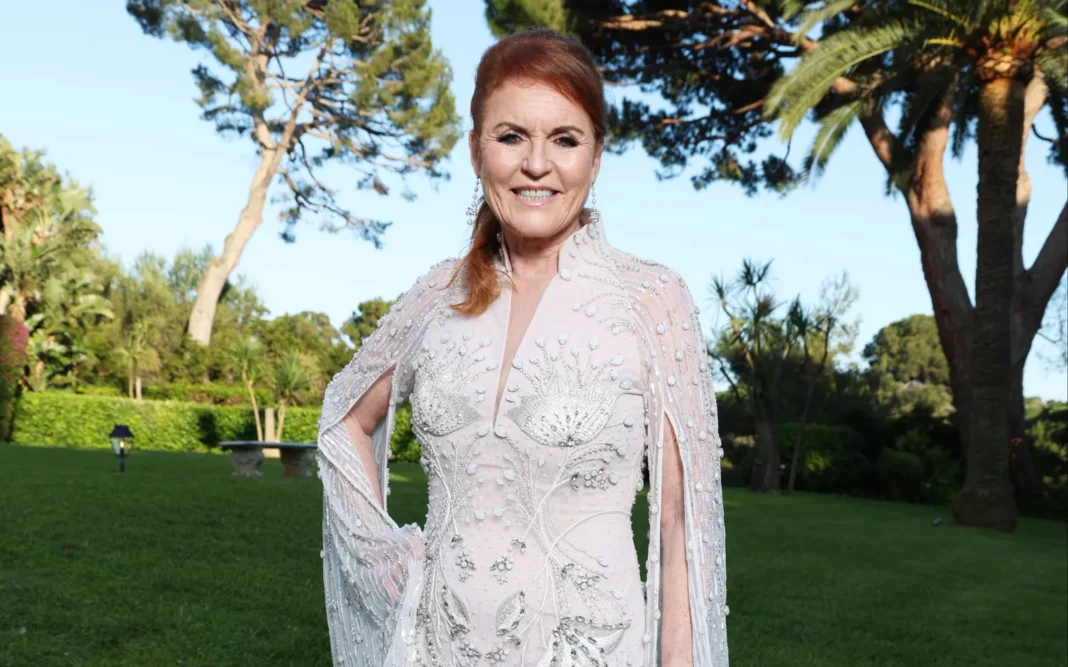
Sarah Ferguson is back in Britain, and the next stop may be the one place every disgraced royal-adjacent figure eventually discovers: a television studio with flattering lighting. The Sun reported over the weekend that the former Duchess of York is considering approaches for a documentary and interview about her life after the Jeffrey Epstein scandal. The Telegraph followed with the same basic development. Ferguson is reportedly interested in retaining editorial control. After several decades of royal scandal, debt trouble, reinvention and public rehabilitation, the newest innovation is apparently making sure the comeback special comes with final cut.
The timing is unusually neat. Ferguson has returned to the UK after months largely outside public view and is reportedly renting a six-bedroom property in the Home Counties. The Guardian reported Saturday that she had been staying at a Swiss chalet after leaving Royal Lodge, the Windsor home she shared with Andrew Mountbatten-Windsor. Her return lands as the Sussexes are also back in Britain, which means the royal news cycle has become a crowded arrivals hall. Harry and Meghan have school runs. Ferguson has a possible documentary. The monarchy has once again achieved its most reliable form of modernization: everyone now has content.
The serious part is why Ferguson has so much explaining to do. The Guardian reported that documents released in the Epstein files renewed scrutiny of her relationship with the convicted sex offender. An email showed Ferguson thanking Epstein for being the “brother” she “always wished for” a year after his conviction for child sex crimes. Other reporting has revisited a 2011 message in which she called him a “supreme friend,” despite having publicly described the association as a “gigantic error of judgment.” Epstein also paid £15,000 toward her debts. Ferguson has not been accused of criminal wrongdoing, but the gap between public repudiation and private warmth is exactly the sort of gap television producers can fit an eight-part series into.
That makes the reported desire for editorial control more revealing than any rumored fee. Ferguson has done this before. In 2011 she made “Finding Sarah: From Royalty to the Real World” with the Oprah Winfrey Network. The premise then was reinvention after financial and personal turmoil. Fifteen years later, the available material is heavier and the public mood is less forgiving. A glossy profile can explain feelings. It cannot edit the underlying emails. The most difficult interview question is not whether Ferguson deserves another chapter. It is why the previous chapters kept requiring revised editions.
There is also a distinctly Windsor problem here. The institution spent years treating scandal as something that could be managed through distance, titles, residences and carefully rationed appearances. Ferguson lost her courtesy title, charities cut ties with her, her trust closed, companies linked to her were wound down, and thousands of copies of a children’s book were withdrawn, according to the Guardian. Yet exile has a funny way of turning into a media strategy. Once someone is outside the formal machinery, the palace loses the main thing it is good at controlling: access. The person who is no longer invited to the balcony is suddenly free to book a soundstage.
Ferguson’s reported options therefore create the oldest royal paradox in a new format. The family’s brand depends on silence, while the people pushed to its edges can often make more money by talking. Harry demonstrated the commercial potential of disclosure. Andrew demonstrated the catastrophic potential of answering questions badly. Ferguson has spent a lifetime somewhere between those poles, gifted at surviving headlines but less gifted at preventing the next batch. A self-produced documentary would offer the irresistible promise that this time the story can be told correctly, provided the storyteller also gets to decide which parts of the story count.
None of that means she should be denied a chance to answer legitimate questions. It means the format matters. A documentary controlled by its subject is not the same thing as an independent interview, especially when the central issue involves contradictory statements and a relationship with a convicted sex offender. Ferguson may have explanations the public has not heard. She may also have context that changes how some episodes are understood. But if the project becomes another royal exercise in reputation laundering, viewers will notice. Britain has watched enough Windsor rehabilitation campaigns to recognize when the soft-focus camera arrives before the hard question.
The monarchy’s great advantage has always been continuity. Its great liability is that continuity also applies to the supporting cast. Ferguson has been a duchess, an ex-duchess, a television personality, an author, a charity patron, a debtor, a scandal survivor and a recurring character in Andrew’s disasters. Now she may become the executive producer of her own explanation. For a family built around hereditary roles, that is almost entrepreneurial. The crown may control the titles, but apparently everyone else can still control the edit.
There is one more reason the story matters beyond palace gossip. Ferguson’s next move will test whether the modern royal ecosystem can distinguish accountability from access. A famous person can now bypass the old gatekeepers, choose a streamer, select a sympathetic interviewer, release clips on social media and call the result candor. That does not automatically make the account false. It does make the audience responsible for noticing who controlled the questions. The Windsor family has spent years discovering that television can turn private dysfunction into global entertainment. Ferguson may be about to discover the reverse lesson: global entertainment does not turn private explanations into independent scrutiny. If she wants the public to believe a definitive account, the strongest production choice may be the one she reportedly values least, surrendering enough control for somebody else to press when the answer gets uncomfortable.
If Sarah Ferguson tells her story while controlling the production, who exactly is supposed to ask the question she would rather cut?
Sources
The Sun: Sarah Ferguson lined up for tell-all TV documentary and interview after returning to Britain following Epstein storm
The Sun: Sarah Ferguson back in UK from exile days after Harry as she rents 6-bed home to plot comeback following Epstein storm
The Guardian: Sarah Ferguson to return to UK after relocating amid Epstein revelations