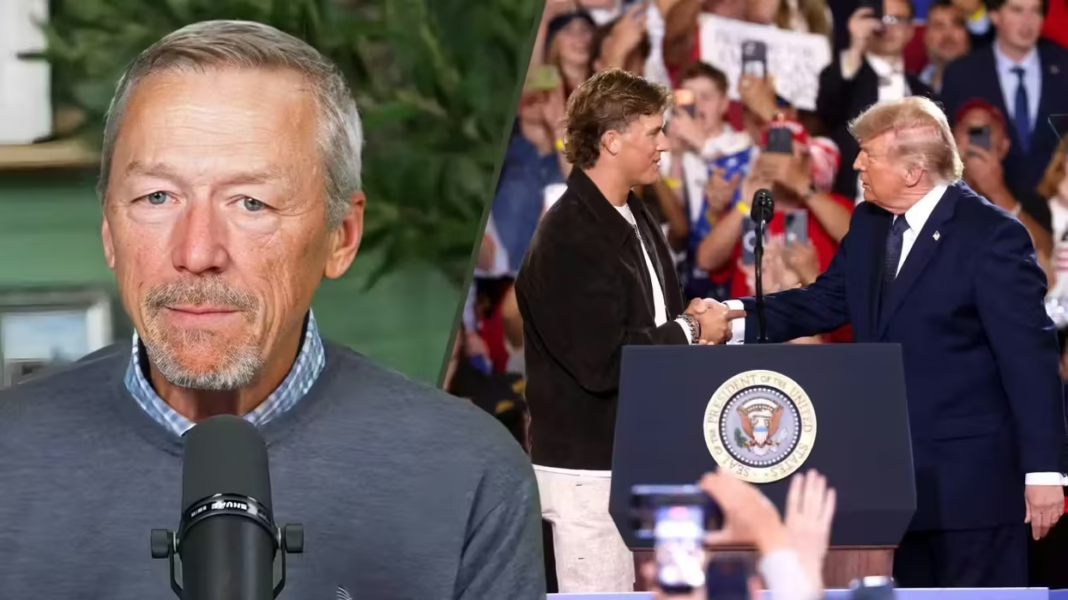




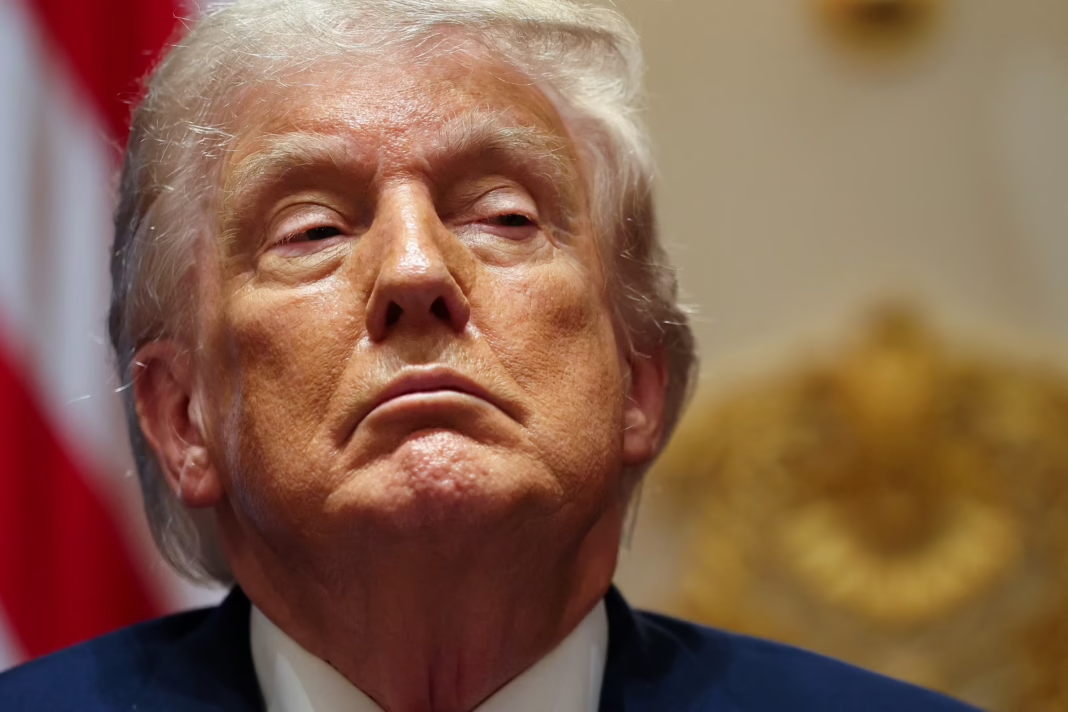
Donald Trump named William Pulte as acting Director of National Intelligence, replacing Tulsi Gabbard. Pulte is best known, to the extent he’s known at all, for using his previous administration position to dig through the mortgages of Trump’s political enemies in search of prosecution material.
The pick has produced an unusual spectacle: Republican senators visibly uncomfortable with one of their own president’s appointments, and willing to say so on the record.
Senate Majority Leader John Thune warned the choice could produce a “weaponized” DNI. Senator Tom Cotton declined to comment. Other GOP senators told reporters Pulte is unqualified for the job. For a party that spent the better part of a year rubber-stamping cabinet picks, the visible discomfort is worth noting.
What the DNI actually controls
The Director of National Intelligence oversees 18 intelligence agencies, coordinates threat assessments, and controls access to classified information. The office was created after 9/11 to centralize the intelligence community. It has extraordinary reach into surveillance, counterintelligence, and national security investigations.
University of Michigan law professor Leah Litman described the potential for a “weaponized” national security state under Pulte as “terrifying.” The concern is not hypothetical. Pulte’s previous work involved combing through financial records of Trump’s opponents, ostensibly looking for pretexts to prosecute.
Now he has access to significantly more data, more agencies, and more investigative authority. The DNI can task the NSA, CIA, and FBI. The position does not require Senate confirmation when filled on an acting basis, which is how Trump installed him.
The mortgage investigation that made Pulte’s name
Pulte’s prior claim to relevance was his role investigating mortgages held by Trump critics. The work was framed as fraud detection. The execution looked like opposition research with subpoena power.
The targets were not random. They were political opponents, former officials who criticized Trump publicly, and figures involved in investigations of Trump’s business dealings. The pretexts for prosecution were thin. The effort to find them was not.
Ransacking someone’s mortgage history to build a criminal case stops being law enforcement at some point and starts being something else. Pulte now has access to tools that make mortgage records look quaint.
What GOP senators are actually saying
John Thune used the word “weaponized” in public. That is not typical leadership language about a presidential appointee from your own party. It is the kind of word you use when you want to signal concern without directly opposing the nomination.
Tom Cotton refused to comment. Cotton is not known for his reluctance to defend Trump. His silence here is its own data point.
Other Republican senators called Pulte unqualified. They did not call him dangerous, but they did not need to. The job description does that work on its own.
The pattern is visible: these are not full-throated objections, but they are not endorsements either. They are the statements of people who know what the DNI can do, who have some idea of what Pulte has already done, and who are now on the record as uncomfortable without being on the record as opposed.
What MAGA expects him to do
MAGA figures expect Pulte to be “turned loose on the left.” That phrasing is not subtle. It is not about counterterrorism or foreign threats. It is about domestic political opponents.
The intelligence community has been used for domestic political purposes before. Hoover’s FBI kept files on civil rights leaders. The CIA ran domestic surveillance programs in the 1970s that prompted the creation of oversight rules. Those rules are still technically in place. Whether they hold under an acting DNI with a track record of targeting political enemies is the question nobody in the administration is pretending to care about.
Litman raised the question of whether the rule of law can survive this presidency. That is not an academic exercise anymore. It is the thing GOP senators are visibly sweating in hallway interviews.
The confirmation gap nobody’s talking about
Pulte is serving as acting director. He does not need Senate confirmation unless Trump formally nominates him for the permanent role. Acting appointments can last months, sometimes longer. By the time a confirmation hearing happens, if it happens, Pulte will have had access to the entire intelligence apparatus for long enough to do whatever it is he was installed to do.
The Senate can object. It cannot stop an acting appointment that’s already been made. That is the gap Trump has driven through repeatedly, and it is the gap that makes Thune’s warning about weaponization feel less like a warning and more like a forecast.
The question now is whether Pulte uses the DNI the way he used mortgage records: as a tool to find something, anything, that can be shaped into a case against someone Trump wants prosecuted. He has more resources now. He has more authority. And he has a party leadership that will call it “weaponized” on camera and then do absolutely nothing to stop it.
So here’s the thread worth watching: does the Senate ever force a formal confirmation hearing, or does Pulte stay acting long enough that it doesn’t matter? And if GOP senators are already rattled enough to break script in public, what exactly are they hearing in private that they’re not saying out loud?
Sources: