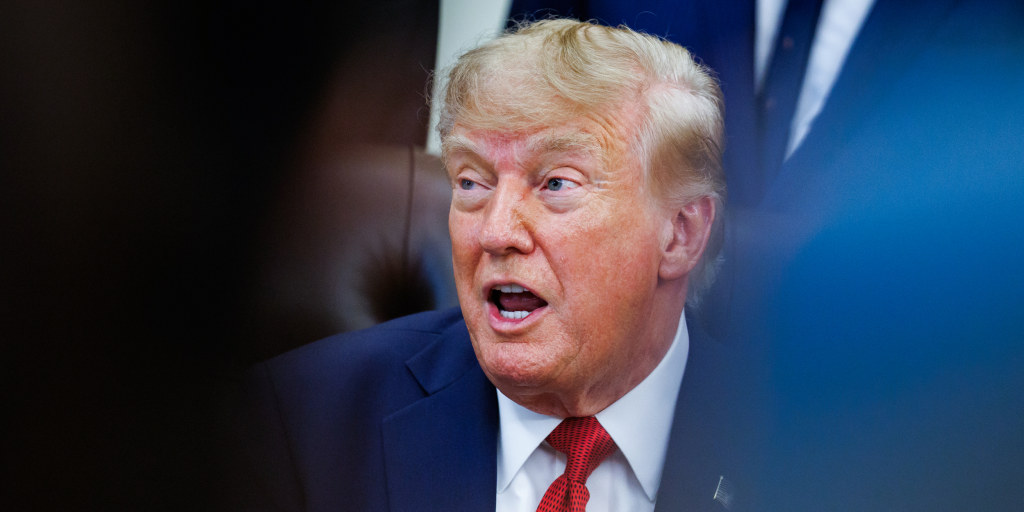





The White House is using a rare “pocket rescission” maneuver to cancel spending approved by Congress. Senate Appropriations Chair Susan Collins says the move usurps Congress’s constitutional spending power.
Congress passed the spending. The president signed the government into motion. The money was supposed to go out. Then, with only days left in the federal fiscal year, the Trump administration announced it was canceling nearly $1 billion of it anyway.
The White House says the targeted spending is unnecessary or harmful and is using a rarely employed maneuver known as a “pocket rescission” to stop the funds. The cuts focus heavily on programs serving refugees, asylum seekers and other migrants, along with diversity-related initiatives.
Normally, when a president wants to rescind money Congress has already appropriated, the executive branch sends a proposal to lawmakers and gives Congress time to decide whether to approve the cancellation. This time, the administration announced the rescissions with only five days left in the fiscal year, effectively leaving Congress no practical window to act before the money expires.
That timing is the reason critics call it a pocket rescission. The executive branch proposes the cut so late that Congress cannot meaningfully review it, and the money simply disappears at the end of the fiscal year. It is the budgetary equivalent of asking whether anyone objects after the door has already closed.
The administration says the cuts target wasteful or ideologically driven spending. The Office of Management and Budget described the rescinded funds as among the “most harmful government spending” and argued that some immigration-service programs are less necessary because illegal border crossings have fallen.
Among the largest reductions is roughly $567 million in funding for services involving refugees, asylees and other migrants through the Department of Health and Human Services. The White House has also highlighted grants connected to organizations it views as politically aligned with prior Democratic administrations.
The sharpest criticism, however, is not coming only from Democrats. Republican Sen. Susan Collins of Maine, chair of the Senate Appropriations Committee, said the action is illegal and called it a usurpation of Congress’s constitutional power of the purse. Her complaint is institutional: Congress decides what money is appropriated, and the executive branch cannot simply substitute its own judgment after the fact.
Democratic Sen. Patty Murray made a similar argument in more colorful terms, calling the action theft from the American people and accusing the administration of treating bipartisan spending laws as optional. Those are political and legal claims, not final judicial rulings.
The Government Accountability Office has previously concluded that pocket rescissions violate the Impoundment Control Act because they prevent Congress from exercising the review process required by law. The Trump administration disputes that interpretation and has pushed for a broader view of presidential authority over spending.
This is not the first time Trump has tried the maneuver. Last year, his administration used a pocket rescission to block billions in foreign-aid spending. The Supreme Court declined to stop those cuts in that particular context, emphasizing the president’s foreign-affairs authority. The current cuts involve domestic spending, which may create a different legal fight.
The constitutional tension is straightforward even if the budget law is not. Congress has the power to appropriate money. The president runs the executive agencies that spend it. Administrations of both parties have tried to influence, delay or redirect spending they dislike, but the Impoundment Control Act was specifically designed to limit presidents from refusing to spend funds Congress has lawfully provided.
Trump’s budget team has openly argued for more executive control over spending. Supporters say presidents should not be forced to waste taxpayer money on programs they believe no longer serve the public interest. Critics respond that allowing presidents to cancel appropriations at will would effectively give the executive branch a line-item veto that Congress never granted.
The political twist here is that Collins is not merely another opposition-party critic. She is the Republican chair of the committee most directly responsible for appropriations. When the person whose committee writes the spending bills says the executive branch is illegally erasing them, the disagreement is not easily dismissed as standard partisan noise.
The practical effect may also be larger than the dollar amount. Nearly $1 billion is significant, but tiny compared with overall federal spending. The precedent is what lawmakers are worried about. If a president can wait until the last days of a fiscal year and cancel money before Congress can respond, future administrations could use the same mechanism against any program they dislike.
That is why the fight is really about who gets the final word after Congress passes a budget. The administration says it is eliminating harmful spending. Critics in both parties say it is overriding the legislature.
And for members of Congress, that raises a fairly existential question: if lawmakers vote to spend money and the executive branch can simply wait until the clock runs out and cancel it, what exactly was the vote for?