




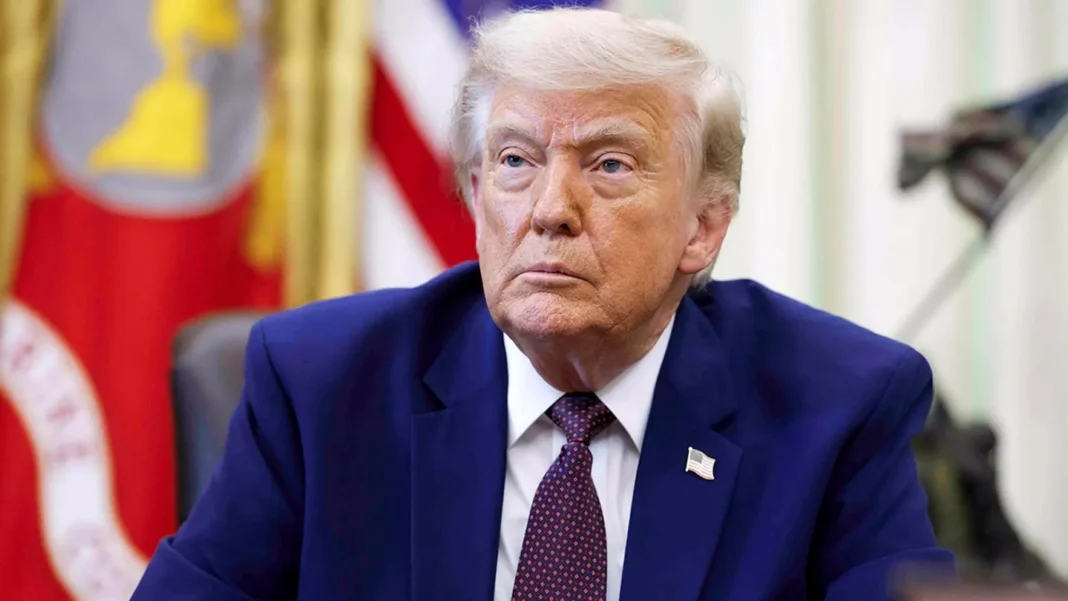
Some presidents treat the War Powers Act as an inconvenient fact of American constitutional life. Donald Trump treated Tuesday’s Senate vote to limit his military authority over Iran as a personal insult delivered at the worst possible moment, which is what checks on executive power have always felt like to executives with a lot of power, and which is precisely why the Founders put them in writing rather than relying on goodwill.
The Senate voted 50-48 to back legislation limiting presidential military involvement in Iran, the same legislation the House had already passed. According to Fox News, Trump posted on Truth Social: “So, I have Iran on the ‘ropes,’ ready to go down for the fall, willing to give us practically anything, and for the first time in decades, respecting the hell out of the United States and its President, ME, and the U.S. Senate decides to have a poorly timed and meaningless War Powers Act Vote.” The caps on ME are in the original. They were not added for effect.
Four Republicans voted for the measure: Rand Paul, Lisa Murkowski, Susan Collins, and Bill Cassidy, the coalition of Republicans who have in common that they have stopped optimizing for Trump’s approval on individual votes. The one Democrat to vote against it was John Fetterman, who has now made voting against whatever the left expects into a personal brand consistent enough to constitute its own ideology.
Iran’s chief negotiator described the same deal the vote was responding to as “America’s declaration of defeat.” Trump’s Truth Social account described the same deal as evidence that Iran is respecting the United States and its President, ME. The Senate’s war powers resolution is therefore the one document in this entire conflict that both Iran and Trump agree is meaningless, making it the most genuinely bipartisan outcome of the war.
The War Powers Act was passed in 1973 to prevent presidents from conducting open-ended military campaigns without congressional authorization. It has been successfully enforced approximately never, a record that this vote will not improve, and which makes the vote technically meaningless in the way that a speed limit sign on a road where everyone drives 90 is technically meaningless. The sign is still there. The sign still says something.
When the president calls the Senate’s constitutional oversight of his war powers poorly timed, when exactly would be the right time to tell him to stop?
Sources
Fox News live: US-Iran peace deal, Senate war powers vote
Fox News: Trump warns Iran on nuclear compliance
Fox News: Republicans break with Trump to rebuke Iran war — but it won’t change policy