




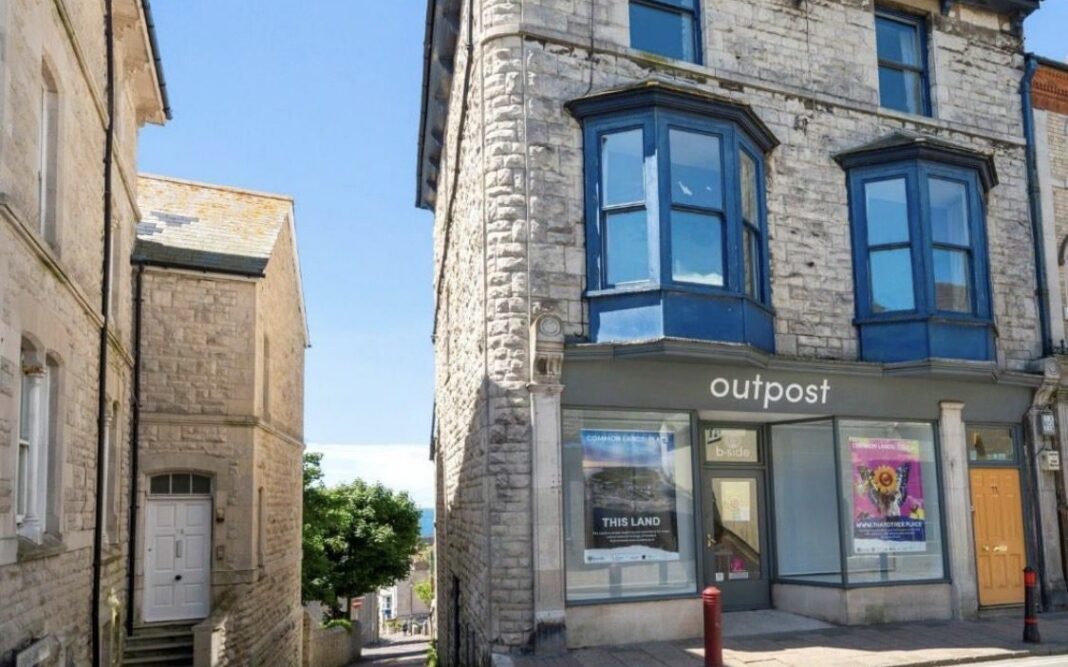
There are political stories that require a flowchart, and then there is this one. A small Dorset bed-and-breakfast called bnb-side is resisting a legal challenge from Airbnb over the letters “bnb.” The Guardian reports that the business name is a play on the local b-side arts festival and that the owners say they will not back down. The target here is Airbnb’s trademark fight with bnb-side. The internet economy promised to empower tiny businesses, and one of its giants has now reached the stage where a local B&B must defend its relationship with the abbreviation for bed and breakfast. That is the whole machine in miniature: a serious institution, a real decision and an outcome that sounds as if a satirist was allowed to sit in on the planning meeting.
Start with what is actually known. A small Dorset bed-and-breakfast called bnb-side is resisting a legal challenge from Airbnb over the letters “bnb.” The Guardian reports that the business name is a play on the local b-side arts festival and that the owners say they will not back down. Those are the reported facts, and they matter because the easiest way to ruin satire is to decorate a good story with invented furniture. The comedy comes from the gap between the institution’s stated logic and the picture created by its own actions. The internet economy promised to empower tiny businesses, and one of its giants has now reached the stage where a local B&B must defend its relationship with the abbreviation for bed and breakfast. No conspiracy is required. No anonymous genius needs to whisper a hidden motive. The public record is already doing enough work.
There is, of course, a respectable defense available. Institutions have rules. Governments have constraints. Companies have shareholders. Public figures have legitimate interests that do not disappear because a headline makes them look silly. That defense should be heard, because the target is not the existence of procedure. The target is Airbnb’s trademark fight with bnb-side, specifically the moment when procedure becomes so self-protective that it produces an outcome harder to defend than the problem it was supposed to solve.
This is where the story develops a thread beyond one day’s embarrassment. The internet economy promised to empower tiny businesses, and one of its giants has now reached the stage where a local B&B must defend its relationship with the abbreviation for bed and breakfast. The recurring pattern is familiar: a system creates complexity, then points to the complexity as evidence that only the system can manage it. Every new clarification requires another clarification. Every safeguard creates another exception. Every branding exercise needs a communications plan explaining why the branding should not be interpreted too literally. Eventually the institution is spending more energy narrating itself than doing the thing the narration was meant to support.
The people running these systems usually insist that outsiders are missing nuance. Sometimes they are right. Nuance is real. But nuance is not a magic solvent for contradiction. If the public needs a briefing book to understand why an apparently simple decision is actually the only responsible option, the burden is on the decision-maker to show the work. Airbnb’s trademark fight with bnb-side does not get to demand trust merely because the explanation contains more acronyms than the criticism.
There is also a practical cost to all this. Attention is finite. Money is finite. Institutional credibility is finite, despite Washington, Silicon Valley and royal households conducting a long-running experiment to test the opposite proposition. When leaders spend credibility on a choice that looks obviously self-serving, ideological or overengineered, they have less available when the next genuinely difficult decision arrives. The public may not remember every procedural detail, but it remembers the feeling that the explanation was written backward from the desired result.
That does not mean the opposite policy is automatically correct. The lazy version of satire would simply reverse the sign and declare victory. The better question is whether the people in charge can defend the actual tradeoff without hiding behind slogans. The internet economy promised to empower tiny businesses, and one of its giants has now reached the stage where a local B&B must defend its relationship with the abbreviation for bed and breakfast. If they can, the policy should survive scrutiny. If they cannot, another press release will not fix it. A functioning institution should be able to explain itself in language that remains persuasive after the applause line has been removed.
One more point matters. The internet economy promised to empower tiny businesses, and one of its giants has now reached the stage where a local B&B must defend its relationship with the abbreviation for bed and breakfast. That tension is not a side issue. It is why the story travels beyond the people who already follow this beat. The public is being asked to accept a rule, a cost or a risk today in exchange for a promise that the institution will use its discretion wisely tomorrow. That bargain only works when the institution is willing to accept the same scrutiny it applies to everyone else.
For now, the story is useful because it turns an abstract argument into something concrete. A small Dorset bed-and-breakfast called bnb-side is resisting a legal challenge from Airbnb over the letters “bnb.” The Guardian reports that the business name is a play on the local b-side arts festival and that the owners say they will not back down. The facts put the target in view, and the target is not an identity or a private person. It is a public choice and the machinery around it. That is where the accountability belongs. The unresolved part is not whether the episode is awkward. It plainly is. The unresolved part is whether anyone with authority will treat the awkwardness as information rather than merely another communications problem to be managed.
If a global platform can make a village B&B lawyer up over “bnb,” who exactly owns the language of the industry?
Sources
Dorset Eye: Portland Guest House Takes on Multi-Billion-Dollar US Corporation