



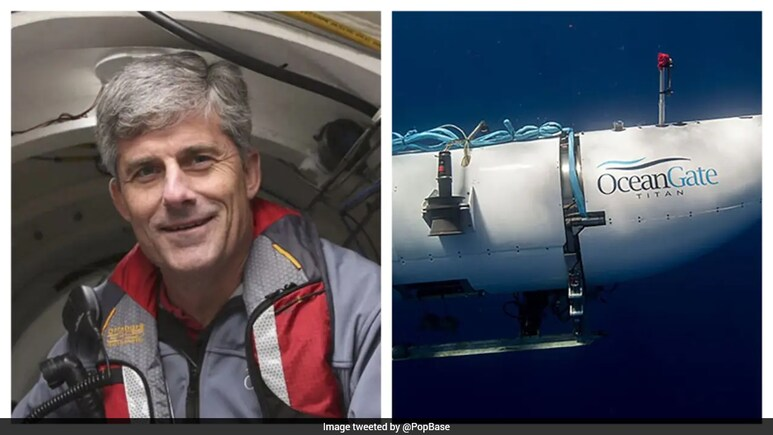
Karl Stanley says Stockton Rush knowingly built a doomed “mousetrap for billionaires” and wanted his own death tied to Titanic mythology. Investigators found catastrophic safety failures, but they did not conclude Rush intentionally planned the implosion.
The Titan submersible disaster already had hubris, billionaires, ignored warnings and a fatal dive to the Titanic. Now a longtime friend of OceanGate CEO Stockton Rush is making an even darker claim: he believes Rush wanted the story to end exactly where it did.
Karl Stanley, a commercial submersible operator who knew Rush for years, argues in a new book that Rush intentionally drove Titan toward catastrophe because he wanted to become permanently attached to Titanic mythology. Stanley has gone so far as to call the vessel a “mousetrap for billionaires.”
That is an extraordinary allegation, and it needs an equally extraordinary caveat. Stanley’s belief about Rush wanting to die is his interpretation of his former friend’s behavior; the U.S. Coast Guard investigation did not conclude that Rush intentionally designed a murder-suicide at the bottom of the Atlantic.
What investigators did conclude was damning enough on its own. The Coast Guard’s Marine Board of Investigation called the 2023 Titan disaster preventable and cited OceanGate’s inadequate design, certification, maintenance and inspection process among the primary contributing factors.
The board also described a toxic workplace culture and said OceanGate failed to properly investigate hull anomalies that appeared during earlier expeditions. The company’s own monitoring system produced warning data that investigators say should have triggered action, but the vessel kept diving.
Stanley’s suspicions did not begin after the implosion. He rode in Titan during a 2019 dive in the Bahamas and said he heard cracking noises from the carbon-fiber hull, then warned Rush in emails that he believed the structure was dangerous.
Rush rejected those warnings and continued developing the submersible. Stanley later said publicly that his friend “definitely knew” the craft would eventually fail, language he is now taking further by suggesting Rush’s obsession with Titanic history may have shaped his willingness to die there.
The new book, Submersed: Wonder, Obsession and Murder in the World of Amateur Submarines, puts Stanley’s theory into a larger portrait of the amateur-submersible world. The book’s very title makes clear this is not presenting the Titan story as a simple engineering accident.
Stanley says Rush was fascinated by the Titanic as more than a tourist destination. In his telling, Rush wanted to become part of the mythology surrounding the wreck, and Titan’s dangerous design became a vehicle for that obsession.
That is where the story crosses from documented negligence into disputed psychology. There is extensive evidence that Rush dismissed warnings and accepted risks that horrified outside engineers, but proving that someone secretly intended to die and take four paying passengers with him requires evidence investigators have not publicly established.
Those four passengers were Hamish Harding, Paul-Henri Nargeolet, Shahzada Dawood and Dawood’s 19-year-old son Suleman. They died alongside Rush when Titan catastrophically imploded during its descent to the Titanic wreck on June 18, 2023.
For years, the public argument around OceanGate has centered on whether Rush was reckless, arrogant or catastrophically overconfident. Stanley’s theory is far more sinister because it suggests the danger was not merely tolerated but embraced as part of the desired ending.
The Coast Guard report does not support going that far. It describes a preventable disaster caused by failed safety systems, poor oversight, inadequate engineering practices and a culture that did not respond appropriately to known warning signs.
That documented reality is already bizarre enough: a company sold $250,000 trips to one of the most hostile environments on Earth while resisting the kind of independent certification most people would demand before boarding a county-fair ride. Stanley’s claim adds a psychological horror story on top of an engineering one.
Maybe future evidence will clarify what Rush actually believed about his chances of surviving. For now, the strongest factual version is also the creepiest responsible one: his friend believes he wanted to become part of Titanic history, while federal investigators proved he ignored enough danger to make the final disaster entirely preventable.