



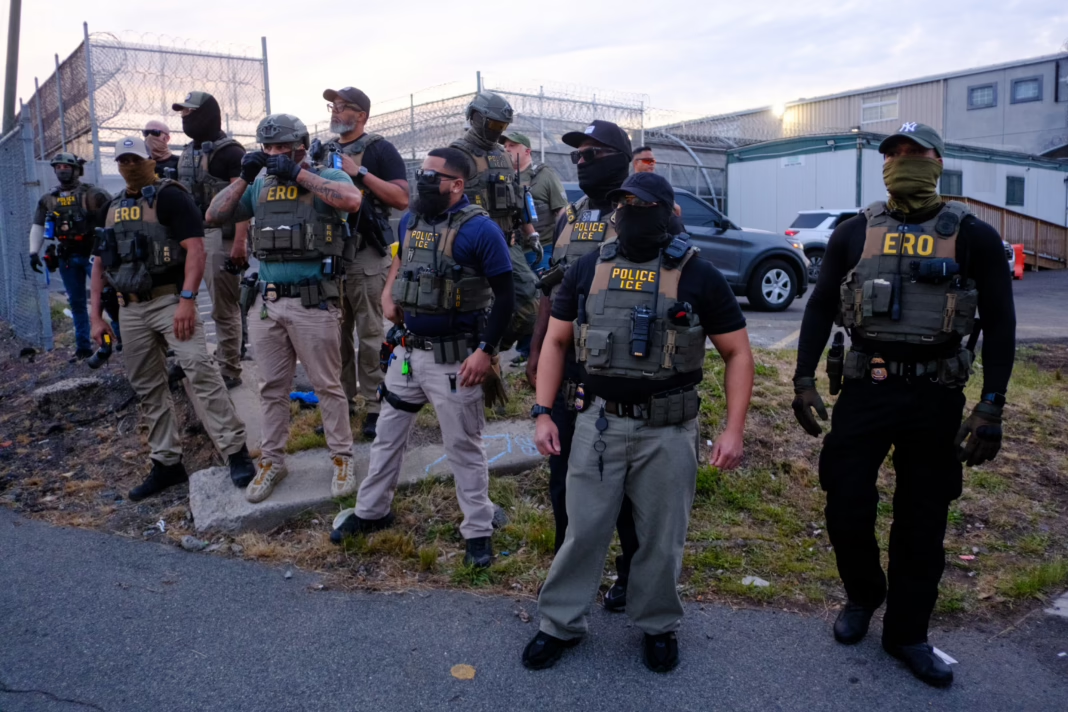
Rep. Ilhan Omar is introducing legislation called the Make ICE Pay Act that would block nearly $140 billion previously designated for Immigration and Customs Enforcement and Customs and Border Protection and redirect the money toward communities affected by federal immigration enforcement operations. The proposal does not abolish ICE, and it does not dissolve CBP. Its central mechanism is financial. Money already allocated to the two agencies under President Donald Trump’s major domestic-policy law would instead be moved into a three-year recovery program for states, local governments, nonprofit groups and small businesses that can show harm from enforcement surges.
The Guardian, which first reported the bill, says Omar is framing it as a response to what she describes as damaging immigration operations in Minneapolis and other cities. Her office cites Operation Metro Surge in Minnesota as a central example, estimating that the campaign produced roughly $700 million in local economic damage while thousands of people were arrested and two U.S. citizens were killed during separate encounters with federal agents. Those local-cost figures come from Omar’s office and should remain attributed that way. The bill would allow redirected money to cover economic recovery, education costs, mental-health services, investigations, historical preservation and other local expenses tied to enforcement activity.
The scale of the proposal is what makes it politically significant. Nearly $140 billion is not a symbolic reduction. It would reverse a large funding increase approved for immigration enforcement and move the money into a program with a very different purpose. Supporters can argue that communities should be compensated when large federal operations create economic and social disruption. Opponents can argue that removing that much money from ICE and CBP would substantially weaken immigration enforcement capacity. Both claims follow from the structure of the bill itself, which is why the debate should focus on the legislation rather than on shorthand claims that Omar is abolishing ICE.
The bill also arrives at a moment when immigration enforcement remains one of the most polarizing issues in the country. Trump has made expanded detention and deportation central to his second-term agenda. Critics have challenged the tactics, costs and legal consequences of those operations, while supporters say the administration is enforcing immigration law after years of inadequate border and interior enforcement. Omar’s proposal turns that dispute into a budget fight. Instead of merely calling for different enforcement practices, it would reassign money already approved for the agencies carrying them out.
That distinction matters because federal agencies do not operate on rhetoric. They operate on appropriations, staffing, detention capacity, transportation contracts, investigative budgets and grants. A funding cut of this size would affect how much enforcement the agencies could conduct, regardless of whether the bill ever uses the word abolish. It would also create a new set of questions about how communities prove damage, who qualifies for compensation and how the Department of Housing and Urban Development inspector general would administer a recovery system tied to immigration operations.
Omar’s own language makes clear that the bill is intended as accountability as well as redistribution. She has said communities should be able to make ICE ‘pay the price’ for enforcement campaigns she considers abusive. That is a political argument, not a neutral description of the agencies’ conduct, and it should be presented as hers. The same is true of the bill’s references to what supporters describe as terror campaigns. The verified factual core is narrower. The legislation targets previously appropriated ICE and CBP money and directs it toward local entities that claim measurable damage from federal enforcement actions.
The proposal is unlikely to move quietly. Republicans can be expected to argue that the bill would undermine border and immigration enforcement at a time when ICE arrests remain high and immigration remains a major campaign issue. Progressive Democrats and immigration advocates are likely to frame it as a corrective for communities that say they have borne costs without compensation. Because the amount is so large, the debate will not stay confined to symbolism. Lawmakers would have to decide whether money approved for federal enforcement should remain with those agencies or be redirected to local recovery.
The bill’s fate will also depend on committee jurisdiction, appropriations rules and whether Democratic leaders decide to prioritize it. A proposal can attract enormous attention because of its dollar figure while still facing a difficult path through a closely divided Congress. That procedural reality is important because the political debate will likely become much larger than the bill’s immediate chances of passage. Supporters will use it to argue that immigration enforcement has created costs that federal budgets ignore. Opponents will use it to argue that progressive Democrats want to dismantle the enforcement capacity Congress recently expanded. The actual legislative text sits between those two campaign messages.
The immediate facts are clear enough to support scrutiny without overstating what remains unknown. The next phase will produce more documents, votes, legal decisions or economic data that can test the competing claims. Until then, the distinction between what has happened and what each side predicts will happen is central to covering the story accurately.
For readers, the cleanest way to understand the Make ICE Pay Act is to separate its verified mechanics from the surrounding campaign language. It is a proposed reallocation of nearly $140 billion, not a formal proposal to abolish ICE. It would move money from ICE and CBP toward state and local governments, nonprofits and businesses affected by enforcement operations. The unresolved issue is whether Congress sees those operations primarily as a federal enforcement responsibility that needs funding or as a source of local harm that warrants compensation.
If Congress has already approved nearly $140 billion for immigration enforcement, what would lawmakers have to believe about those operations to redirect that money to the communities affected by them?
Sources
The Guardian: Ilhan Omar brings bill to make ICE ‘pay the price’ for terrorizing communities – https://www.theguardian.com/us-news/2026/sep/17/ilhan-omar-ice-bill
OAN: Ilhan Omar brings bill to make ICE ‘pay the price’ for terrorizing communities – https://oan.co/