



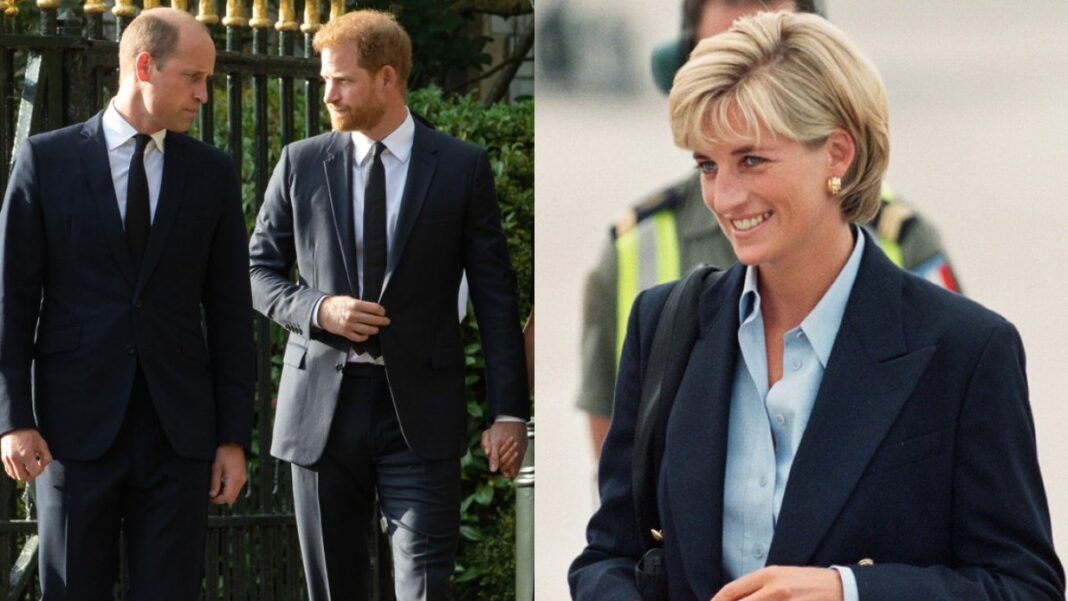
Charles Spencer’s new memoir revisits the decision to have William and Harry walk behind Princess Diana’s coffin. Royal commentators say William is deeply unhappy that the traumatic episode is back in public view.
Nearly 30 years after Princess Diana’s funeral, one of the most haunting images in modern royal history is back in the headlines: a 15-year-old Prince William and 12-year-old Prince Harry walking behind their mother’s coffin through London.
The reason is Charles Spencer, Diana’s brother, who has revisited the decision in his new memoir, “Swan Song: Diana, My Sister.” Spencer says he fiercely opposed having the boys join the funeral procession and recounts a confrontation with King Charles, who was then Prince Charles, over whether William and Harry should be asked to make the walk.
According to Spencer’s account, he believed the procession would be emotionally damaging for the boys and argued that the adults should shield them from such a public spectacle. Charles, he says, supported their participation. Buckingham Palace has disputed parts of Spencer’s version of events.
Now the publication fight is spilling into another generation of royal tension. Page Six reports royal commentators believe William feels betrayed that his uncle has reopened the episode publicly, particularly because William has historically been more private than Harry about the trauma surrounding Diana’s death.
The word “betrayed” comes from royal commentary rather than a direct public statement from William, so it should be treated accordingly. The prince has not issued a personal declaration using that language. But friends and royal sources have long described him as deeply sensitive about public attempts to revisit his mother’s death.
That sensitivity is understandable. The funeral procession became an iconic television image, but William and Harry were children walking behind the coffin of their mother while hundreds of millions of people watched. The fact that the image became historic does not make the experience any less personal.
Spencer’s memoir argues that he tried to prevent the boys from taking part. That puts King Charles in an uncomfortable position because it suggests the future king supported a decision that Diana’s brother believed was emotionally harmful. The palace has pushed back against Spencer’s recollection, arguing that grief and the passage of time can affect memories of what happened.
That response triggered another round of conflict, with Spencer accusing Charles of effectively dismissing his account. Royal family disputes rarely arrive as simple disagreements. They usually come with dueling memoirs, unnamed friends, historical grievances and at least one person insisting everyone else remembers 1997 incorrectly.
Prince Harry adds another complication. He has spoken much more openly than William about the funeral and has previously described the walk as something no child should have been asked to do. Harry is also reportedly closer to Spencer and has explored possible projects connected to Diana’s legacy ahead of the 30th anniversary of her death.
Reports that Harry may be considering a Diana documentary have fueled speculation that Spencer could participate. William, by contrast, is reportedly reluctant to take part in new documentaries and prefers not to revisit the story publicly in ways that could put him in direct contrast with his brother.
That difference reflects the broader split between William and Harry. Harry has turned personal royal experiences into books, interviews and documentaries. William has generally taken a more institutional approach, speaking selectively about Diana while avoiding extended public discussion of the family conflict surrounding her death.
Spencer’s new book makes that strategy harder because William does not control who else talks about the past. His uncle can publish his memories. His brother can produce media projects. Royal commentators can interpret his silence. Privacy is a difficult strategy when everyone around you has a publishing deal.
The renewed attention is also happening as the monarchy approaches a symbolic anniversary. Diana died in August 1997, making 2027 the 30th anniversary of her death. That virtually guarantees documentaries, books, retrospectives and renewed arguments about how the royal family handled the tragedy.
For William, the issue may be less about whether Spencer has a right to tell his story and more about whether telling it requires placing William’s childhood trauma back at the center of a public feud. The two are not quite the same thing.
Royal history has a way of becoming public property even when the people who lived it would rather leave it alone. The image of those two boys behind the coffin belongs to millions of people’s memory of Diana’s funeral. For William, it was also simply the day he buried his mother.
So the question is not whether Charles Spencer is allowed to publish his version. It is whether family members have any obligation to leave certain memories alone when telling the story means reopening somebody else’s worst day.