



Video of Donald Trump briefly closing his eyes and appearing to sway during a Lincoln Memorial event sparked online speculation, but it does not establish a fall or a medical episode.
The Clip That Stole the Reflecting Pool’s Spotlight
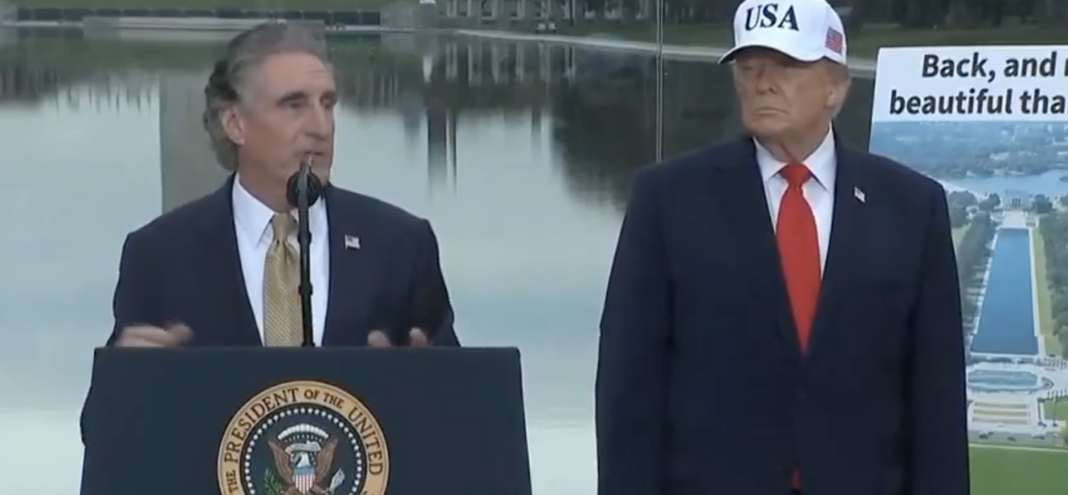
Donald Trump went to the Lincoln Memorial to celebrate the reopening of the reflecting pool and deliver a late midterm message. The internet, naturally, found a different subject: a moment in the event video when the president, standing near Interior Secretary Doug Burgum, appeared to briefly close his eyes and sway. There was no verified fall, no announced medical emergency and no evidence from the clip alone that he was asleep. But the footage gave political social media everything it needed for another round of zooming, looping and declaring a diagnosis by smartphone.
The White House published video of the November 2 appearance, and a transcript of the event is available through Roll Call’s Factba.se archive. Subsequent coverage noted viewers reacting to Trump’s posture and eyes while Burgum spoke. It is reasonable to describe what is visible; it is not reasonable to leap from a few seconds of body language to a confident medical conclusion.
That distinction will disappoint the internet’s amateur medical boards, which now seem to convene whenever a politician blinks for slightly longer than expected. Yet it also makes the story more honest. The real event is compelling enough without turning an ambiguous moment into a fabricated collapse.
An Event Already Designed for Attention
Trump’s remarks centered on renovation work at the reflecting pool, a giant landmark that has recently become a surprisingly political construction project. He praised the newly finished work, spoke about the condition of the site, thanked Interior Department employees and promoted what his administration describes as improvements to Washington. He also joked about naming the pool after himself before saying he was kidding.
The location was not accidental. The Lincoln Memorial and its reflecting pool offer the kind of scenery that presidents and television producers love: monumental stone, a long vista and instant historical gravitas. Trump frequently frames construction, restoration and visible changes to public spaces as evidence of executive competence. The reflecting pool was almost tailor-made for that pitch.
But the project has generated its own controversy. Associated Press reporting ahead of the visit documented cost increases, delays, algae and problems with the pool’s liner, along with a failed prosecution concerning damage investigators initially attributed to vandalism. The White House presented the restoration as a success. Critics pointed to the problems as another example of promises colliding with the realities of a large public works project.
In his speech, Trump cited the pool’s past condition and blamed predecessors for years of neglect. He also touted administration policing claims. Those are political assertions made during the event, not independently validated conclusions to be inferred from the eye-closing video. A momentary camera clip tells us little about whether a construction project was on time, on budget or even properly sealed.
What the Footage Does and Does Not Prove
Coverage of the viral sequence described Trump briefly closing his eyes and appearing to sway while Burgum was talking. Viewers differed sharply in their interpretations. Some saw tiredness or loss of alertness; others regarded it as ordinary movement during a long standing appearance. Without a medical assessment or a clearer event, neither interpretation can be stated as a diagnosis.
The difference between “eyes closed” and “fell asleep” is bigger than it sounds. A person can blink, squint, rest their eyes momentarily or shift weight without losing consciousness. Likewise, a body shifting position is not automatically a fall. The clip did not show Trump collapsing, and the available account did not establish that officials rushed to help him.
The president’s age makes health-related footage politically potent. Trump is 80, and voters reasonably care about the ability of any president to carry out demanding duties. Scrutiny of public appearances is legitimate, particularly when administrations are selective about what health information they share. But legitimate scrutiny is undermined when people proclaim certainty from inconclusive video.
Just this year, fact-checkers examined manipulated imagery purporting to show Trump sleeping during another White House event. AFP documented an altered image circulating in April, and Lead Stories examined overstatements surrounding a June clip. Those were separate incidents. Their relevance here is not that the November video was fake; the White House’s event footage is real. It is that viral captions can turn ordinary visual fragments into claims the original recording cannot bear.
The Political Reaction Machine Does Its Thing
For Trump’s detractors, the video became a tempting symbol: a president who relentlessly attacks opponents over stamina caught in an awkward pause of his own. For supporters, the online reaction looked like a predictable effort to treat every blink as a national crisis. Both narratives travel faster than the slow, boring work of examining an entire event.
There is a more useful question buried beneath the memes. Why was a presidential appearance about a public construction project immediately reframed as a health debate? Partly because Trump has made strength, vigor and dominance central to his political image. When you turn physical toughness into a campaign brand, opponents will examine the packaging for imperfections.
The administration would prefer attention remain on the pool and the broader claims about Washington. Critics would rather focus on the president himself. The result was a particularly 2026 news cycle in which a national monument, an infrastructure announcement and a few seconds of eyelid activity competed for the same headline.
Watch the full event rather than a selectively edited fragment. Observe the moment, compare it with longer footage and resist the temptation to make the diagnosis that trained professionals have not announced. The video shows an awkward pause that politicians would rather avoid. It does not show a verified fall, and no amount of replaying it changes that fact.