



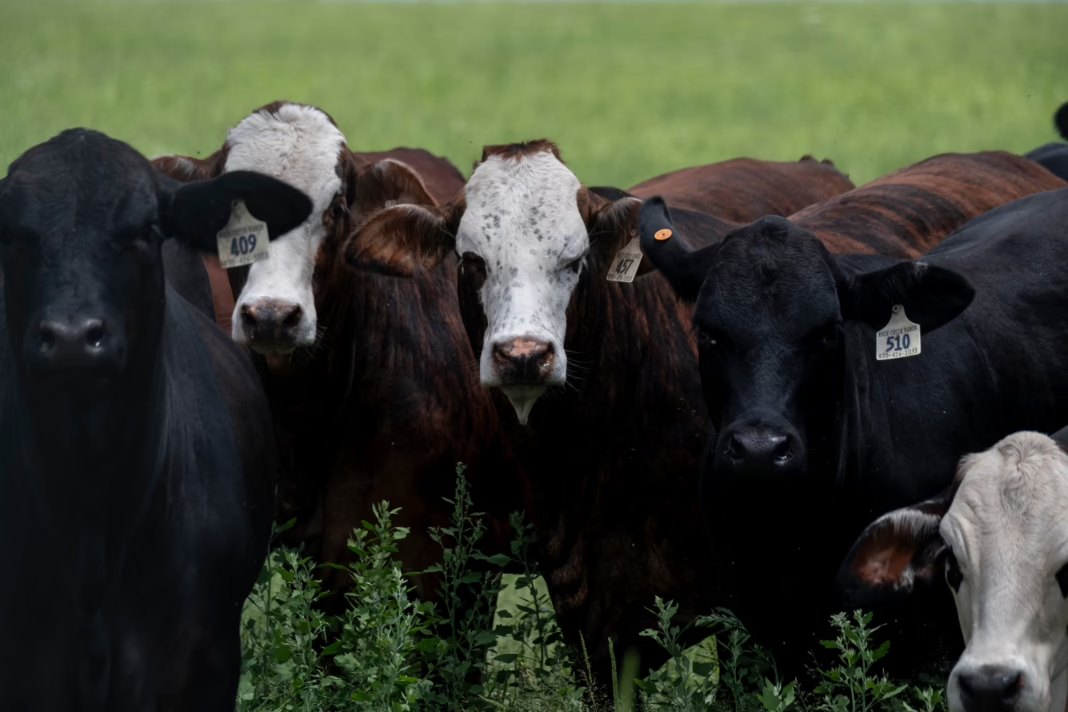
Donald Trump has a new grocery-price plan. For 90 days, the United States will allow up to 300,000 additional metric tons of imported beef to enter under the lower tariff quota, and Trump says the product will be sold at 25% below current market prices. There is one detail the administration was not ready to provide when reporters asked this week. Agriculture Secretary Brooke Rollins would not say which countries, beyond Mexico, would supply the meat. Nothing builds consumer confidence like a bargain followed immediately by a geography quiz.
Salon reported Thursday that the information gap helped produce an internet rumor involving wild horses, ground beef and the sort of AI-generated supermarket labels that normally disappear after lunch. The rumor is unsupported. Salon states clearly that there is no evidence Trump’s imported beef will contain horse meat. That sentence matters. The joke is not that the government is secretly feeding Americans horses. The joke is that an administration promising a massive quantity of unusually cheap imported beef managed to leave the origin vague enough for the internet to write a menu.
The underlying policy is real. The Guardian reported that Trump temporarily expanded the lower-tariff beef quota by 300,000 metric tons as the administration tries to bring down high beef prices while the U.S. cattle herd remains historically small. National Review explained that imports above the quota normally face a 26.4% tariff, while beef inside the quota faces a much smaller duty. The change therefore creates a very Trump-era scene. A president famous for tariffs is cutting a tariff barrier because tariffs helped make the thing voters buy more expensive.
Republican lawmakers from cattle states objected. The Guardian reported criticism from senators and representatives who argued that the influx could hurt U.S. ranchers and complicate efforts to rebuild domestic herds. Agriculture officials defended the move as a temporary consumer-price measure. Those are recognizable policy tradeoffs. Cheap imports can help shoppers while creating pressure on domestic producers. The Trumpiverse part arrives when the president sells the policy as a simple win while members of his own party begin explaining why the simple win has several thousand hooves attached.
Then came the missing origin information. Salon quotes Rollins telling a reporter, “I am not privy to talk about that,” while saying negotiations were still being worked out by the U.S. trade representative and the president. That is a perfectly possible stage for a trade policy to be in. It is also an extraordinary stage from which to announce that consumers are about to receive a giant pile of discount meat. Most restaurants identify the supplier before advertising the special.
The unsupported horse rumor gained oxygen because another federal story was circulating at the same time about wild mustangs entering channels that could lead to slaughter abroad. Salon carefully distinguishes the two stories and says there is no evidence connecting those horses to Trump’s beef plan. That distinction is precisely why the episode works as satire. The government did not create the false connection. It created a blank space, and the internet did what the internet now does with blank spaces. It furnished them.
There is a larger contradiction here for the administration’s food politics. Trump and the MAHA movement have encouraged Americans to inspect ingredients, distrust opaque systems and ask who controls the food supply. Skepticism can be healthy. But skepticism does not come with a party registration. If consumers are trained to demand provenance from cereal makers, drug companies and food processors, they may eventually ask the president where 300,000 metric tons of bargain beef is coming from. That is not disloyalty. It is the habit the movement advertised.
There is a communications lesson here that has nothing to do with horses. Consumers can tolerate complexity better than officials sometimes assume, especially when the explanation is concrete. Say the herd is small. Say prices are high. Say temporary imports may help. Say which countries are involved and how labeling will work. That is less dramatic than promising cheaper beef first, but it gives rumor less empty space to occupy. The administration chose the bigger headline before the smaller details were ready, then discovered that the smaller details were exactly what shoppers wanted.
The horse jokes are likely to fade, but the policy problem will not. Beef prices are politically painful precisely because shoppers encounter them every week, not in an abstract economic report. That makes this a test of whether Trump’s trade instincts can bend when tariffs collide with grocery prices. He is betting voters will forgive a temporary retreat from protectionism if the supermarket receipt gets smaller. Ranch-state Republicans are betting their voters will notice who pays for that retreat.
The rancher backlash adds another useful complication. Trump has built much of his economic brand around protecting American producers from foreign competition, yet this policy deliberately opens more room for imported beef because consumers are angry about prices. That may be sensible as a temporary tradeoff. It is also a reminder that slogans become harder when they meet a grocery bill. Protect the rancher, lower the price, rebuild the herd and keep tariffs high. The administration is trying to do all four at once. The cattle market, unlike a rally crowd, does not applaud before choosing which objective wins.
The administration may soon provide the missing details and make the meme disappear. Countries of origin can be identified. Contracts can be explained. Labels can do what labels are for. Until then, the episode is a useful demonstration of how modern political communication works. Announce the result first. Explain the mechanism later. Watch a rumor sprint through the gap. Then spend the afternoon insisting that everyone should have waited for information the government had not yet supplied.
If the administration wants Americans to become more skeptical about what is in their food, why would it announce a mountain of bargain beef before clearly saying where the beef is from?
Sources
Salon: Trump’s mystery meat problem
The Guardian: Trump faces backlash from Republicans over plan to lift tariffs on beef imports
National Review: Beef Tariffs Are Still Doing What They’re Supposed to Do