



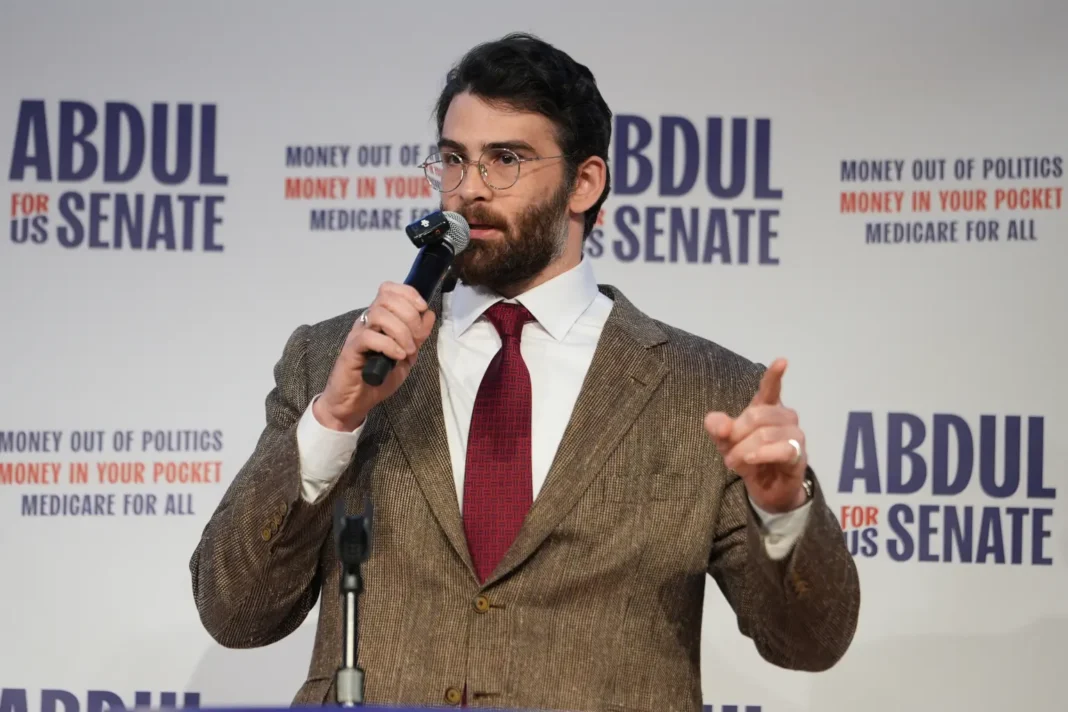
Democrats are putting distance between themselves and left-wing streamer Hasan Piker after remarks about American Jews and Israel drew condemnation from elected officials. Fox News highlighted the fallout Friday, including Michigan Senate nominee Abdul El-Sayed distancing himself from Piker and Georgia Sen. Jon Ossoff condemning rhetoric he described as dangerous. The political left has finally located the mute button, and in a remarkable coincidence it was sitting next to the midterm calendar.
This pattern is familiar because online politics rewards exactly the opposite behavior from electoral politics. Algorithms reward certainty, conflict and escalation. Candidates eventually need coalitions containing people who have never heard the original argument and do not care about the creator’s extended context thread. The influencer gets engagement. The candidate gets a question from a local reporter while standing next to a factory.
The New York Post reported that Piker suggested during a livestream that American Jews strongly associated with support for Israel could provoke violence against themselves. Ossoff rejected that framing and defended the right of Americans to advocate political positions without being threatened. Other Democrats, including Cory Booker and Hakeem Jeffries, have criticized Piker, while El-Sayed has said he opposes antisemitism and moved away from the streamer’s support. Piker has argued that his comments are being distorted and has attacked the credibility of critics and media outlets.
The target is not disagreement over Israel. Democrats contain a wide range of views on the war, US policy and the Israeli government, and vigorous criticism is part of politics. The target is the progressive habit of treating inflammatory online personalities as useful energy until the bill arrives. A streamer can be edgy, transgressive and wonderfully independent right up until a Senate candidate has to explain the clip to somebody who does not spend six hours a day on Twitch.
El-Sayed’s problem is especially clear. A campaign can accept support without endorsing every statement a supporter has ever made. But prominent political relationships create signals. When a controversial figure becomes associated with a candidate or movement, the campaign cannot be surprised that voters use the association to judge its boundaries. Boundaries that appear only after backlash look less like principles than emergency exits.
Democrats distancing themselves now may be the correct move. The interesting question is what standard produced it. If the standard is that rhetoric blaming Jews for antisemitic violence is unacceptable, that standard should be easy to state and easy to maintain. If the standard is that a controversy became electorally inconvenient, the distancing will look exactly as temporary as critics assume.
The reason democrats discovered hasan piker has an off switch after all works as more than a one-day headline is that the underlying incentive does not disappear when the news cycle moves on. The people and institutions involved are being rewarded for a particular kind of behavior, whether that reward is attention, political loyalty, money, status or the comfort of avoiding a harder decision. That is the thread worth watching after the immediate controversy cools. A single episode can be dismissed as bad luck or bad optics. A repeated incentive becomes a governing or cultural habit. The useful test is not whether everyone involved can produce a defensible explanation. Most public controversies come with one. The useful test is whether the explanation would still sound reasonable if the names and teams were reversed. That is where satire earns its keep. It strips away the jersey and leaves the behavior sitting there by itself. The next development will matter because it will show whether this was an exception that embarrassed the people involved or a model they intend to keep using. If the same logic appears again, the story stops being an oddity and becomes a pattern. If the people involved change course, that is evidence too. That is why the closing question matters here: If Democrats only distance themselves from inflammatory allies when an election gets close, what standard are voters supposed to believe is operating the rest of the time? Public life is full of arguments about motives that cannot be proved. Behavior is easier to judge. Watch what gets repeated, what gets rewarded, what gets quietly abandoned, and who is asked to absorb the cost. Those details usually tell the story more clearly than the slogans do.
The controversy also exposes the uneasy bargain between candidates and online creators. Politicians want access to large, energized audiences without inheriting every provocation that built those audiences. Creators want political relevance without being managed like campaign surrogates. Both sides enjoy the arrangement until a clip escapes the community that understands its tone. Then everyone discovers that informal influence still creates formal consequences.
This is especially difficult for progressive campaigns because the online left often treats institutional caution as cowardice. A candidate who draws a boundary can be accused of selling out. A candidate who refuses to draw one can be forced to answer for statements he did not make. The result is a strange ecosystem in which politicians are expected to benefit from radical energy while maintaining plausible separation from the parts that repel ordinary voters. That is less a coalition than a recurring hostage negotiation with the timeline.
The clean solution is boring, which is usually a sign that politics will avoid it. Candidates can state standards before controversies happen. Support is welcome. Antisemitism is not. Criticism of Israel is legitimate. Blaming Jews for violence against Jews is not. If those lines are clear in advance, distancing does not look like panic. It looks like policy.
If Democrats only distance themselves from inflammatory allies when an election gets close, what standard are voters supposed to believe is operating the rest of the time?
Sources
Fox News: Hasan Piker controversy: Democrats distancing from streamer
New York Post: Jon Ossoff calls out Hasan Piker’s antisemitic tropes and remarks on the mainstream media
New York Post: Hasan Piker shredded over vile suggestion that Jews were responsible for antisemitic attacks against them: ‘Hack who thrives in hate’