




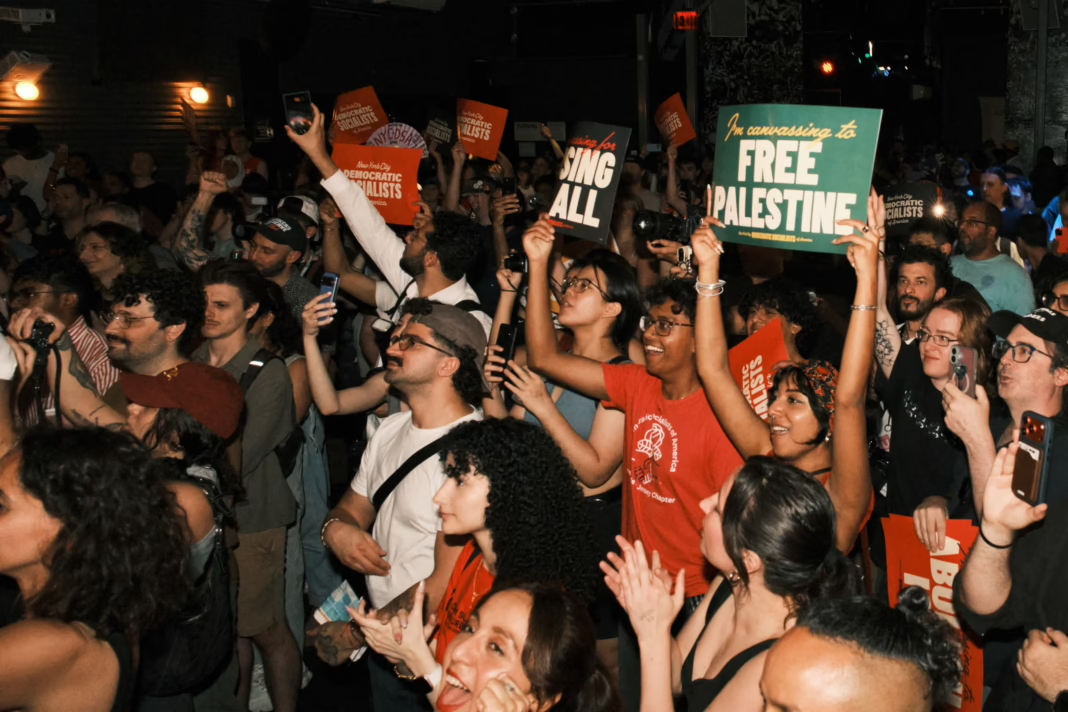
Democratic Socialists of America is having the political problem every insurgent movement dreams of having. It is winning enough races that other Democrats now have to read the platform. Rep. Tom Suozzi went on television this week and argued that DSA-backed candidates should have to defend the organization’s positions just as he has to defend the Democratic Party’s platform. This is what success looks like when the family starts asking exactly what your new friend believes about the Senate, the police and private ownership.
Breitbart reported Thursday on Suozzi’s comments, in which he criticized a series of positions he attributes to the DSA platform and argued that candidates should not be able to distance themselves from unpopular planks while keeping the movement’s support. Fox News, in a separate current piece, highlighted DSA-backed victories in cities and school-board races around the country. Newsmax reported this week that democratic socialists are trying to expand beyond their strongest constituencies and win more Black voters by focusing on housing, healthcare and everyday costs rather than ideological labels. The movement is no longer a podcast guest. It is becoming an electoral faction.
That creates an accountability problem the left has often imposed on everyone else. Republicans are regularly told that if they accept an endorsement from a movement, appear at its events or seek its voters, they own the movement’s ugly positions too. Sometimes that is fair. Sometimes it is lazy guilt by association. The standard does not become less interesting when applied in the opposite direction. If a candidate runs with DSA support but says several parts of the DSA program are not really what the campaign is about, voters are allowed to ask what the affiliation is for.
The answer may be straightforward. DSA is not a conventional top-down political party, and candidates associated with it do not necessarily endorse every plank or every chapter position. Local chapters differ. Members argue. National committees argue with members. The movement contains people more interested in tenant organizing and wages than constitutional redesign. That is normal for political coalitions. The Republican Party also contains people who disagree about tariffs, foreign policy and data centers. But normal disagreement does not erase the need to identify which parts of a coalition’s agenda a candidate actually supports.
The DSA’s recent electoral growth makes the distinction urgent because branding is becoming policy. A socialist candidate who wins a city council seat will eventually vote on budgets. A mayor will sign contracts. A member of Congress will choose committee positions and cast votes that cannot be explained by a rose emoji. Once a movement moves from protest to power, it loses the luxury of treating every awkward proposal as a misunderstood thought experiment. Someone eventually has to write the ordinance.
Progressive activists sometimes respond that the DSA label is being weaponized by conservatives and that debating the most provocative lines in a platform distracts from popular economic goals. That is probably true. Republicans would much rather discuss abolishing institutions than cheaper childcare. But political movements do not get to publish platforms and then complain that opponents read them. If a position is obsolete, remove it. If it is aspirational, explain it. If it is essential, defend it. The least persuasive option is to insist that the official words are both deeply meaningful and unfair to mention.
Newsmax’s reporting on Black voters points to the more promising route. Candidates such as Angie Nixon have gained traction by talking about costs people encounter in real life. Housing. Medical bills. Childcare. Wages. Those issues can be argued from a socialist perspective without requiring voters to pass a vocabulary exam. If DSA wants durable growth, it may discover that organizing people around practical interests matters more than getting them to identify with the entire ideological package. That would not make the movement less serious. It would make it political.
Suozzi’s complaint is self-interested, of course. Centrist Democrats see DSA growth as a threat to their influence and will emphasize the movement’s least popular ideas. Fox’s description of a quiet socialist takeover is also plainly an opinionated frame. The factual development underneath both is more useful. DSA-backed candidates are winning enough elections that Democrats can no longer treat the movement as a fringe curiosity. With influence comes the deeply unfair burden of being asked what you mean. The growth also creates a discipline problem for Democrats who are not members. They will be asked about DSA positions anyway, especially when nominees accept DSA help or endorsements. That can feel unfair to moderates, but coalitions create shared reputational costs. The practical solution is not endless denunciation. It is clarity. Candidates should be able to say which alliances they welcome, which policies they reject and why, without requiring voters to decode organizational bylaws between campaign ads.
That is the thread the activist left cannot meme away. A faction that wants to reshape the Democratic Party will eventually have to decide whether it is building a broad governing coalition or an ideologically precise club that happens to win some primaries. Those goals can overlap for a while. They diverge when candidates in difficult races start editing the label, the platform or both. The bigger the movement gets, the harder it is to keep every contradiction inside the group chat.
The DSA has spent years asking Americans to take democratic socialism seriously. Congratulations. They are. Serious attention includes scrutiny, hostile questions, platform comparisons and candidates being asked to say which ideas they actually intend to enact. That is not suppression. It is what happens when a political movement gets close enough to power that the footnotes start mattering.
If DSA-backed candidates keep distancing themselves from parts of the DSA platform as they move into competitive races, which part is supposed to define the movement: the platform or the candidates who can win?
Sources
Breitbart: Suozzi: DSA Candidates Have ‘Got to Defend the DSA Platform,’ ‘I’ve Always Got to Defend the Democratic Platform’
Fox News: America’s quiet socialist takeover is spreading from town halls to classrooms
Newsmax: Democratic Socialists’ Next Hurdle: Winning Over Black Voters
The Guardian: Democratic socialists ride wave of momentum in primaries from New York to Colorado