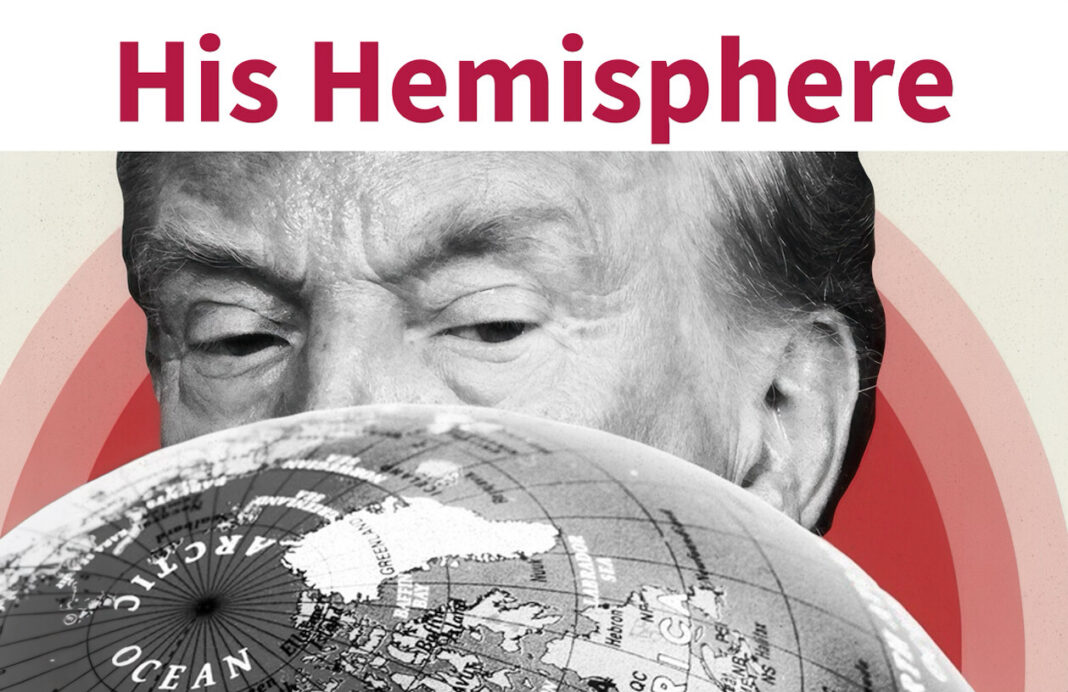




Donald Trump has a new midterm warning for voters: Democrats, he says, are bringing communism to America.
There is one very awkward calendar item sitting next to that message.
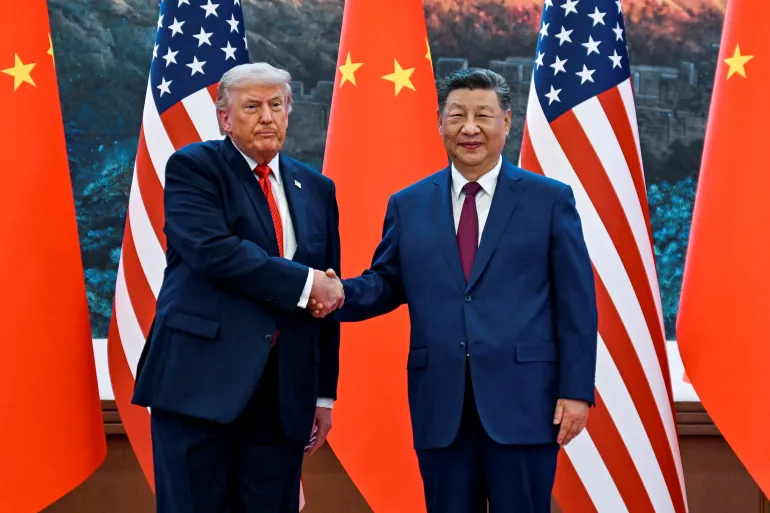
Chinese President Xi Jinping is coming to the United States this week.
Xi is not being accused of communism as a campaign metaphor. He is the leader of the Chinese Communist Party.
The juxtaposition has become part of the political conversation as Trump sharpens his attacks on Democrats ahead of the 2026 midterms while simultaneously preparing to receive Xi for high-level talks.
To be clear, those two things are not equivalent. Calling an American political opponent a communist is campaign rhetoric. Conducting diplomacy with the head of a communist state is a normal function of the presidency. American presidents have met Chinese leaders for decades while criticizing communism at home.
But when your campaign message is essentially communism is coming and your diplomatic schedule says Xi Jinping arrives Wednesday, people are going to notice.
Associated Press reporting describes Trump as increasingly using “communist” as a label for Democrats while warning that Democratic victories would transform the United States. That rhetoric comes as Trump says he has a good relationship with Xi and prepares for a major round of talks with the Chinese leader.
Trump’s relationship with China has always contained contradictions.
He launched a trade war during his first term, imposed tariffs and accused Beijing of taking advantage of the United States. In his second term, he has again pressured China economically while also repeatedly emphasizing his personal relationship with Xi.
“We get along well,” Trump told reporters ahead of the visit, according to The Washington Post.
That is diplomacy. Presidents regularly negotiate with governments whose political systems they reject.
The more interesting part is that Trump’s domestic economic policies have also created an argument inside his own coalition over how much government involvement in private business is too much.
The AP notes criticism from Republicans over the administration taking government stakes in private companies, including Intel and Westinghouse. Critics have described some of those moves using terms like “state capitalism” and “corporate socialism.”
Again, those descriptions are political arguments, not neutral definitions of the policy.
The administration says the investments serve national-security and strategic objectives, particularly in industries like semiconductors, energy and infrastructure. Supporters argue that direct government involvement can protect supply chains and keep critical industries under American control.
Critics on the right counter that the government owning pieces of private companies looks suspiciously like the kind of state involvement Republicans traditionally attack.
So the word “communism” is doing a lot of work in Washington right now.
Trump uses it to describe Democrats.
Some Republicans use adjacent language to criticize Trump administration industrial policy.
And the actual general secretary of the Chinese Communist Party is flying in for meetings.
Politics rarely provides such convenient scheduling.
Xi’s visit is important for reasons far beyond the campaign rhetoric. The United States and China are negotiating over trade, artificial intelligence, semiconductor restrictions, military competition, Taiwan and a long list of other disputes. The two countries are economic competitors, military rivals and deeply connected trading partners all at the same time.
Trump’s approach has increasingly combined confrontation with direct leader-to-leader diplomacy. He has imposed tariffs and restrictions while also presenting his personal relationship with Xi as an asset that can produce deals.
That makes the contrast with his domestic rhetoric even sharper.
At home, “communist” is being used as a blunt political insult.
At the negotiating table, the administration has to deal with actual Communist Party officials on extremely complicated questions where shouting the word does not solve very much.
The distinction is worth keeping clear because American political language has become extremely elastic. “Communist,” “socialist,” “fascist” and similar labels are routinely thrown around far beyond their technical meanings. They are often designed to tell voters how they should feel about an opponent before anyone gets to the underlying policy.
Xi, by contrast, leads a one-party state governed by the Chinese Communist Party. The CCP controls the political system, and Xi is its general secretary as well as China’s president.
No rhetorical decoding is required.
None of this means Trump should refuse to meet him. Presidents are expected to communicate with rivals, including governments whose political systems are fundamentally different from America’s. Ronald Reagan negotiated with Soviet leaders while attacking communism. Richard Nixon went to China. Diplomacy does not imply ideological agreement.
The BuzzyTimes part is simply the timing.
Trump is warning Americans about communists while preparing the White House welcome mat for the leader of the largest communist party on Earth.
And because this is 2026, the week will also include arguments about AI, Greenland, tariffs and whether the federal government owning stakes in corporations is sufficiently capitalist.
Just a normal Monday.
The real test will be what comes out of the Xi meetings. If Trump secures agreements on trade, security or AI, the administration will point to the visit as proof that personal diplomacy works. If the talks stall, critics will argue that Trump’s softer language toward Xi produces little in return.
Either way, the communist label is unlikely to disappear from the midterm campaign.
It is too useful politically.
It is also about to become very difficult to avoid noticing who is sitting across the table.
Is “communist” still a meaningful political description in American campaigns, or has it become just another all-purpose attack word?