



Trooping the Colour is a 265-year-old ceremony in which the British monarchy puts on its best clothes, deploys 1,400 soldiers and 200 horses, marches down the Mall, and demonstrates to the world that the institution is still here, still functioning, and absolutely not in the middle of an ongoing family implosion. It went largely according to plan on Saturday. Then some people booed, and the internet got to work.
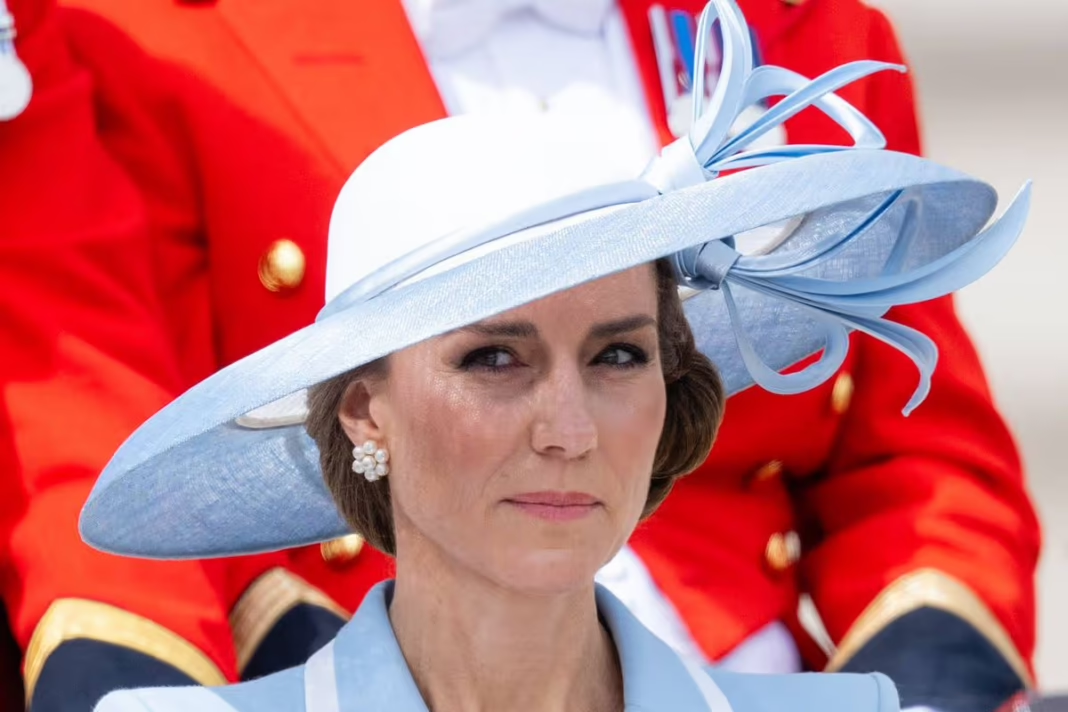
The boos were real. The Mirror reported that as Kate rode in a carriage with George, Charlotte, and Louis after the ceremony, members of the crowd booed and shouted. Kate, who has been doing this long enough to have an emergency expression for exactly this situation, maintained composure, offered a small wave, and let her face communicate the rest in a way that does not give photographers a pull quote. That part is documented. The part the viral clips added (that Kate looked “angry,” that the children were “uncomfortable,” that the crowd was turning) was, per the Nerd Stash’s fact-check, considerably more embellished than what actually happened.
The boos came from an organized protest group, Republic, whose signs were specifically about Prince Andrew and the Epstein scandal. The loudest moments were near Charles and Camilla, not the Wales carriage. Republic posted their own footage with the context that the viral clips left out, which is the kind of responsible sourcing that travels about a tenth as far as the clip of Kate’s face.
The ceremony itself, stripped of the narrative layer deposited on it afterward, was a strong one for Kate. She sat on the royal dais beside King Charles at Horse Guards Parade, a position that royal correspondents treated as significant enough to write six paragraphs about. She wore the Irish Guards’ regimental brooch, her regiment. Princess Charlotte, eleven years old and apparently unconcerned with discourse, was described as elegant by every outlet that covered the event.
Prince Andrew was also not there, a fact that produced considerably less commentary about shifting public sentiment than Harry’s now six-year-running absence. Andrew lost his royal titles in 2025 and was arrested on suspicion of misconduct in February 2026, which he denies. The contrast in coverage between the two absent royals is a data point the palace, if it were inclined to do public relations analysis, would find instructive.
Harry and Meghan did not attend. This generated the predictable volume of articles before, during, and after the ceremony, including claims that William intends to strip the Sussexes of their titles when he becomes king, a report that Kate has formed a close friendship with Harriet Sperling as a private source of support, and the standard round of palace-source quotes that the palace declined to comment on. The palace declining to comment on things is now so consistent it functions as its own message, which both sides of the Sussex debate interpret as confirmation of whatever they came in believing.
The monarchy has been running this play since 1760. Show up. Wear the hat. Wave. Do not give the photographers a reaction. Trust that the ceremony is more durable than the controversy. It has worked for 265 years. The carriage kept rolling on Saturday. So did the discourse.
When a 265-year-old institution’s entire strategy for every crisis is to wave and keep moving, at what point does the wave stop working?
Sources
The Mirror: Kate Middleton goes viral for her reaction after she’s booed at Trooping the Colour
The Nerd Stash: Kate Middleton Drama Erupts As Her Kids Get ‘Booed’ At Trooping The Colour Until Fans Spot The Twist: ‘This Didn’t Happen’
IBTimes UK: Kate Middleton Looked ‘Angry’, Children ‘Uncomfortable’ After Trooping the Colour Boos, Critics Claim