



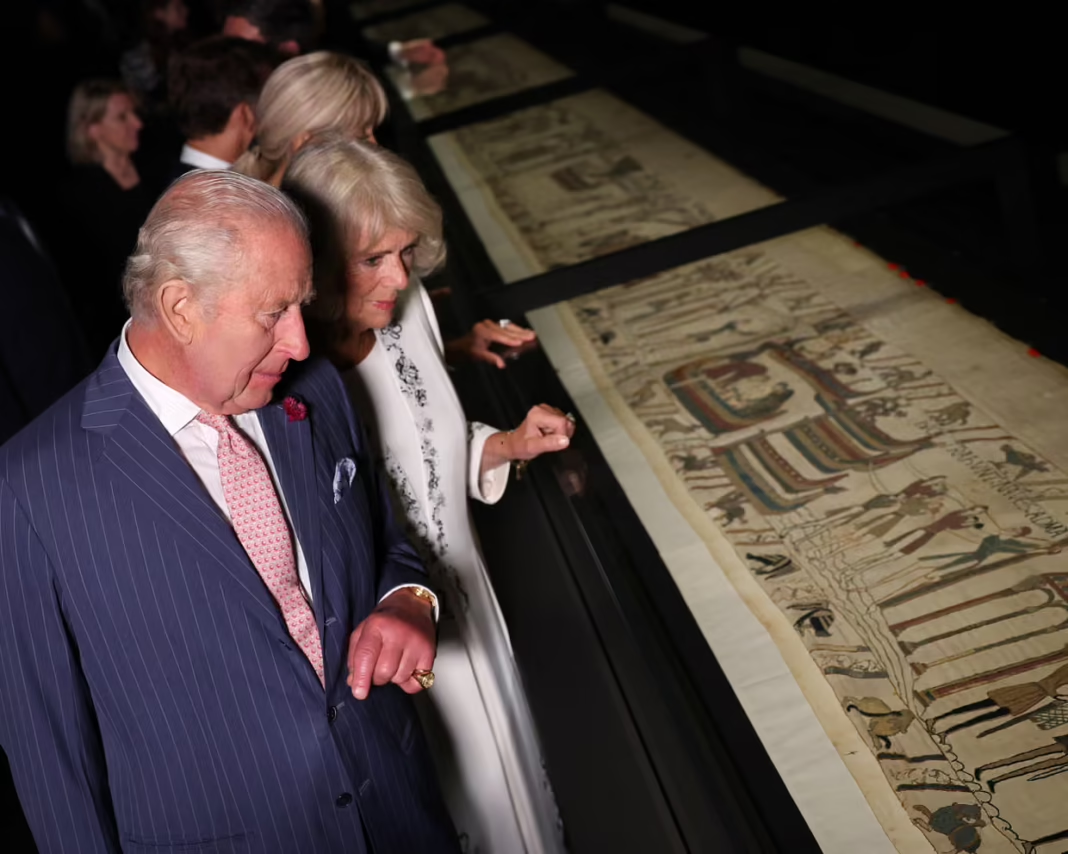
King Charles stood beside Emmanuel Macron at the British Museum this week and celebrated the return of the Bayeux Tapestry to Britain for the first time in nearly a millennium. The object depicts the Norman conquest, which is a wonderfully British choice for a friendship exhibit because nothing says renewed cooperation like seventy meters of embroidered evidence that France once arrived with an army and changed the management. Charles called the loan a symbol of trust and an ‘entente amicale.’ After Brexit, tariff rows and years of Channel arguments, Britain and France have apparently decided the safest subject is 1066, when the disagreement was at least settled on schedule.
The loan is genuinely extraordinary. The tapestry is roughly 950 years old and has spent most of its known history in France. It tells the story surrounding William the Conqueror’s invasion of England and the Battle of Hastings, with hundreds of figures, horses, ships and the sort of political messaging that proves propaganda did not need Wi-Fi. The British Museum exhibition is part of a cultural exchange in which Britain will send treasures including Sutton Hoo objects and Lewis chess pieces to France. Macron noted that Britain had been asking for the tapestry since 1931. Ninety-five years later, the answer was finally yes. Diplomacy rewards patience, particularly when the item cannot fit in anyone’s carry-on.
Charles leaned into the symbolism, saying Britain and France share a future woven together by history and values. It is an elegant line. It is also hard to ignore that the most famous thread in the room records a successful invasion of England. Royal diplomacy has always required a certain ability to place a polished silver frame around awkward facts. The king did not pretend Hastings was a team-building retreat. He simply treated the ancient conquest as proof that the two countries have been entangled for so long that separation now requires more paperwork than friendship.
That is the target here, in the fondest possible royal sense. The monarchy can turn almost anything into continuity. A battle becomes shared history. A conquered kingdom becomes cultural exchange. A 950-year-old needlework account of regime change becomes soft power with canapé service. This is not dishonesty. It is the core royal technology. If Charles had been asked to open an exhibition about the Wars of the Roses, he would probably have found a paragraph about horticulture and national resilience before the ribbon was cut.
The timing helps. Britain and France are trying to manage current disagreements over migration, defense and the broader relationship between the UK and Europe. Those problems do not become easier because an embroidered Norman is pointing a spear at an Anglo-Saxon. But cultural diplomacy gives leaders a room in which they can talk about centuries rather than tomorrow morning. It lowers the temperature. Macron gets to lend something France treasures. Charles gets to praise a relationship older than either modern state. Everyone gets photographed beside history instead of beside another small-boats chart.
The tapestry also offers a quiet lesson in who gets to tell the story. It was created close to the events it depicts, probably in England, yet it became one of France’s great cultural treasures. Its pictures helped shape the popular memory of the conquest for generations. Now it is back in Britain as an exhibit about shared heritage, which is a diplomatic way of saying both countries have spent nine centuries claiming a piece of the same story. The monarchy understands this instinct. It has spent even longer turning possession, ritual and repetition into legitimacy.
There is a charming absurdity in watching modern leaders search the medieval past for reassuring metaphors. The Channel is full of current political friction, so Charles points to stitches made before either country had its current borders. Britain has spent years debating its distance from Europe, and the king welcomes an artifact that demonstrates how badly geography has respected that ambition. Even the phrase ‘entente amicale’ admits the relationship is not effortless. You do not need a special French phrase for getting along with someone who never annoys you.
Still, this is one of the monarchy’s better uses. No elected leader needs to risk a poll number to admire embroidery. Charles can embody continuity while governments argue about practical policy. The tapestry does not solve migration, trade or defense. It does remind both sides that today’s quarrel will eventually become somebody else’s museum label. A royal family that survives by thinking in centuries is unusually well suited to that message.
The British Museum has another reason to enjoy the symbolism. The loan arrives after years of arguments about ownership, restitution and what major museums should hold on behalf of everyone else. Here is a celebrated object moving across a border because two countries agreed to share it rather than spend another decade arguing about permanent possession. The exchange is temporary, carefully insured and probably supervised more closely than some elections. Still, it demonstrates that cultural treasures can travel without anyone pretending history has been resolved.
Charles is particularly suited to this kind of ceremony because the monarchy itself is a living argument about inherited history. He cannot make 1066 less bloody, just as he cannot make empire, Brexit or modern Anglo-French rivalry disappear. He can stand beside the evidence and insist that long relationships contain both conquest and cooperation. That may sound obvious, but modern politics often behaves as if every disagreement began last Tuesday and can be solved by finding the correct villain before dinner.
If Britain and France can turn a conquest into a friendship exhibit after 950 years, which of today’s supposedly permanent disputes will look equally negotiable when history gets enough distance?
Sources
The Guardian: Bayeux tapestry loan symbolises ‘entente amicale’ between France and UK, says King Charles
The Sun: King Charles and Macron share a joke as they view the Bayeux Tapestry together at the British Museum