



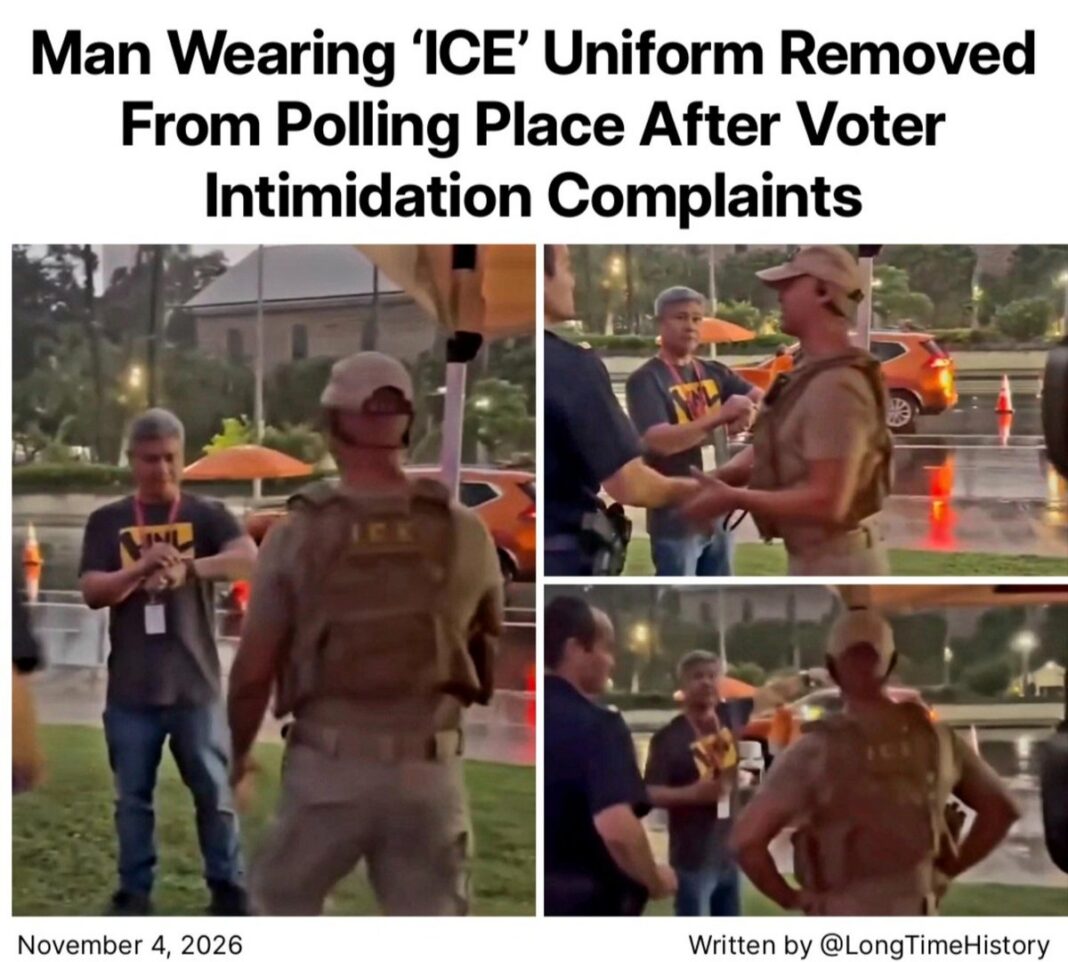
At a Brazilian election polling site in Miami, authorities say a man put on an ICE outfit and walked among voters who feared they might be detained. The detail that makes this story particularly American is that the man reportedly bought the costume on Amazon. Democracy was trying to conduct an election. Someone apparently decided it needed an unsolicited immersive experience. According to the arrest report described by local news outlets, Danilo Alves Silva, 46, was wearing a blue ICE hat and raid jacket, sunglasses, a mask and tactical-style boots when deputies encountered him at Miami Dade College’s Kendall Campus on October 4. He was not an ICE officer. The sheriff’s office says he was pretending to be one.
The voting was for Brazil’s presidential election, not a United States election. That distinction matters, because the people casting ballots were Brazilian citizens exercising their voting rights while in Florida. Deputies said the man moved between two voting locations, interacted with people who appeared afraid and was confronted by someone who objected to his behavior. The officers intervened. A polling place is supposed to be a place where people can vote without being frightened by a stranger dressed as a federal immigration agent. That seems like a modest standard. It also seems to have been too much to ask of this particular afternoon.
Investigators say Silva gave them an explanation that belongs in a customer review, not an arrest affidavit. He had arrived in a Brazilian jersey, voted, gone back to his vehicle and changed into the outfit because he wanted to see people’s reactions. The report quotes him describing the ICE gear as a costume bought online. Apparently the traditional methods of learning how strangers feel, such as talking to them, had been exhausted. The problem with staging a social experiment at a polling site is that the participants have not volunteered, and the election is not a theater production. A voter who thinks an actual federal agent is threatening to deport them is not giving an amusing reaction. That voter is being frightened.
The allegations did not end with the costume. Authorities say Silva became agitated when detained, threatened detectives and offered money to be released. Those are allegations, not findings of guilt. News reports list charges including voter intimidation, bribery-related offenses, threatening a public servant and unlawful use of law-enforcement insignia. A costume can be harmless at a party. At a polling location, the same insignia can convey the authority of the state. That is why the setting, the behavior and the apparent reaction of voters are central to the case, rather than whether a website was willing to ship a jacket.
There is an institutional lesson hiding under the absurd wardrobe change. Federal immigration enforcement is already contentious enough that simply appearing to represent ICE can frighten people who are doing something lawful. The accused man did not need to produce a badge that passed inspection or a warrant that could withstand a legal challenge. Investigators say the impression alone was enough to alarm people. That makes impersonation a problem for more than the agency whose name appears on the clothing. It makes it a problem for elections, public trust and everyone who must decide in seconds whether the person approaching them has real authority.
It is tempting to treat the incident as another entry in the national collection of people behaving badly for attention. But the alleged conduct took place where the right to vote was being exercised. That is the serious part. The comedy is in the logistical detail of a man apparently treating the polling place as the set of his own prank video, complete with a costume change after casting his ballot. The legal system will determine what happened and whether the charges hold. In the meantime, election administrators are left with a practical question that should not require a shopping cart to answer.
How do election officials protect voters when a convincing uniform can be ordered online and worn by someone with no authority at all?