




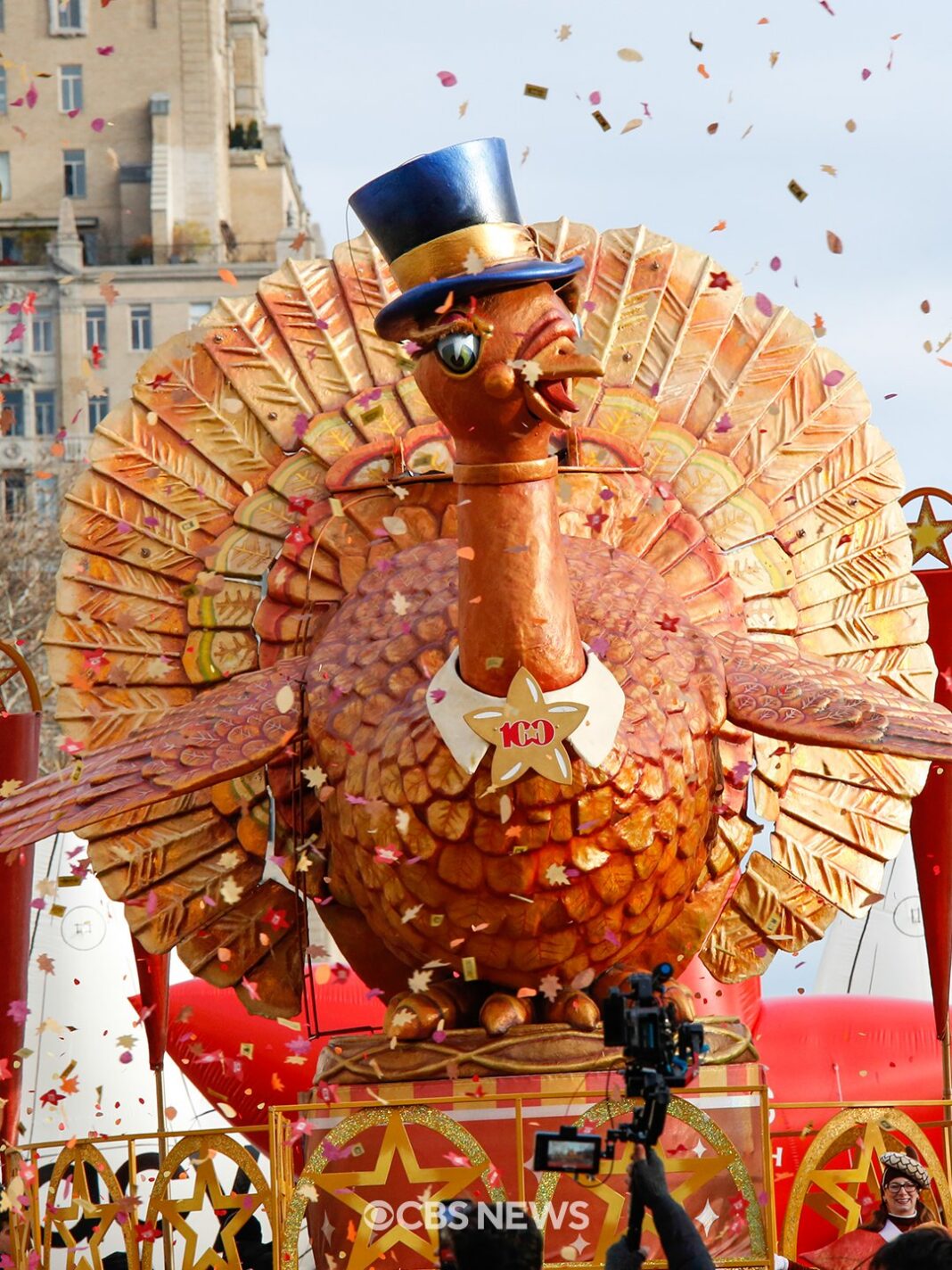
The 100th Macy’s Thanksgiving Day Parade survived a historic weather delay, only to run straight into a completely different sort of storm involving Broadway performers, fishnet stockings and Americans arguing about what children should see on television. A performance from The Rocky Horror Show during Saturday’s broadcast set off a flurry of complaints from conservative commentators. One of its stars, Kevin McHale, decided he was not going to spend the weekend apologizing for wearing theatrical costumes in a theatrical performance.
The Glee alumnus instead invited people to see the Broadway production and took a shot at one of the critics. Suddenly a parade designed to celebrate a century of American entertainment was also serving as the latest battlefield in an argument about cultural standards. Santa Claus has probably had more relaxing trips down Sixth Avenue.
Thanksgiving Finally Arrives on Saturday
There was already plenty unusual about this year’s event before any of the performers stepped in front of the cameras. A severe storm forced organizers to move the November 26 parade to Saturday, November 28. According to the Associated Press, it was the first postponement of the event in its history. The giant balloons had to be dealt with, performers had to rearrange travel plans, and NBC filled the original holiday broadcast slot with last year’s parade.
Macy’s and NBC had also planned something special for the centennial: a ten-minute musical celebration featuring performers from nine Broadway shows. The lineup was publicly announced November 19, and included Wicked, Hamilton, Aladdin, Chicago, Rent and The Rocky Horror Show, among others. It was meant to showcase the parade’s long relationship with musical theater, rather than simply give each individual production the customary opportunity to advertise itself.
That is important context because Rocky Horror did not somehow slip into a parade without the organizers knowing. It was a scheduled component of an extensively promoted Broadway tribute. What viewers saw on Saturday was a portion of that performance, with cast members in the show’s characteristic costumes dancing and singing Time Warp.
Fishnets Meet the Family Broadcast
Page Six reported that performers wore sheer clothing and stockings during the number. Conservative commentator Steve Guest shared a clip on X, criticized NBC and argued that the outfits were unsuitable for a program he considered intended for children. Other commentators echoed concerns about the costumes and choreography.
For the critics, the setting was the issue. A performance at a Broadway theater is an event that people choose to attend and can investigate before buying tickets. The Thanksgiving parade, on the other hand, is a broadly marketed holiday tradition that many families watch together without treating each musical number as a separate entertainment decision. Some viewers felt the production was an odd fit for that particular morning.
Rocky Horror’s defenders had a different reaction. Revealing costumes, theatrical camp and deliberately exaggerated gender presentation have been elements of the musical for decades. To them, a few minutes of choreography from a famous Broadway production were hardly the cultural catastrophe the online commentary suggested.
Neither reaction requires pretending that everyone who watched the parade felt the same way. There is no representative polling on what American families thought of the performance. A set of angry posts and an equally enthusiastic set of replies establish that people were arguing, not which side constitutes a national majority.
Kevin McHale Has No Plans to Apologize
McHale, best known to many viewers as Artie Abrams on Glee, plays Brad Majors in the Broadway revival. He responded directly to Guest’s post by encouraging people to visit the production at Studio 54, describing the commentator as a loser. The response was not a carefully managed statement expressing gratitude for the feedback. It was a fairly straightforward invitation to buy a theater ticket and ignore the person who had complained.
From a publicity perspective, the exchange is a remarkable gift to the production. Broadway shows compete to attract attention, especially during the holiday season. A nationally televised appearance followed by a social media argument gives Rocky Horror another chance to remind audiences that the show is running. The people most offended by the performance are now helping circulate its footage, although that does not make their objections insincere.
It also makes this a particularly modern entertainment controversy. A short segment of a long live broadcast becomes a stand-alone clip. The clip is shared with a strongly worded reaction. A performer responds, and the response becomes its own story. By the time everyone has finished debating the number, they may have watched it more often than the people who originally enjoyed it on television.
Rocky Horror Was Never Exactly a Norman Rockwell Painting
The original stage musical premiered in London in 1973 and reached Broadway in 1975, the same year the famous movie adaptation was released. Its story follows a newly engaged couple, Brad and Janet, who encounter the flamboyant inhabitants of an eccentric scientist’s home. The production became a cult favorite precisely because of its unusual mixture of rock music, science fiction, sexual humor and affectionate parody.
It would be difficult to celebrate the history of Broadway without acknowledging shows that challenged conventional tastes. The art form is full of material that was provocative in its own time. Of course, acknowledging a musical’s place in theater history is not the same as saying every scene belongs on morning television. Broadcast producers make selections, and viewers can reasonably argue about where the line belongs.
That is a more interesting argument than whether a musical that has been around for half a century suddenly invented fishnets. NBC knew the production’s identity when it put the show on the schedule, and the performers were doing material associated with the production. Whether the selection was the best fit for a general audience is a question for the broadcaster and its viewers, rather than something McHale could resolve with a post on X.
What makes the episode particularly funny is the contrast between the scale of the event and the size of the dispute. Organizers managed to recover from an extraordinary storm, rearrange a massive parade and deliver a hundredth-anniversary celebration. Then a portion of a ten-minute musical medley became a national argument about stockings. New York had spent two extra days getting the balloons into the air, and the internet still managed to find something else to inflate.
Sources
- NBCUniversal — Official announcement of the Broadway medley and postponement
- Associated Press — Historic postponement and revised parade lineup
- Parade — Kevin McHale’s response to critics
- Page Six — Performance, costumes and musical history
- X — Steve Guest’s original post and performance clip (quoted in Parade)
- X — Kevin McHale’s original response (quoted in Parade)