



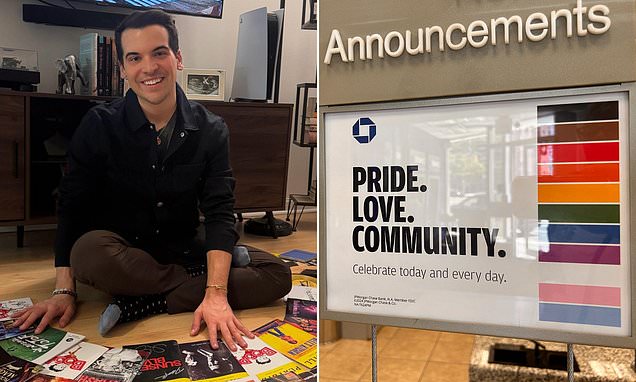
Brian Larson says a supervisor mocked his work with JPMorgan’s PRIDE group, warned that “DEI is not going to save you,” and retaliated after he complained. The bank says the allegations lack merit and points to performance concerns.
Brian Larson says he joined JPMorgan expecting the usual giant-bank mix of deadlines, meetings and corporate acronyms. According to a new federal lawsuit, he instead ended up in a workplace fight where a supervisor allegedly told him to keep his “gay job” separate from his “day job.” If the goal was to produce the least subtle HR complaint imaginable, the alleged phrasing did a lot of the work by itself.
Larson, an openly gay former senior associate, says he was heavily involved with PRIDE Tri-State, an internal affinity group for LGBTQ employees. His complaint alleges that a supervisor repeatedly belittled that work, told him “DEI is not going to save you,” and said that being gay did not mean he deserved a “leg up.” Larson argues those comments were part of a broader pattern of discrimination and retaliation.
The lawsuit says Larson had previously received strong reviews and had taken on leadership responsibilities inside the PRIDE group. He claims that changed after he pushed back on his supervisor’s comments and raised concerns internally. According to the complaint, he was removed from projects, received a sharply lower performance rating and then struggled to land another role inside the bank despite applying for dozens of openings.
One episode centered on roughly $40 in Uber expenses tied to Pride Month events. Larson says he had been authorized to attend those events and expense the rides, and that his manager corroborated his account when HR questioned him. The complaint says the expense issue was dropped, but only days later Larson was told he needed to resign or be fired because his rotational program had effectively run its course.
JPMorgan disputes his version of events. A bank spokesperson told The Independent that the company investigated Larson’s allegations and found no evidence to substantiate them. A source at the bank also pointed to concerns about his performance, communication and receptiveness to feedback, and said participation in the associate program did not guarantee a permanent position.
That is the central factual divide in the case. Larson says his career was derailed because he was gay and because he challenged what he viewed as discriminatory treatment. JPMorgan says he had legitimate performance issues and that the discrimination claims were not supported by its internal investigation. A federal court has not yet decided who is right.
The complaint also describes a significant personal toll. Larson says the stress contributed to panic attacks, depression, migraines and a recurrence of trichotillomania, a condition involving compulsive hair pulling. He is seeking lost wages, damages and other relief under federal civil-rights law.
The case lands in an awkward moment for corporate America. Big companies spent years advertising employee-resource groups and DEI initiatives as proof of inclusive workplace culture. Many have since pulled back from some of that branding as political pressure around DEI intensified. Larson’s allegations cut directly into that tension: what happens when a company promotes Pride internally, but an employee says his manager treated that same work like an embarrassing side hustle?
There is also a practical workplace issue hiding beneath the culture-war language. Employee-resource groups are often encouraged by companies, highlighted in recruiting materials and treated as part of corporate culture. If managers then penalize employees for participating in them, the company is effectively asking workers to volunteer for a program and then pretend it never existed when review season arrives.
JPMorgan says that is not what happened here, and the court process will test Larson’s evidence against the bank’s explanations. Until then, the most striking part of the complaint is still the bluntness of the alleged remarks. “Gay job” and “day job” are not exactly phrases a compliance department dreams of seeing reproduced in a federal filing.
The broader question is simple: if a company publicly promotes LGBTQ employee groups, how much protection should workers expect when participation in those groups becomes part of a conflict with management?