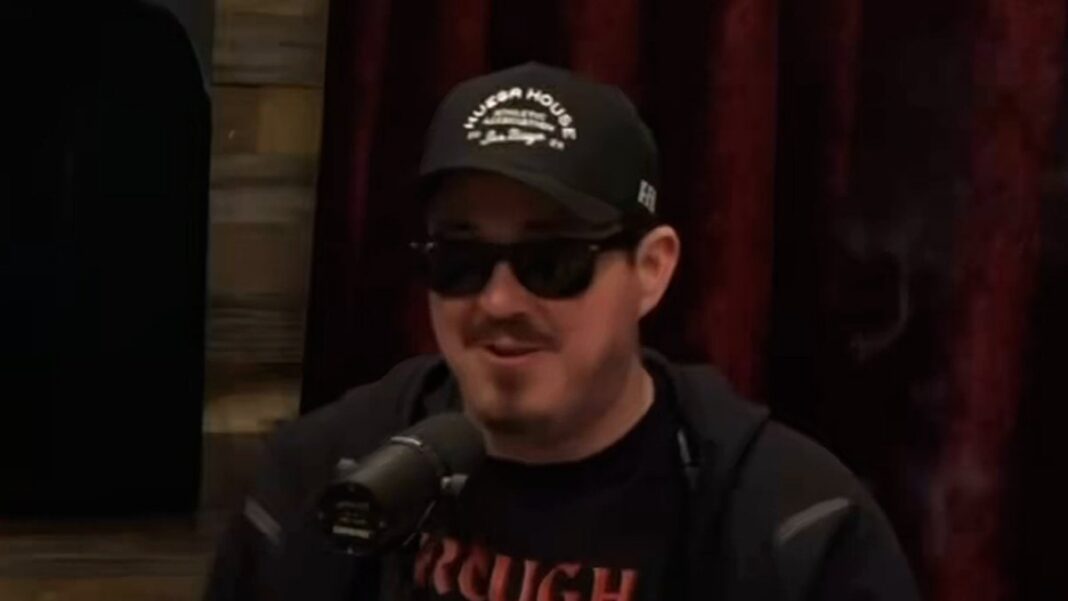




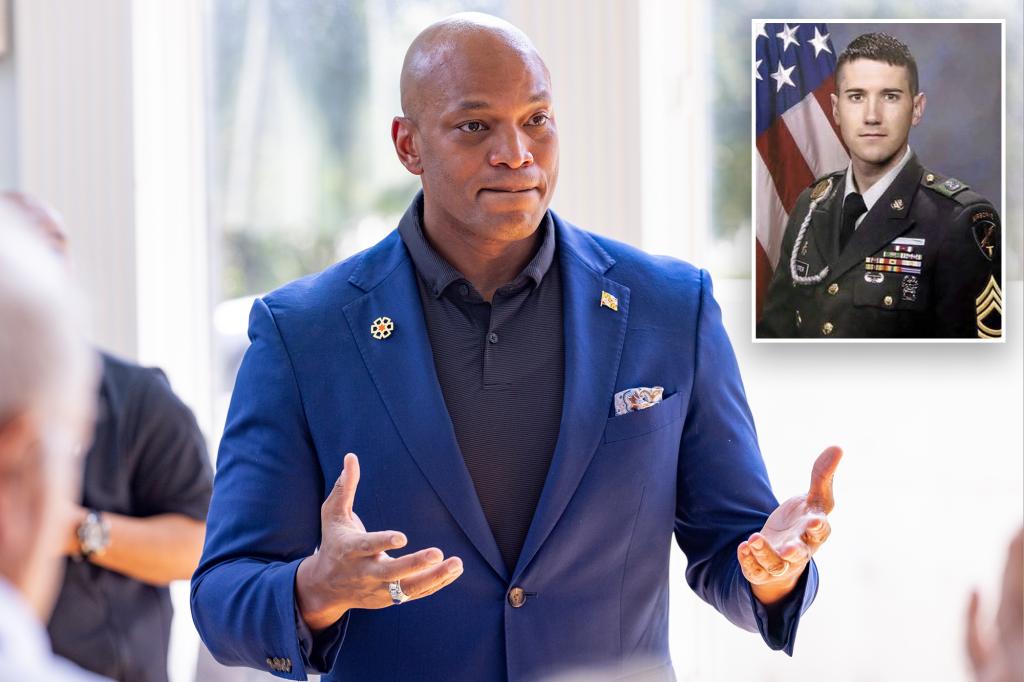
Maryland Gov. Wes Moore is facing a question that no memoir editor wants to encounter: how could a man mourn a soldier at a funeral when that soldier was still alive? A newly published investigation says Moore’s 2015 book places an emotional remembrance of Army 1st Sgt. Tobias “Toby” Meister at his grandfather’s funeral on December 17, 2005. Meister died in Afghanistan on December 28, eleven days later. The calendar is not offering much room for interpretation.
The discrepancy is the centerpiece of reporting published Sunday by Spotlight on Maryland and subsequently covered by the New York Post. It is not proof that every aspect of Moore’s wartime recollections was fabricated. But it is a concrete problem in a personal narrative that presents memories of military service as formative experiences, and it has drawn sharply conflicting accounts from people who knew the fallen soldier.
The story is especially sensitive because it concerns a real family’s loss. Meister was killed by a roadside bomb while serving in Afghanistan. His widow, Alicia Meister, has spent nearly 21 years living with that loss. A dispute over a politician’s book should not turn her husband into a prop in someone else’s campaign argument.
The passage that started the questions
Moore’s memoir, “The Work: Searching for a Life That Matters,” describes a moment of grief at his grandfather’s funeral and connects it to Meister, whom the governor identifies as a friend. According to the reporting, the passage evokes the image of seeing Toby in the casket. The documented dates, however, put Meister’s death after the funeral. A powerful literary scene becomes a chronological impossibility if read as a literal recollection of events that day.
There are possible explanations for an inaccurate memoir passage, including confused chronology, faulty editing, or memories assembled long after traumatic experiences. Those possibilities are not findings about what happened here. They also do not eliminate the need for a clear explanation from the author. When a book asks readers to trust a first-person account, the author cannot outsource the calendar to the emotional force of the prose.
The investigation raises a second issue: how close Moore and Meister actually were. That question is harder to resolve from dates alone. People can know each other without every colleague or family member being aware of the relationship. Yet the accounts gathered by the reporters make the claimed friendship a legitimate subject for further examination rather than a detail readers should automatically accept.
What the widow and veterans say
Alicia Meister told Spotlight on Maryland she did not recognize Moore’s name as one her husband had mentioned, and said she had not heard from the governor in the years following Toby’s death before reporters contacted her. She also described hearing from numerous soldiers and public figures over the years. Her account does not conclusively establish whom Toby knew, but it is a significant counterpoint to the memoir’s description.
After the interview, Moore contacted Alicia to offer his respects, according to subsequent coverage. She did not claim to know his intentions, and she allowed that memories of wartime experiences can be complicated. That restraint matters. It would be easy for commentators to turn her uncertainty into a definitive verdict she did not deliver.
Retired Army Lt. Col. Patrick Munster, who said he was with Meister at the time of the fatal attack, disputed the notion that Meister and Moore coordinated tactical operations. He questioned why the personnel and units described would have been coordinating in the way suggested. Retired Marine Cpl. Gary Wayne Epperson, wounded in the same attack, also expressed doubt about the relationship described in the book.
These are named people speaking about their own knowledge and experience, not anonymous internet speculation. Still, their testimony should be attributed accurately. They challenge Moore’s account; they cannot, by themselves, establish every interaction that may or may not have occurred between two soldiers more than two decades ago.
A familiar controversy returns in a new form
Moore’s military biography has previously faced scrutiny over a separate Bronze Star controversy. That earlier debate provides political context, but it should not be treated as evidence that the new memoir allegations are true. Each claim needs its own documents, dates and witnesses. Otherwise the coverage becomes a game of stacking suspicions until the pile looks like proof.
The governor was reelected earlier this month, and his national profile means that questions about the book are unlikely to stay confined to Maryland. Opponents may seize on the story; supporters may argue that a passage written years ago is being stripped of context. Neither reaction settles the central issue: the funeral date and the date of Meister’s death do not match the literal sequence presented in the account.
According to the New York Post, Moore did not answer the original outlet’s extensive questions before publication, and his office did not respond to the Post’s request for comment. That is a description of the reporting status, not evidence of guilt. A detailed response, including any corrections or contemporaneous records, could materially change how the episode should be understood.
The questions that remain
The clearest next step would be a direct explanation of the chronology: whether the funeral scene was a composite, whether the book misplaced a later recollection, or whether another error occurred. Readers also deserve to know what evidence supports the description of Meister as a friend and how the relevant passages were fact-checked before publication.
Public figures often write memoirs to explain how their experiences shaped them. The trouble is that a memoir is both storytelling and a claim about reality. Moving an emotional scene by eleven days is not like moving a comma. When the subject is a soldier who died in combat, precision is part of the respect owed to his memory.
For now, the documented contradiction is substantial, while the broader claim of an invented friendship remains contested. The story does not need an invented motive or a dramatic verdict to be remarkable. An account intended to honor a fallen soldier has instead produced a public dispute over whether its most memorable scene could have happened at all.