



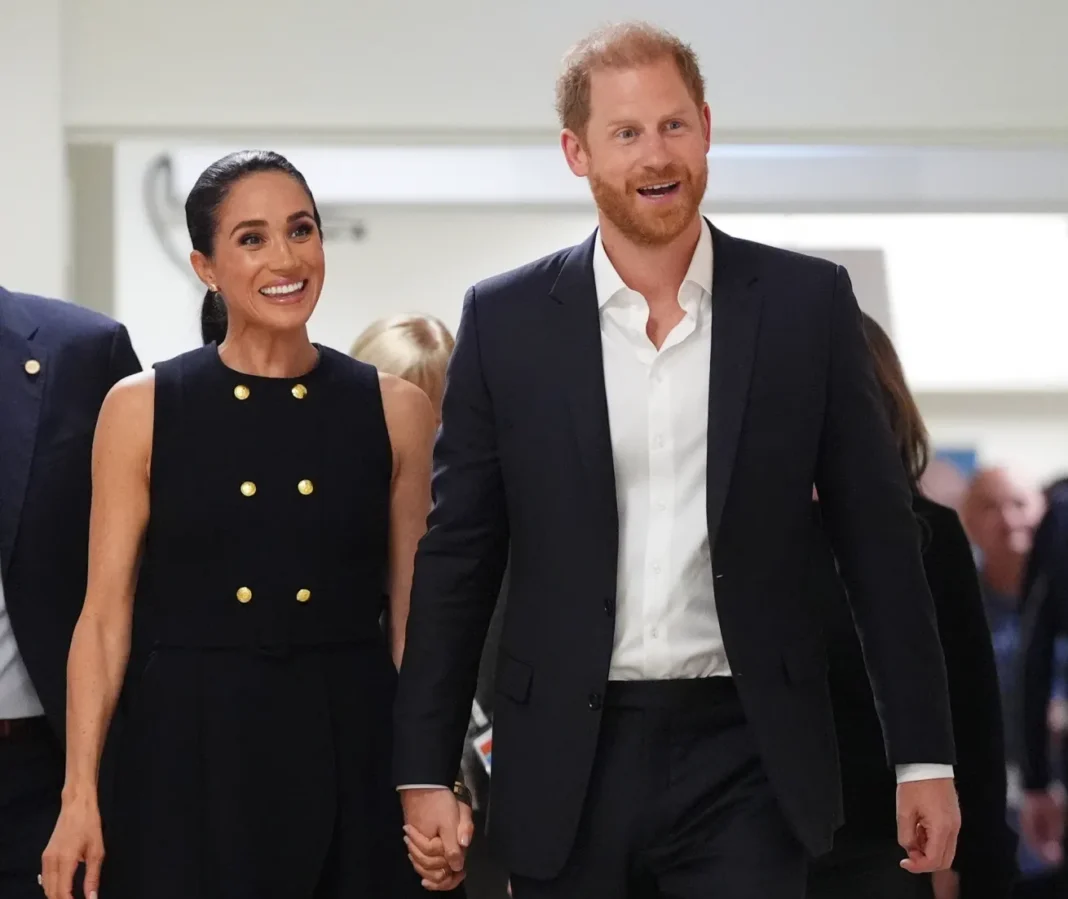
Prince Harry and Meghan Markle are back in Britain with Archie and Lilibet for what The Sun describes as an extended stay. The family arrived in Birmingham after flying privately from California, and the children are expected to start school in the UK in September. The important part is what is not happening. Harry and Meghan are not returning as working royals, are not receiving public funding for royal duties, and are expected to live in a private, non-royal residence. Six years after the grand exit, the sequel is apparently called living nearby.
The practical arrangement may actually be simpler than the symbolism. The children can attend school. Harry can spend more time near his father. Meghan can continue her business work. Nobody has to stand on a balcony or cut a ribbon. Yet the old Sandringham settlement was built around a fear that private commercial activity and royal status could blur together. Living in Britain without official duties does not automatically break that settlement, but it creates a daily reminder that geography can put the blur back into the picture even when job titles do not.
The return also revives the security argument that followed Harry for years. The Sun reported that the Sussexes arrived without close publicly funded police protection and are relying on private security. Harry previously fought the Home Office over the level of taxpayer-funded protection available to him in Britain. That legal fight helped turn every visit into a logistical referendum on whether a prince who left the job still gets the security architecture of the job. Now the family is back for an extended stay anyway, which is one way to test a principle under real-world conditions.
The target here is the Sussex theory that royal life could be escaped cleanly while royal significance remained fully portable. Harry and Meghan left official duties in 2020 and built an independent commercial life. That was their right. But the continuing fascination around their return shows how much of the independent brand still draws oxygen from the institution they left. A private family moving countries is ordinary. A private family moving countries while newspapers track the motorcade, the security arrangements, the school plans and the palace reaction is something else.
That is why this return is more interesting than another round of family-feud scorekeeping. The Sussexes spent years proving they could attract attention outside the palace. Britain now gets to find out whether they can be physically close to the monarchy without every school run, security decision and public appearance being interpreted as a constitutional weather report. The palace does not need to issue a statement for the machine to start. The machine arrived at Birmingham Airport with the luggage.
For Harry, the cleanest version of this chapter would be boring. See family. Raise children. Do private work. Pay private bills. The trouble is that boring has never been available to a couple whose movements are treated as evidence in a six-year argument about duty, privacy, money and belonging. Their return may eventually normalize them as relatives who happen to live in Britain. Or it may prove that once royal status becomes the organizing fact of a public identity, moving home is never just moving home.
What makes this arrangement unusual is that it separates three things royal coverage normally bundles together: residence, family membership and public duty. Harry can be a son and brother in Britain without being a working representative of the Crown. Meghan can run private ventures without appearing on behalf of the King. Their children can grow up closer to relatives without being drafted into a public schedule. On paper, those are clean distinctions. In practice, the British press and palace-watching public have spent years treating every Sussex decision as a clue about the monarchy itself. The experiment is whether ordinary boundaries can survive extraordinary attention. If they can, the return may eventually make the Sussex story less dramatic. If they cannot, Britain will have recreated the same pressure cooker with a different mailing address.
There is also a quiet generational issue underneath the spectacle. Archie and Lilibet did not negotiate Megxit, the Sandringham agreement or the security lawsuits. They are children whose parents made a complicated institutional break before they were old enough to understand it. Schooling them in Britain could give them a relationship with the country and family that is not mediated entirely through headlines about their parents. That possibility is less flashy than another palace feud, which is exactly why it matters. The adults built the argument. The children may be the first people in the story with a chance to live around it instead of inside it.
The next test will be routine. Not a summit, not a balcony and not a memoir. Routine. How often Harry sees Charles. Whether the family can move around without every security detail becoming a public fight. Whether Meghan can work without each project being scored as a referendum on royal relevance. The Sussexes have already proved they can generate attention. The harder task is proving they can build a life that does not require attention to function.
The reason harry and meghan came back without bringing the old job works as more than a one-day headline is that the underlying incentive does not disappear when the news cycle moves on. The people and institutions involved are being rewarded for a particular kind of behavior, whether that reward is attention, political loyalty, money, status or the comfort of avoiding a harder decision. That is the thread worth watching after the immediate controversy cools. A single episode can be dismissed as bad luck or bad optics. A repeated incentive becomes a governing or cultural habit. The useful test is not whether everyone involved can produce a defensible explanation. Most public controversies come with one. The useful test is whether the explanation would still sound reasonable if the names and teams were reversed. That is where satire earns its keep. It strips away the jersey and leaves the behavior sitting there by itself. The next development will matter because it will show whether this was an exception that embarrassed the people involved or a model they intend to keep using. If the same logic appears again, the story stops being an oddity and becomes a pattern. If the people involved change course, that is evidence too. That is why the closing question matters here: If the Sussexes can live in Britain without returning to royal work, what exactly is left of the old either-or deal?
If the Sussexes can live in Britain without returning to royal work, what exactly is left of the old either-or deal?
Sources
The Sun: Harry & Meghan seen in airport motorcade after arriving back for extended UK stay as Archie & Lilibet enrol at school
The Sun: Harry & Meghan back in UK without close police protection as row continues over who should foot security bill
New York Post: Prince Harry, Meghan Markle and their kids get private jet back to UK and arrive without publicly funded security