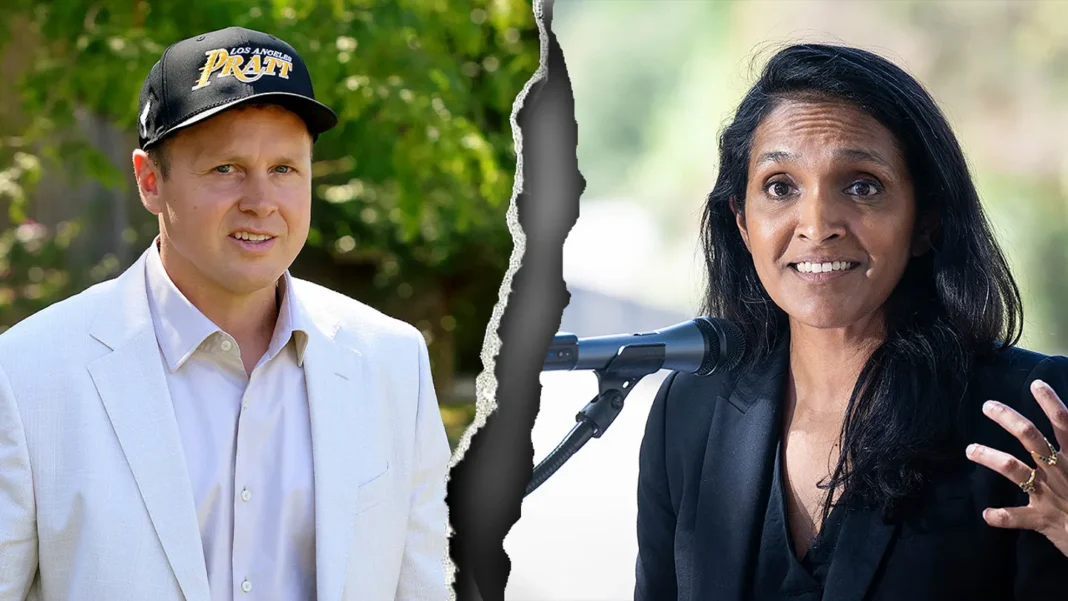





Michael Boren, a senior Trump administration official overseeing the US Forest Service, is facing calls for an investigation over allegations that he used his position to push firefighting resources toward his own Idaho ranch. Three Democratic senators, Ron Wyden, Amy Klobuchar and Martin Heinrich, asked for an inquiry after current and former officials described an unusually aggressive response to the July Cabin Creek fire near Boren’s property. The fire burned about seven acres. The allegation is that the bureaucracy still received the kind of attention usually reserved for something larger than one official’s neighborhood anxiety.
The stakes are not merely optical. Wildfire resources are finite. Crews, aircraft, equipment and attention assigned to one fire are not available somewhere else at the same moment. That is why incident command systems exist and why political interference in emergency response is a serious allegation. The public does not need every decision to be perfect. It does need confidence that the map is being read according to risk rather than property records.
The Guardian reported that Boren contacted Forest Service officials multiple times as the fire burned near his 480-acre ranch. Six current and former officials said the response appeared unusually robust for a fire of that size and threat level. The Agriculture Department defended Boren’s communications as consistent with his responsibilities. The senators are asking for records, safeguards and an explanation by September 10. At this stage, the alleged misuse is exactly that, an allegation under scrutiny, not a proven finding.
The target is the MAGA version of anti-bureaucratic government, which often sounds most passionate right up until somebody important needs the bureaucracy. The Forest Service can be mocked as bloated federal machinery in one speech and treated like concierge wildfire protection in the next. Small government has always had an exception for the driveway of the person currently explaining why government is too big.
The story also lands in an administration that has repeatedly sold itself as a cleanup crew for federal favoritism. The promise is that entrenched bureaucrats and special interests will lose their privileges. If the senators’ concerns are substantiated, the replacement model would be difficult to distinguish from the old problem except that the favored address is easier to locate. Drain the swamp, then make sure the hose reaches the ranch.
The investigation now has a simple job. Establish what Boren asked for, what resources moved, who made those decisions and whether the response differed from normal practice. If the explanation is innocent, records can show it. If it is not, the administration will have to explain why an official entrusted with public land management appeared to receive a very private version of public service.
The broader issue is what political appointees believe their authority is for. Senior officials are supposed to set policy and supervise agencies, not become priority customers of the systems they oversee. Even the appearance of special treatment is corrosive because emergency agencies depend on professional judgment being trusted in real time. Fire crews cannot pause in the middle of a season to litigate whether a request came from an ordinary landowner or the boss of the people deciding where resources go. The rules have to do that work before the phone rings.
This is where anti-government rhetoric collides with the reality of governing. Federal capacity looks abstract until a fire, flood, hurricane or disease outbreak makes it urgently concrete. Then expertise, logistics and staffing stop being examples of waste and become the difference between a contained incident and a disaster. Politicians who campaign against bureaucracy often discover that they like bureaucracy very much when it is competent, fast and pointed in their direction. The public is entitled to insist that the same competence be available according to need rather than rank.
Boren and the Agriculture Department now have an opportunity to make the record clear. The relevant questions are operational, not ideological. What was requested? Who approved it? What resources were assigned? How did those choices compare with similar fires? A clean answer protects both Boren and the Forest Service. A vague answer will deepen the suspicion that the agency’s chain of command became a private hotline.
The reason a trump forest official allegedly found a very personal fire priority works as more than a one-day headline is that the underlying incentive does not disappear when the news cycle moves on. The people and institutions involved are being rewarded for a particular kind of behavior, whether that reward is attention, political loyalty, money, status or the comfort of avoiding a harder decision. That is the thread worth watching after the immediate controversy cools. A single episode can be dismissed as bad luck or bad optics. A repeated incentive becomes a governing or cultural habit. The useful test is not whether everyone involved can produce a defensible explanation. Most public controversies come with one. The useful test is whether the explanation would still sound reasonable if the names and teams were reversed. That is where satire earns its keep. It strips away the jersey and leaves the behavior sitting there by itself. The next development will matter because it will show whether this was an exception that embarrassed the people involved or a model they intend to keep using. If the same logic appears again, the story stops being an oddity and becomes a pattern. If the people involved change course, that is evidence too. That is why the closing question matters here: If emergency resources can be pulled toward the property of the official overseeing them, what safeguard is supposed to stop public service from becoming private service?
If emergency resources can be pulled toward the property of the official overseeing them, what safeguard is supposed to stop public service from becoming private service?
Sources