




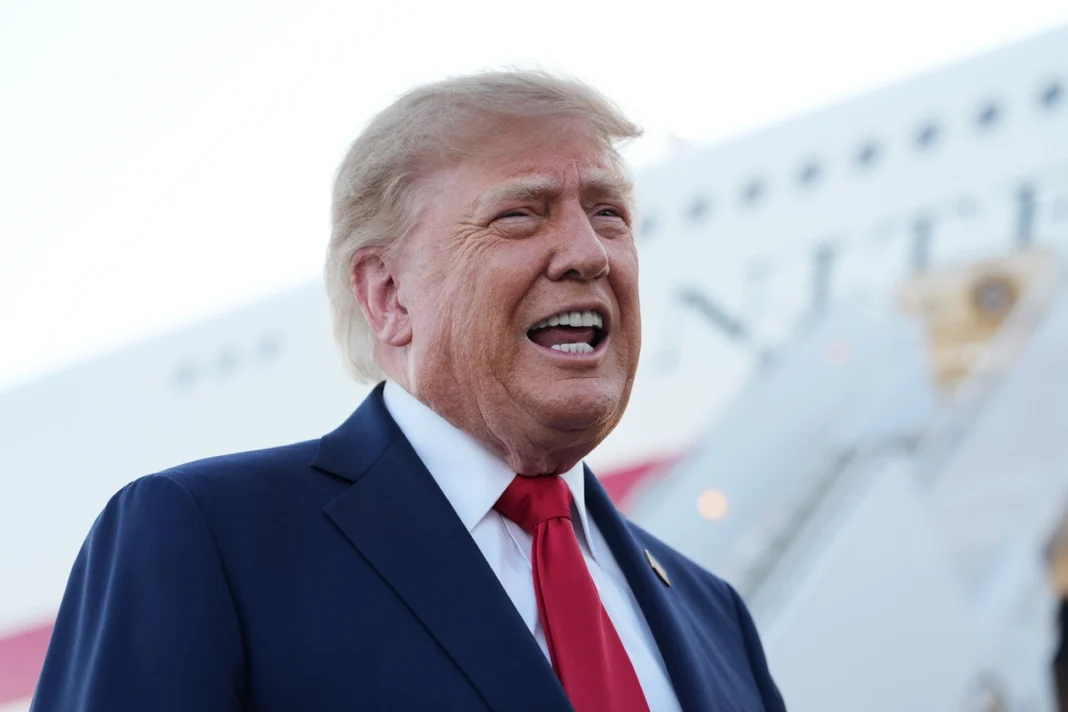
President Donald Trump has threatened the European Union with heavy tariffs and even a possible reduction in trade after European Commission President Ursula von der Leyen proposed a new form of ‘associate membership’ for Canada. The phrase sounds more settled than the policy actually is. Associate membership is not currently a standard legal category inside the EU, and officials are still discussing what it might include. But the political message was clear. Canada and Europe are exploring a deeper relationship at a time when Ottawa is trying to reduce its dependence on the United States.
Trump called the proposal ‘laughable’ and suggested that Washington could treat it as a hostile act if he concluded the arrangement was aimed at the United States. He said the U.S. could impose ‘very serious tariffs’ or stop trading with Europe on some items. The Guardian and Breitbart both reported those remarks, while Newsmax reported Canadian Prime Minister Mark Carney’s public embrace of a closer relationship with the EU. Carney described the goal as deeper cooperation across trade, defense, energy, artificial intelligence, critical minerals and research rather than full EU membership.
The immediate dispute therefore involves three different things that can easily get blurred together. First, Canada is seeking a broader strategic relationship with Europe. Second, the EU has floated a new associate-member concept whose legal meaning is still undefined. Third, Trump is warning that he could respond economically if he views the plan as directed against U.S. interests. None of those points means Canada is becoming a normal EU member, adopting the euro or entering the bloc’s institutions on the same terms as France or Germany.
The proposal reflects how much the Canada-U.S. relationship has changed during Trump’s second term. Trade disputes, tariff threats and repeated comments from Trump about Canada becoming the 51st state have pushed Ottawa to look more aggressively for other markets and alliances. Breitbart reported earlier this week that Canadian and European officials were already exploring ways to move goods, services, energy and data more directly across the Atlantic. The EU’s new offer puts a political label on that broader effort.
Europe’s response to Trump has been equally direct. European Commission officials have said the Canada initiative is not designed against the United States and is intended to strengthen Canada and Europe together. French officials have also emphasized that Washington does not have veto power over the EU’s geopolitical relationships. That turns the argument into more than a tariff dispute. It is also a disagreement about whether Washington should be able to influence how closely Canada and Europe cooperate with one another.
Trump’s leverage is real because the United States and European Union remain deeply connected economically. Tariffs can raise costs, change supply chains and trigger retaliation. A threat to reduce trade altogether is even more significant, though turning that rhetoric into policy would involve major economic consequences for American companies and consumers as well as Europe. Trump has repeatedly used tariff threats as a negotiating tool, so the next step will depend on whether he views the emerging Canada-EU arrangement as symbolic or strategically threatening.
Canada, meanwhile, has reasons to avoid overpromising. The EU itself has not fully defined what associate membership would mean, and a major agreement could require approval from European governments and Canada’s Parliament. Carney has described the relationship in terms of diversification and sovereignty. That leaves room for Ottawa to deepen cooperation without pretending it is becoming a 28th EU member. The concept is politically powerful precisely because its details remain open. The economic relationship at stake is not peripheral. The EU is one of the United States’ largest trading partners, and Canada remains deeply integrated with the U.S. through energy, manufacturing, agriculture and defense supply chains. A dispute that begins with diplomatic language about associate membership can therefore affect companies far removed from Brussels or Ottawa. Any actual tariff package would need details about which products are covered, when duties begin and whether Europe retaliates. Until those details exist, Trump’s statement is a threat rather than a completed trade policy. That difference matters because markets and governments often react to the possibility of tariffs before any tariff is formally imposed. It also gives negotiators room to narrow or postpone measures if political talks succeed.
The economic consequences also depend on what happens next rather than on the first public threat. Tariffs can be announced, delayed, narrowed or used as leverage in negotiations. Canada and the EU can likewise adjust the scope of their discussions. That flexibility is why the phrase associate member matters politically even before it is legally defined. It creates a framework for future cooperation and a test of how aggressively Washington will respond when two close U.S. partners try to reduce their exposure to American policy swings.
The immediate facts are clear enough to support scrutiny without overstating what remains unknown. The next phase will produce more documents, votes, legal decisions or economic data that can test the competing claims. Until then, the distinction between what has happened and what each side predicts will happen is central to covering the story accurately.
The result is a transatlantic argument built around a status that does not formally exist yet. Europe wants to pull Canada closer. Canada wants options beyond the U.S. market. Trump is warning that those options could carry a price if he believes they are hostile. The next question is whether the threat changes the negotiations or gives Canada and Europe another reason to make their relationship more durable.
If Canada and Europe deepen their relationship specifically to reduce dependence on the United States, can tariff threats do anything except reinforce the reason they started talking?
Sources
The Guardian: Trump threatens to stop trading with EU over ‘laughable’ membership offer to Canada – https://www.theguardian.com/world/2026/sep/17/trump-calls-eu-offer-to-canada-associate-membership-laughable-threatens-tariffs
Breitbart: Canada alliance plan ‘not against anyone’, EU says after Trump threat – https://www.breitbart.com/news/canada-alliance-plan-not-against-anyone-eu-says-after-trump-threat/
Newsmax: Carney Embraces a Proposal for Canada to Become EU’s 1st Associate Member – https://cloudflarepoc.newsmax.com/world/globaltalk/carney-canada-eu/2026/09/17/id/1269713/