



Artificial intelligence has learned the most important lesson in the music business. Release constantly. Fox News reported Friday that AI-generated music now accounts for about 44% of daily music downloads on Deezer, while artists and industry figures are trying to work out what happens when the supply of songs no longer depends on somebody having a song to write. An AI-generated act called Breaking Rust has already appeared on Billboard’s Emerging Artists chart. The robots have skipped the garage and gone directly to distribution.
The human advantage is supposed to be connection. Fans care who wrote a song, what happened to them, how they perform it and what the work means in a larger career. AI music can imitate sound, but a fake band cannot have a terrible second album, cancel a tour, reunite after 17 years or glare at the drummer during an awards show. Pop culture is built from the mess around the music as much as the audio file itself.
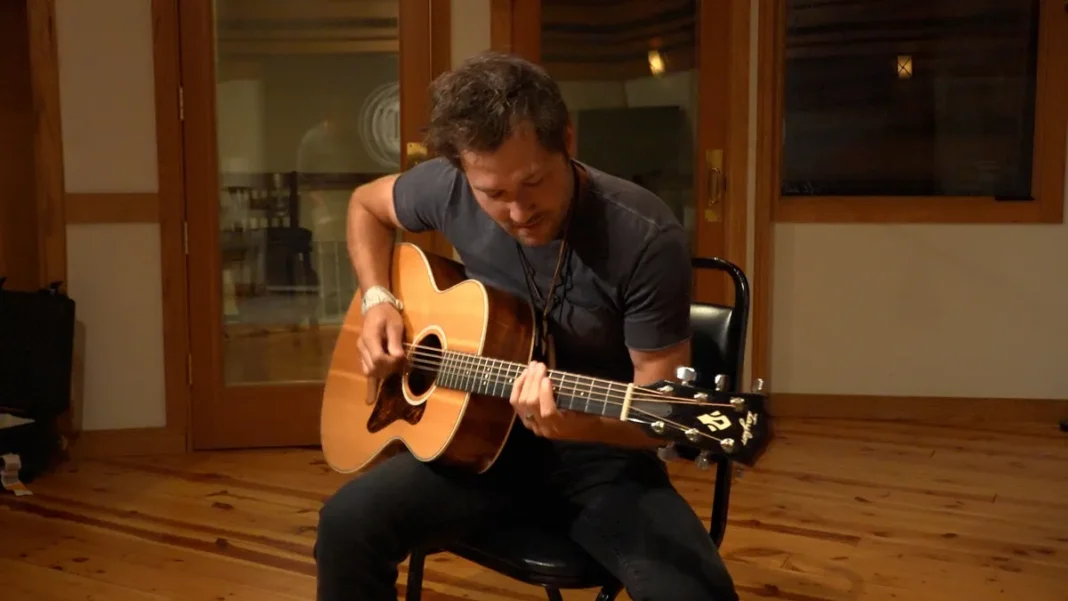
Nashville musician Ben Gallaher told Fox that synthetic acts still cannot compete with live performers because there is no actual band to see onstage. That sounds obvious until you remember how much modern listening already happens without a stage anywhere in sight. Streaming turned music into an infinite shelf. Generative AI has now discovered it can stock the shelf faster than humans can browse it.
The target is not the technology itself. Tools have always changed music. The target is an industry architecture that spent years reducing songs to interchangeable content units and is now shocked that software can manufacture interchangeable content units at industrial speed. If the business model rewards volume, cheap production and algorithmic compatibility, the algorithm was eventually going to notice the job opening.
Yet platforms have incentives that do not necessarily care about that distinction. A stream is a stream. Background music is especially vulnerable because listeners may want a mood more than a biography. If AI can produce endless competent tracks for studying, sleeping, lifting or pretending to answer email, the market for anonymous music could become enormous without anyone deciding they love an AI artist.
That leaves musicians with a strange future. They may have to become more human to compete with machines. More live shows. More personality. More proof of authorship. More reasons for listeners to care about the person behind the recording. The industry spent decades trying to make music frictionless. AI may force it to rediscover that friction was where much of the culture lived.
The rights question will become unavoidable as the volume rises. Human musicians and songwriters want to know what material trained the systems, how synthetic tracks are labeled and whether platforms will distinguish between a person making music with AI tools and a fully generated act with no human performer. Those are technical questions, but they are also cultural ones. Attribution tells listeners what kind of relationship they are being invited to have with the work.
The industry has been here before in smaller forms. Drum machines were accused of replacing drummers. Sampling triggered legal fights over ownership. Auto-Tune became shorthand for artificiality before becoming an ordinary production tool. AI is different mainly in scale. It can generate not just a sound or effect but an endless catalogue. The problem is no longer whether a machine can participate in music. It is whether the machine can flood the market faster than humans can establish the rules.
Listeners will ultimately decide more than executives admit. If people care about artists, live performance and stories, human music retains an enormous advantage. If large portions of listening are purely functional, synthetic music may thrive there. The strange future may not be humans versus AI. It may be music splitting into two markets, one for connection and one for endless competent noise.
The reason ai music is flooding the charts before it can play a bar works as more than a one-day headline is that the underlying incentive does not disappear when the news cycle moves on. The people and institutions involved are being rewarded for a particular kind of behavior, whether that reward is attention, political loyalty, money, status or the comfort of avoiding a harder decision. That is the thread worth watching after the immediate controversy cools. A single episode can be dismissed as bad luck or bad optics. A repeated incentive becomes a governing or cultural habit. The useful test is not whether everyone involved can produce a defensible explanation. Most public controversies come with one. The useful test is whether the explanation would still sound reasonable if the names and teams were reversed. That is where satire earns its keep. It strips away the jersey and leaves the behavior sitting there by itself. The next development will matter because it will show whether this was an exception that embarrassed the people involved or a model they intend to keep using. If the same logic appears again, the story stops being an oddity and becomes a pattern. If the people involved change course, that is evidence too. That is why the closing question matters here: If streaming platforms fill with music that has no musicians behind it, what exactly are listeners supposed to become fans of? Public life is full of arguments about motives that cannot be proved. Behavior is easier to judge. Watch what gets repeated, what gets rewarded, what gets quietly abandoned, and who is asked to absorb the cost. Those details usually tell the story more clearly than the slogans do.
If streaming platforms fill with music that has no musicians behind it, what exactly are listeners supposed to become fans of?
Sources
Fox News: Music industry fends off flood of AI music ‘stealing’ the charts