



The Democratic Socialists of America have had a consequential August. Abdul El-Sayed won Michigan’s Democratic Senate primary on August 4, becoming the first DSA-backed Senate nominee in American history in a state Trump won in 2024 by a margin of 2.7 percentage points. Before Michigan, there was Maine, where 78-year-old Gov. Janet Mills dropped her Senate bid as her age became, in HuffPost’s words, “an albatross against the insurgent campaign” of 41-year-old Graham Platner. Before that, there was Texas, where Rep. Christian Menefee “soundly defeated” a more senior opponent. Today, primaries in Connecticut, Minnesota, Vermont, and Wisconsin, plus a South Carolina special Senate election, offer the next chapter. Wisconsin is where the answer to whether August 4 was a movement or a high-water mark arrives first.
Wisconsin’s Democratic gubernatorial primary is the race that Fox News Decision Desk director Arnon Mishkin identified as the one to watch on the Fox News Rundown this morning. Assemblywoman Francesca Hong, who is aligned with the Sunrise Movement and has received endorsements from Sens. Bernie Sanders and Elizabeth Warren, has been leading in public surveys against a more moderate opponent. HuffPost’s reporting from last week described Hong as among the progressives “set to defeat comparatively moderate opponents” as the party’s Tea Party-style insurgency continues to build. The moderate camp’s argument is that winning a Democratic primary is different from winning a November general election in a state Trump won in 2024, that the Republican nominee will spend the fall running ads about DSA, Medicare for All, abolishing ICE, and whatever Hong’s most controversial primary statements turn out to be, and that Wisconsin’s general election electorate is substantially different from its Democratic primary electorate.
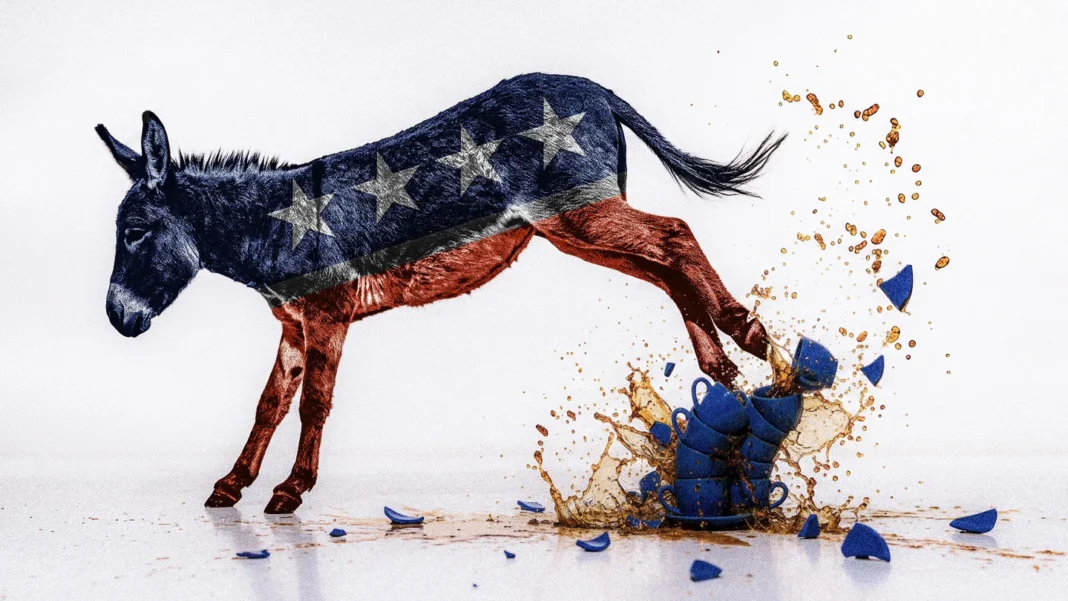
Those two electorates are the central tension in every primary happening today. The progressive case is that El-Sayed’s Michigan win, Hong’s Wisconsin polling, and the pattern of insurgent wins across multiple states this year demonstrate that the Democratic electorate is moving left and that candidates who speak honestly to working-class economic frustration can bring in low-propensity voters who sat out 2022 and 2024. The establishment case is that all of this is happening in Democratic primaries, which are won by a motivated base, and that the November electorate includes a large number of voters in swing states who did not participate in the primaries and who will be making decisions based on different information than primary voters had access to.
Fox News Decision Desk director Mishkin, breaking down the day’s races on the Fox News Rundown, noted that the Wisconsin race also tests whether the progressive surge has reached the gubernatorial level after demonstrating its strength primarily at the congressional and Senate level. A governorship is a different kind of race because the winner cannot simply oppose the other party’s proposals from the minority; they have to run something. The practical consequences of Medicare for All, abolishing ICE, and ending military aid to Israel are arguably more vivid when the candidate is running to be the executive of a state than when they are running to be one of a hundred senators. Wisconsin voters will be asked today to decide whether that distinction matters to them.
South Carolina is holding a special election to fill the Senate seat of Lindsey Graham, who died in July after 28 years representing the state. Graham was the chamber’s most consistent advocate for American military engagement abroad. He supported intervention in Kosovo, Afghanistan, Iraq, Libya, Syria, and every iteration of the argument that American disengagement from global security commitments would invite adversaries to fill the vacuum. He died while the United States was conducting its fifth month of bombing campaign against Iran — a war that, depending on which analysis you accept, either validates his consistent warnings about the consequences of weakness toward Iran or represents exactly the kind of open-ended military commitment that produced the anti-interventionist backlash now manifesting in the Carlson-Massie-Greene coalition. Graham did not live to know how the war ends or what his legacy means in its context. The special election is to fill his seat until November. The permanent seat goes to the Republican primary winner in November. South Carolina has not sent a Democrat to the Senate since Fritz Hollings retired in 2005. It is expected to remain Republican.
Connecticut’s primary races are lower-profile. Minnesota’s Democratic gubernatorial primary features Lt. Gov. Peggy Flanagan, who would be the first Native American governor of any state in American history if she wins the general election in November, a distinction whose historical weight is independent of her policy positions and which she has woven into her campaign’s narrative about what Wisconsin and Minnesota and the broader region are capable of becoming. Vermont’s Democratic gubernatorial primary involves its own version of the progressive-moderate argument in a state that is reliably blue in general elections but where the specific candidate the party nominates has implications for how energetically the progressive base turns out in November and for what the governing coalition looks like afterward.
Hasan Piker, the progressive streamer with 2.5 million Twitch followers who campaigned with El-Sayed in Michigan and declared that result “just the beginning,” said the movement would go “to every single state.” Today is the day Wisconsin Democrats decide whether that describes their state. The results arrive tonight. The DSA’s test is Wisconsin. Graham’s legacy question is South Carolina. The answers matter differently to different people watching.
When the Democratic Party’s internal argument about electability plays out simultaneously in four states plus a special election for a Senate seat held by the chamber’s most consistent interventionist, what exactly does the party learn about itself tonight?
Sources
Fox News Rundown: Why Today’s Primaries Are a Test for the DSA and Democrats
Fox News: 2026 Primary election schedule
HuffPost: Democrats Confront Their New Tea Party Reality