



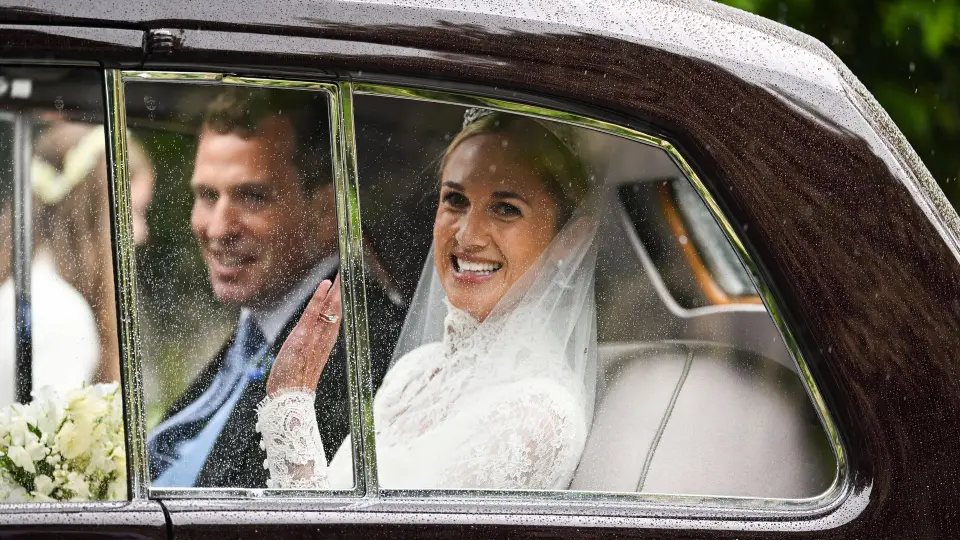
The British royal family has not had a wedding since Princess Beatrice married quietly in Windsor in 2020. On Saturday, Peter Phillips, Princess Anne’s son and the late Queen’s eldest grandchild, married Harriet Sperling at a country church in the Cotswolds. King Charles came. Queen Camilla came. William and Kate came. Harry did not, because he was not asked.
A friend of Peter’s told Hello! that the duke simply “wasn’t invited” because the cousins had “lost touch” over the years and “simply stopped speaking.” This is the diplomatic version of events. The less diplomatic version is that Harry has spent the better part of five years turning the royal family into a press tour subject, and the people in that family who were not obligated to include him did not include him. Peter Phillips is not a senior royal. He owes Harry no public occasions.
The detail the coverage could not stop mentioning is that the couple left the church in the Queen’s own Phantom IV Rolls-Royce, the same car used at Harry and Meghan’s 2018 wedding. Hello! called it a “surprising nod” to the absent Sussexes. The phrase “nod to” is doing considerable work there. The car is a piece of the royal fleet used at weddings. Its appearance is not a tribute; it is a vehicle. The suggestion that driving away in it constitutes a gesture of solidarity with the uninvited couple is the kind of thing that gets written when the real story is that Harry was not there and the day was fine.
Prince Andrew was also not invited, having been stripped of his royal titles in 2025 and arrested on suspicion of misconduct in February 2026, which he denies. His exclusion generated considerably less commentary about symbolic nods and gestures of connection. The difference in treatment is instructive.
When a family’s most talked-about member keeps not being there, at what point does his absence become the normal version of events?