



Kennedy says he is complying with federal ethics rules. His latest disclosure still shows a remarkably lucrative year of book deals, private flights and free lodging from longtime allies.
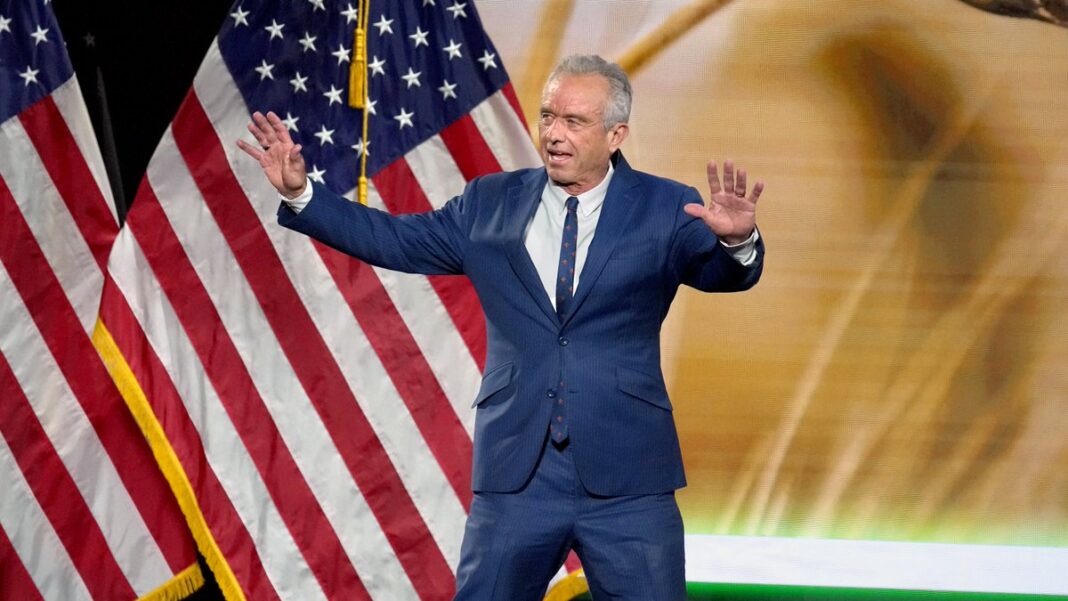
Robert F. Kennedy Jr. is running the federal government’s health department, helping shape vaccine policy, overseeing regulators and carrying one of the most recognizable political names in America. He also had a pretty spectacular year on the side: $4 million in book advances, private flights to Greece and Fiji, free use of a Washington property and more than $270,000 in disclosed gifts from people in his orbit.
Those numbers come from Kennedy’s latest financial disclosure, first reported in detail by The New York Times and The Wall Street Journal. The largest chunk is the book money. Kennedy received two $2 million advances for books being published by Skyhorse Publishing, the company run by longtime ally Tony Lyons. One book is called ‘Unsettled Science,’ while another is titled ‘A Defense of Israel.’ He also disclosed a smaller advance tied to a third book.
Kennedy had already pledged, before taking office as health secretary, that he would not write, edit or promote the books while serving in government. His ethics agreement did not require him to reject advances entirely, and HHS says Kennedy works with career ethics officials and complies with applicable federal ethics rules. That has not stopped outside ethics experts from asking whether payments connected to books touching on subjects related to Kennedy’s official duties create a conflict.
The relationship with Lyons is one reason the disclosure is drawing attention. Lyons is not simply Kennedy’s publisher. He has been a longtime business associate and supporter and now sits at the center of several organizations connected to the Make America Healthy Again movement. That movement overlaps heavily with Kennedy’s political brand and policy agenda, which means the same universe that helped make Kennedy a cabinet secretary is also helping publish and promote ideas closely associated with him.
The disclosure gets more interesting from there. Kennedy also reported that longtime friend and security consultant Gavin de Becker provided him with lodging worth about $126,000 at a Washington property. De Becker also covered nearly $150,000 in airfare, including a trip to Greece valued around $45,000 and a Fiji trip valued at nearly $97,000. If your friendship group normally settles up with Venmo after dinner, this is a noticeably different tier of hospitality.
De Becker has said the arrangement reflects a genuine longtime friendship. He told reporters that he and Kennedy have vacationed together for years, that Kennedy has hosted his family in return and that he has no business with HHS or the federal government. Federal ethics rules do contain exceptions for gifts based on personal friendship, which is why the existence of an expensive gift does not automatically establish a violation.
Still, ethics experts quoted in the reporting say the scale of the gifts deserves scrutiny, particularly because de Becker has political and ideological ties to Kennedy’s movement. De Becker has donated to Kennedy’s political efforts and has published writing skeptical of vaccine safety through Skyhorse, the same publisher run by Lyons. HHS oversees agencies making decisions on vaccines, drugs and other health products, so the question is not simply whether Kennedy and de Becker know each other. The question is whether a reasonable person could worry that unusually valuable gifts might complicate public confidence in Kennedy’s independence.
Kennedy’s financial filing also disclosed other gifts, including a flight from Commerce Secretary Howard Lutnick and box seats at a WWE event provided by Education Secretary Linda McMahon. Compared with a private flight to Fiji, wrestling tickets almost feel like the normal part of the form.
HHS has pushed back strongly against suggestions that Kennedy is violating ethics rules. A department spokesperson told the Times that Kennedy complies with disclosure requirements and works with career ethics officials to make sure gifts, financial interests and outside activities are handled appropriately. That is important because financial disclosures are exactly what they sound like: disclosure. A large number on a form can trigger questions without, by itself, proving misconduct.
But the disclosure creates a striking picture of how money moves around a public figure who sits at the intersection of politics, publishing, advocacy and government. Kennedy is not merely collecting royalties from a book he wrote years ago. He received millions in advances from a publisher closely tied to the movement built around his public-health agenda, while his wife also reportedly received consulting income from a MAHA-aligned organization led by Lyons.
That is why the ethics discussion is unlikely to disappear. Federal ethics rules are designed not only to prevent explicit quid pro quos but also to reduce circumstances in which an official’s private financial relationships could undermine trust in government decisions. Kennedy’s supporters can reasonably point out that longtime friends are allowed to give gifts and publishers are allowed to pay authors. Critics can reasonably ask whether those relationships become more complicated when the recipient is making national health policy.
The strangest part is how normal all of these relationships may feel inside Kennedy’s world. Longtime friends vacation together. Publishers pay authors. Political movements create organizations. Wealthy supporters provide hospitality. Individually, none of those things necessarily proves anything improper. Put them all on one federal financial disclosure, however, and the page starts looking less like a government form and more like the itinerary for an extremely well-connected book tour.
So the real issue is transparency. If a cabinet secretary is receiving millions from a publisher tied to his political movement and six-figure travel and lodging from wealthy allies, what level of separation should the public expect between those private relationships and the government decisions he makes?