




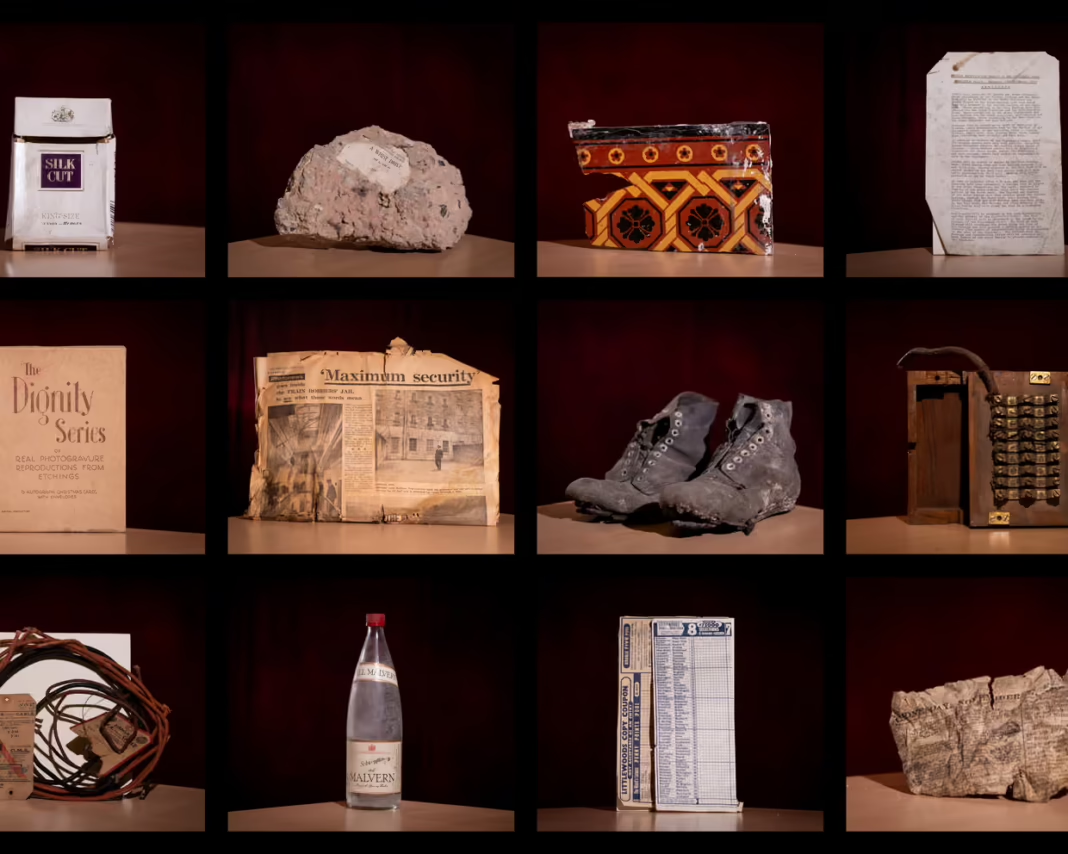
Buckingham Palace is in the middle of a £370 million restoration meant to preserve the headquarters of monarchy, and the most interesting things workers keep finding are not crowns, state papers or forgotten portraits of somebody called Albert. They are betting slips, cigarette packets, hobnail boots, bottles, staff instructions and a ticket to a 1949 whist drive. After centuries of selling the palace as a stage for sovereigns, the building has started coughing up evidence that ordinary employees were there the whole time. History has breached protocol.
The Guardian reports that the decade-long reservicing project has exposed a small archive of staff life from beneath floorboards and inside walls. Among the finds are 1957 Littlewoods football pool slips, an empty Silk Cut packet, a Schweppes bottle, a pewter tankard, an 1889 newspaper fragment and notes laying out how staff were supposed to move guests through a 1977 royal reception. The Sun has its own inventory of the finds, which somehow makes Buckingham Palace sound less like the heart of the Crown and more like the break room after everyone clocked out.
This is exactly the wrong kind of archaeology for an institution built on controlled symbolism. Palaces are supposed to reveal chandeliers, diplomatic gifts and furniture that requires its own insurance policy. A betting slip is rude. It implies somebody stood near the throne room wondering whether Arsenal would cover the weekend. A cigarette packet is worse. It suggests that behind the velvet ropes were workers having a completely normal Tuesday while the monarchy performed permanence one corridor away.
The palace restoration itself is a monument to permanence by invoice. The project began in 2017 because plumbing, wiring and other systems had reached the point where history risked becoming an electrical fire. More than a mile of outdated wiring has been replaced. The work is supposed to finish in 2027. For years, the public case has been that preserving a globally important building costs money. Fair enough. The building has now supplied an accidental footnote: preserving monarchy also means preserving evidence of everyone who kept the monarchy functioning while nobody put them on the souvenir mug.
Royal history tends to arrive from the top down. Kings decided. Queens reigned. Princes married. The household appears as a single efficient noun, like the palace wakes itself at six and lays out the breakfast trays. The objects under the floorboards tell a less polished story. Somebody wore those boots. Somebody bought that football pool entry. Somebody received a sheet of instructions explaining where to stand so that a reception involving famous people appeared effortless. The monarchy’s greatest production trick has always been making labor disappear into ceremony.
That trick is not unique to royalty. Every glamorous institution depends on invisible work. But the palace turns invisibility into part of the product. A state banquet is impressive because nobody sees the planning meeting about spoons. A procession looks timeless because nobody sees the person checking the route, the timing and the weather. Royal life is marketed as tradition, but tradition is often just logistics repeated until the staff doing the logistics are no longer mentioned.
The timing makes the discovery even better. King Charles and Queen Camilla have already decided they will not live at Buckingham Palace after the restoration is complete, preferring Clarence House while the palace remains the ceremonial and administrative center of royal life. Britain is spending hundreds of millions modernizing the national symbol of royal residence so the monarch can mainly use it as the office. The floorboards, meanwhile, are producing better human-interest copy than the throne room.
There is nothing scandalous about the finds. That is the point. The monarchy spends so much time around scandal that ordinary human evidence feels almost subversive. A pair of work boots does not require a palace statement. A whist ticket cannot be accused of briefing against anyone. Nobody needs to explain the constitutional position of a 1957 betting slip. The objects simply make the building less mythical and more believable, which is a dangerous amount of clarity for a brand that normally prefers gold leaf. The finds also complicate the usual argument that the palace is simply a royal residence. It is part home, part office, part museum, part national stage and part workplace. The restoration is exposing all of those functions at once. The people whose names never appeared in court circulars were still part of the institution’s continuity, which makes their discarded objects oddly more democratic than most of the rooms above them.
The palace will eventually catalogue the objects, finish the rewiring and reopen more rooms to visitors. Tourists will see restored interiors and hear about monarchs, ceremonies and national history. Maybe some of these staff artifacts will make it into the story too. They should. The most honest version of Buckingham Palace is not a building where royalty happened. It is a building where hundreds of people worked very hard to make royalty look like it simply happened. That tension is what gives the story a thread beyond the headline. The immediate event is funny because the facts are funny, but the larger question is institutional. Once a public institution builds its legitimacy around a principle, moments like this test whether the principle survives when it becomes inconvenient.
There is a small democratic virtue in these discoveries too. Public money is helping restore a national building, and the finds make the building feel more national precisely because they are not royal. The cigarette packet and pool slip are evidence of ordinary lives threaded through an extraordinary institution. They make the palace belong a little less exclusively to the people whose portraits hang upstairs and a little more to the people who kept the lights on below them. The monarchy has spent generations explaining itself through sovereigns, jubilees and constitutional duty. The renovation has supplied a quieter interpretation from beneath the floorboards: a palace is also a workplace, and the people doing the work leave traces even when the official history barely leaves them a paragraph.
If Buckingham Palace wants to tell the story of monarchy, how much of that story belongs to the people who made monarchy look effortless?
Sources
The Guardian: Hidden history of royal staff uncovered in Buckingham Palace restoration
The Sun: Hidden trove of Buckingham Palace trinkets dating back 140 years are discovered beneath floorboards during £370m revamp