



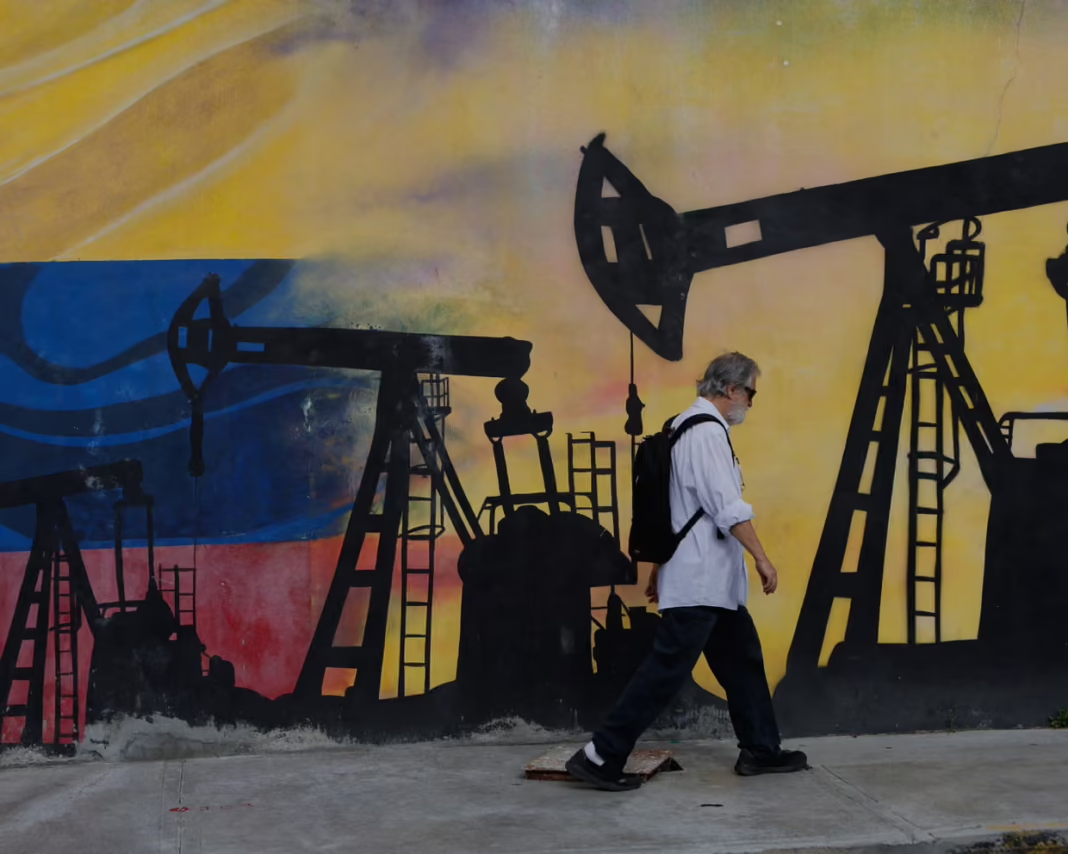
The Trump administration has found a wonderfully Trumpian way to simplify foreign policy: acquire an ownership stake. The White House says the Pentagon’s Office of Strategic Capital will take a 35% equity stake in the parent of North American Blue Energy Partners, a private company granted concessions over 17 Venezuelan oil fields. The administration says those fields contain roughly 65 billion barrels of proven crude reserves. After years of hearing that Washington should stop nation-building, America has apparently moved on to nation-shareholding.
The Washington Examiner reported that the Venezuelan interim authorities granted NABEP 100-year concessions and that the U.S. government will receive governance rights, a guaranteed 20% of production at cost and first refusal on the rest. The Guardian separately reported U.S. officials defending the arrangement as a way to stabilize Venezuela and fund reconstruction. It is an extraordinary package. The United States is not merely encouraging investment or easing sanctions. It is becoming a shareholder with veto power in a private oil venture operating across a large chunk of another country’s reserves. Very limited government, provided the government owns 35%.
The first comedy problem is duration. Washington says the concessions run for 100 years. Venezuela’s acting president, Delcy Rodriguez, has said the agreement lasts 25 years. That is not a minor typo. Seventy-five years is the difference between a long mortgage and a family dynasty. If the parties cannot publicly agree on whether the deal expires when today’s toddlers reach middle age or when their great-grandchildren retire, perhaps the victory lap could wait until somebody finds the contract.
The second problem is the Strategic Petroleum Reserve. Trump has promoted Venezuelan oil as a way to replenish the reserve after releases connected to the Iran war. The Examiner noted a technical inconvenience: the reserve’s facilities were not designed for Venezuela’s heavy, high-sulfur crude. This is the sort of detail that tends to interrupt a slogan. The plan is apparently to secure oil for a stockpile that may not be able to store that oil in its current form. America has invented the geopolitical equivalent of buying a sectional sofa before measuring the doorway.
Then there is the private partner. NABEP is led by Venezuelan businessman Alejandro Betancourt. The Examiner reported that he has faced money-laundering investigations in several countries, while noting that he has not been formally charged in the United States and that a U.S. official said he had been vetted. The administration’s own defense included the line that nobody was “nominating anyone for sainthood.” That is reassuring in the narrow sense that oil deals do not require canonization. It is less reassuring when the transaction is being sold as the foundation for Venezuela’s long-term democratic and economic recovery.
Trump’s supporters can make a serious case for the deal. Venezuela has enormous reserves. Chinese and Russian interests have held influence in its energy sector. The United States wants more supply while the Iran conflict pressures oil markets. A structure that channels investment and production toward U.S. strategic interests could be valuable. But those arguments make transparency more important, not less. A century-scale concession, government equity stake and politically connected private operator should be the beginning of questions, not the end of them.
The ideological reversal is the richest part. Republicans spent years warning about government picking winners and losers, state capitalism and public ownership. Now the Pentagon is taking equity in an oil company, the State Department gets purchasing rights, and the White House is touting the arrangement as strategic genius. Apparently socialism becomes capitalism if the shareholder agreement has enough American flags around it. Bernie Sanders wanted public ownership of utilities. Trump looked at Venezuela and said, essentially, make mine crude.
Meanwhile, Venezuelans are being told the deal will help rebuild their country and support a democratic transition after Maduro. That promise deserves scrutiny because control over natural resources has been central to Venezuela’s politics for generations. If the arrangement succeeds, it could generate revenue and investment. If it fails, it could look like a foreign power securing unusually durable rights during a fragile political transition. The difference will depend on legal legitimacy, transparency, distribution of revenue and whether Venezuelans eventually get the democratic government U.S. officials say they want.
The Chevron announcement on Wednesday adds another layer. The company said it plans more than $7 billion in Venezuelan investment over five years and aims to more than double production there, according to the Washington Examiner. That investment is separate from the government’s NABEP stake, but together the moves show how quickly Washington is trying to reorganize Venezuela’s oil sector around American capital and strategic needs. Speed may be useful in an energy crunch. It also increases the need for rules that survive beyond the current presidents, companies and emergency. Oil projects last decades. Elections happen every few years. A deal sold as a geopolitical masterstroke today can become a legal dispute, corruption scandal or stranded asset under the next government. The administration wants Americans to see barrels, lower prices and leverage over China and Russia. Venezuelans are entitled to see the contracts, the revenue path and the democratic guardrails. A hundred-year headline demands more than a hundred-hour sales pitch.
The administration may have found a bold strategic play. Bold is not the same as self-explanatory. When government becomes investor, buyer, geopolitical sponsor and democracy tutor in the same transaction, the paperwork matters almost as much as the petroleum.
Before America celebrates owning part of Venezuela’s oil future, can anyone agree on what the deal actually says and who will be accountable for it?
Sources
Washington Examiner: Trump administration taking 35% equity stake in new Venezuelan oil company
The Guardian: US officials defend Venezuela oil deal amid questions over rebuilding plan
Fox News: Retaliation on Kharg Island weighed as US-Iran hostilities reignite | Live Updates from Fox News Digital